Showing posts with label Japan. Show all posts

Friday, August 21, 2020

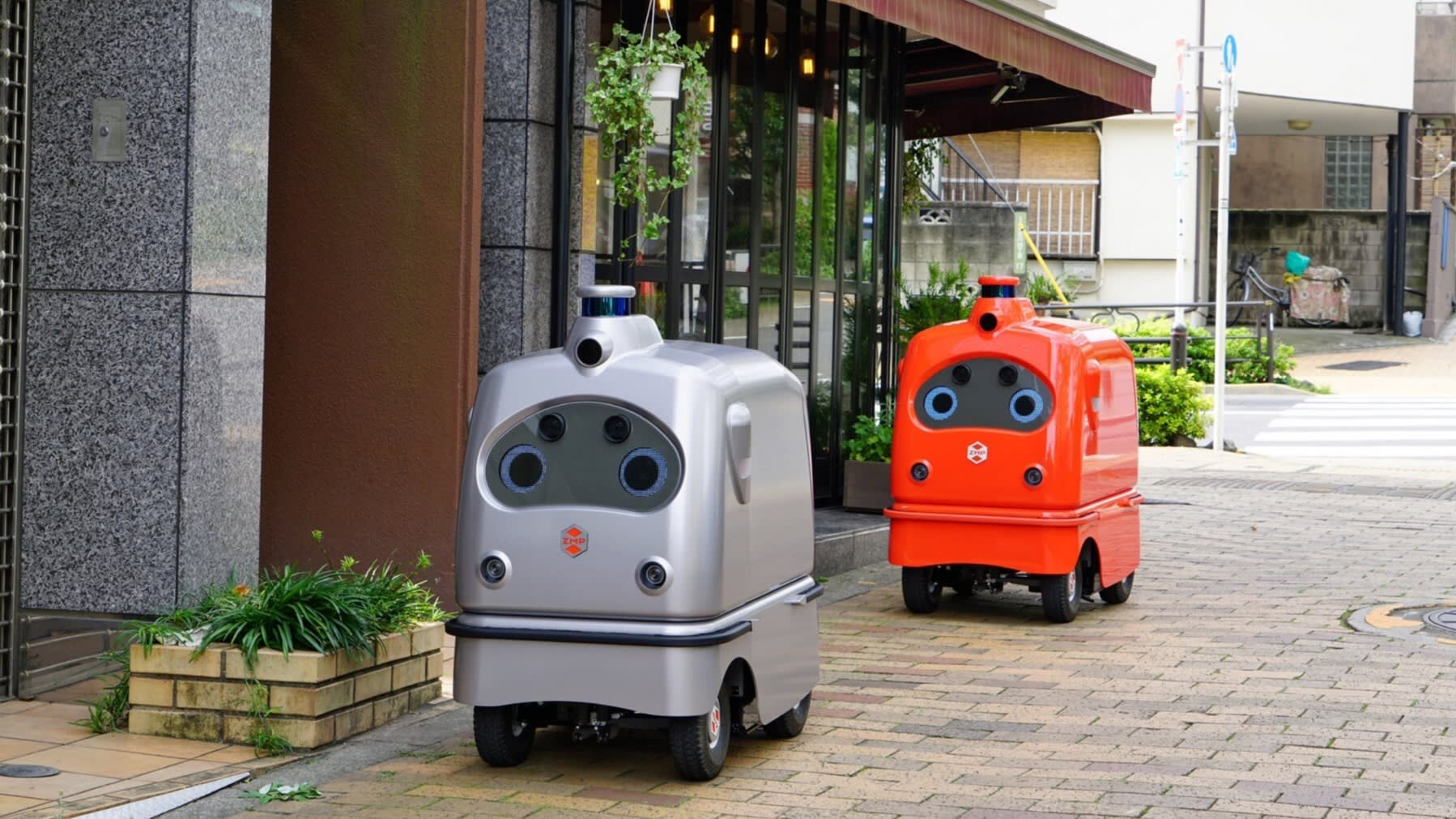
Robots delivering in Tokyo

Another measure to reduce the spread of Covid-19 infection, one of Japan's largest door-to-door delivery service companies, Yamato Holdings, and the government-owned courier firm Japan Post is testing delivery robots in Tokyo.

Hopefully robots will help contain the spread of the coronavirus — while alleviating the shortage of delivery drivers.

Read more...


Friday, November 8, 2013

The New Face of Microsoft is... a robot-slaying teenage anime girl?!

I will say, I like the artwork, and it isn't the first time Japanimation-style cartoon characters have been used to sell Microsoft products. This one has high production values, however.

View it here...

Wednesday, March 6, 2013

Why High Speed Rail Won't Be Pulling into the Station Anytime Soon

High speed rail in the US is, unfortunately, unachievable, for many reasons, but one important one stands out: there are hundreds of thousands of at-grade-crossings. Too many roads and rail lines intersect, requiring crossing gates and slow transversal by trains. In Japan, the entire Shinkansen system resides behind concrete walls and high fences so pedestrians and automobiles don't have to be negotiated.
The culture of trains in other countries stems from a history of adoption of said transport method. Train evolution occurred simultaneously worked with the Industrial Revolution in England in the nineteenth-century, and served to play a crucial part in the lives of Victorians and urban development during this era. The impacts trains produced were unseen in relative terms as the technology pioneered was unlike anything previously.
This chap has an excellent discussion around the British culture is infused with rail technology -- at home and around the empire.
Unlike the poopy and slow horse that preceded this technological wonder, the railways enabled transportation times to dramatically decline. The debut of the steam locomotive of the 1830s turbo-charged the already booming British economy. The cultural impacts that took place due to the augmentation of the train and railways were visible almost immediately.
In Japan, a similar affectation for trains is infused in the culture. Love of all things transport-related is obvious to visitors to Japan, but trains are one if the most visible aspects of Nippon infrastructure loved by its people.


In the US, freight is the true winner for train traveling. Freight on railroads is the critical application for this surface transport. According to this, trains move 42 percent of the county's freight (measured in ton-miles) -- everything from lumber to vegetables, coal to orange juice, grain to automobiles, and chemicals to scrap iron -- and connect businesses with each other across the country and with markets overseas.
Rail contributes billions of dollars each year to the US economy through investment, worker wages, purchases, and taxes.
Saturday, August 25, 2012

The Last Ninja

It seems a shame, but this fellow seems to be the last ninja.

Jinichi Kawakami is a 63-year-old former engineer who may not fit the typical image of a dark-clad assassin with deadly weapons who can disappear into a cloud of smoke -- but Jinichi Kawakami is reputedly Japan's last ninja.

Kawakami first encountered the secretive world of ninjas at the age of just six, but has only vague memories of first meeting his master, Masazo Ishida, a man who dressed as a Buddhist monk.

"I kept practising without knowing what I was actually doing. It was much later that I realised I was practising ninjutsu," he says.

It is difficult to pin down the emergence of the first ninja, more properly called shinobi. As long as there has been political intrigue, there have been spies and assassins.

Japanese folklore tells us that the ninja descended from a demon that was half man and half crow. The ninja evolved as an opposing force to their upper-class contemporaries, the samurai, in early feudal Japan.


Tuesday, May 1, 2012

How ERP and Lean Can Work Together

Enterprise resource planning software is the lynchpin in corralling and centralizing important data in a business's transaction processing. The role of manufacturing and distribution software in supply chain management solutions is growing in impact as businesses attempt to respond faster to market conditions during these difficult economic times. I've been reviewing offerings from TGI (http://www.tgiltd.com/) that could be a radical step forward, when paired with Lean Production. Lean manufacturing aims to eliminate components and processes, whether that is excess stock, inventory, excess parts or handling, or labor. Using ERP software automation to improve operational efficiency makes perfect sense when implementing process improvement. What I've witnessed is that, for Japanese companies, ERP software is more prevalent at the top of a lean process, especially in industries such as car manufacturing (Honda) or consumer electronics (Sony). Japanese companies are less likely to face the need to rebuild ERP software or even MRP systems to support new manufacturing techniques -- something businesses world-wide could emulate to find cost savings and other efficiencies.

Tuesday, March 13, 2012

Learning from Japan


Disaster response is baked into the Japanese psyche, as we can see from the amazing post-melt-down, post-tsunami reports on the anniversary.

But Japan has a whole lot more to offer, including how a society can be polite without a top-down command-structure, and how to continuously improve, in business and personally.

Of course, the onsen is one of my favorites, and why hasn't the world adopted the Toto toilet wholesale?

Read more here at Michael Todd's...