Showing posts with label pandemic. Show all posts

Friday, March 26, 2021

Public Service Announcement - Tips for Staying Sane During Trubled Times

 “Life is 10% what happens to me and 90% how I react to it.” -Charles Swindoll

Stay happy during these difficult times. I’ve practiced “remote relationships” since returning to Ireland in 2017. Here’s a few ways I stay connected, while social distancing:

Meet  up via Google Meet, Zoom or Teams. Besides talking and catching up, there are many virtual board games available on Steam for group interaction. I’ve been lucky to have Settlers of Catan and Talisman games with friends recently... and we really enjoy the camaraderie. 

Pick up the phone and call those you are close with. FaceTime is awesome - see your loved ones, chat for hours, for free!

Write letters — who doesn’t enjoy receiving a letter in the mail?

Text those who you love that you are thinking of them.

I’m lucky — I have a quaran“team” – people in my “bubble” limiting social interaction so we can spend time together.

Play D&D! The ultimate escape!


Friday, February 26, 2021

Tracking COVID19 reinfection - with help from Elon Musk

On 15 February, 2021, the paper Discrete SARS-CoV-2 antibody titers track with functional humoral stability was accepted for publication by the prestigious journal Nature — interesting not only for being a large-cohort study on COVID-19 reinfection, but for the presence of one of its coauthors: Elon Reeve Musk.  Elon is listed as one of the co-authors on a paper concerning the tracking of antibodies in people. Antibodies serve as biomarkers of infection. If sustained they can confer long-term immunity. 

For most clinically approved vaccines, binding antibody titers only serve as a surrogate of protection. Instead, the ability of vaccine induced antibodies to neutralize or mediate impact is the main way they confer protection. While evidence points to persistent antibody responses among SARS-CoV-2 infected individuals, cases of re-infection have begun to emerge, calling the protective nature of humoral immunity against this highly infectious pathogen into question. Using community-based surveillance, the study aimed to define the relationship between titers and functional antibody activity to SARS-CoV-2 over time.

Apparently, Musk — concerned in April 2020 with maintaining the schedule for the SpaceX crewed launch in May and wanting to make sure that an outbreak wouldn't set back plans — contacted academic researchers and worked with them to set up an antibody testing research programme. Over 4,000 SpaceX employees volunteered and were provided with periodic free testing at work to look for infection and monitor previously-infected people for reinfection. The programme gave SpaceX an advance heads up about upcoming threats, such as the growing wave in Texas in June, and continues to this day, with a new focus on mutant COVID strains.

The primary results of the study were that past infection provides a strong, although not perfect, barrier to reinfection. The level of antibodies strongly indicate the level of risk of reinfection, which promotes a positive outlook for vaccines, as they tend to result in much higher antibody levels than infection.

Monday, January 18, 2021

In the Time of Pandemic, Drone Delivery Lands

 In this time of global pandemic, greater drone adoption is driven not by technological advancement, but by the utility of drones. When major players such as Walmart and Amazon throw their hats in the ring, one can count on fast adoption of new ideas. For example, the retailing giant Walmart has undertaken  drone trials, one to deliver select grocery and household essentials, and another to test delivery of certain health and wellness products. They have expended into drone delivery of at-home COVID-19 self-collection kits, to provide  contactless, testing options. And Amazon inches closer to FAA approval.

We read,

Dire times drive innovation. In this instance, the innovation is not in technology, but in policy. While some argue that drone technology wasn’t mature enough to be trusted at large scale – and cultural questions around privacy, noise and annoyance have hampered the expansion of flights – a societal and governmental shift in evaluating acceptable risk is driving greater implementation. With air travel down nearly 90% and dramatically fewer cars on the road due to shelter-in-place orders, the risks drones might present in the air and on the ground are significantly reduced. Meanwhile, pressure has been mounting to streamline drone use to deliver vital goods, support social distancing and enable essential workers to operate with greater efficiency and efficacy.

Read more here...


The Federal Aviation Administration has approved American Robotics to become the first company to operate smart drones without needing on-site pilots or spotters. American Robotics, an industrial drone developer based out of Massachusetts, will still need a human pilot overseeing each flight’s takeoff remotely, so the process isn’t technically 100% autonomous, as the Verge notes. Still, the decision brings the U.S. one step closer to seeing fully automated commercial drone flights.


Monday, October 5, 2020

Bill Gates offers up a plan to rid the world of COVID19

Ever the optimist, the founder of Microsoft writes: because we will be able to immunize against the disease, governments will be able to lift social distancing measures. People will stop having to wear masks. The world’s economy will start running again at full speed.

Bill Gates writes that the virus won't go away soon... even with a vaccine. He does predict that likely more than one vaccine will be available by the early part of 2021, but dealing with the pandemic would first require the capacity to make enough of the various medicines, and then ensure a global reach to deliver dosages.

"Right now," he said, "most of the world's supply of COVID-19 vaccines is slated to go to rich countries." Those countries at the other end of the scale are not so lucky: "As things stand now, these countries will be able to cover, at most, 14 per cent of their people."

Removing the ethical / moral considerations out of the equation, the result, according to Gates, is the virus will continue its rampage through large parts of the globe -- wealthy nations risking reinfection because, after all, not everybody will line up for vaccination. "The only way to eliminate the threat of this disease somewhere is to eliminate it everywhere," insisted Gates.

Read more... 

Sunday, September 13, 2020

Does Wok-from-Home Cripple a Segment of the Economy?

With the pandemic sending millions of workers home, suggests MIT economist David Autor in a paper last month, the office economy is under threat. The pandemic, he and his co-author, Elisabeth Reynolds, a lecturer at MIT, write, has made a permanent shift to remote work for a large part of the office workforce a near certainty. 

And with that, tens of thousands of workers in the office support economy — those who “feed, transport, clothe, entertain, and shelter people when they are not in their own homes” — will lose their jobs.

Read more here...


Friday, August 21, 2020

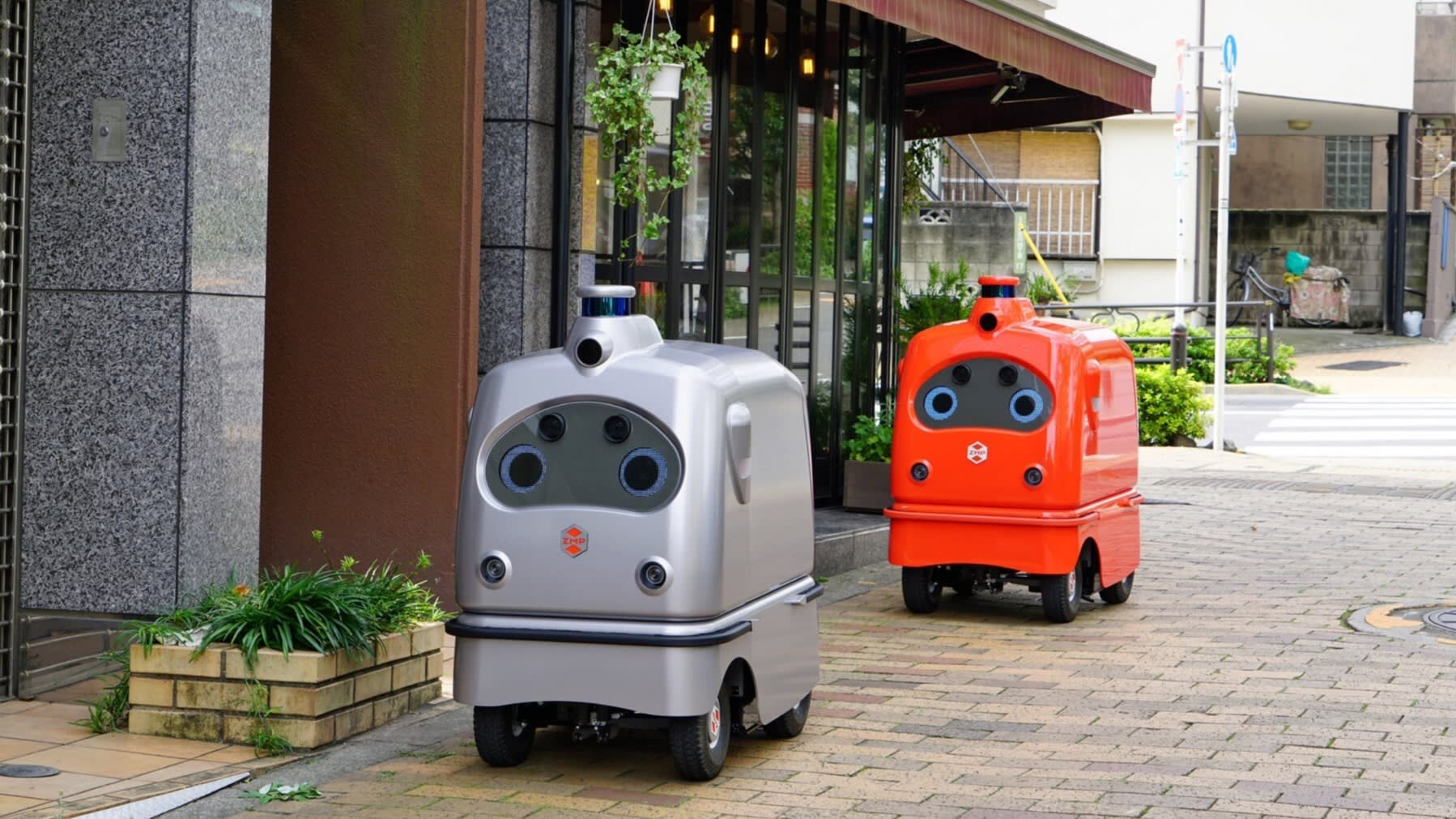
Robots delivering in Tokyo

Another measure to reduce the spread of Covid-19 infection, one of Japan's largest door-to-door delivery service companies, Yamato Holdings, and the government-owned courier firm Japan Post is testing delivery robots in Tokyo.

Hopefully robots will help contain the spread of the coronavirus — while alleviating the shortage of delivery drivers.

Read more...


Wednesday, June 24, 2020

The Distributed Data Model Wins Out in the UK for Tracking COVID19

The UK government will abandon its centralized COVID-19 contact-tracing smartphone app in favor of the distributed system proposed by Apple and Google more than two months ago. This decision follows that the app, once said to be a key part of the government's test-and-trace system, would not be ready until at least winter this year.

The idea is that a user runs one of these apps on their phone, and the software uses the Apple-Google-developed interface to communicate with copies of itself on other people's nearby devices over Bluetooth. When someone declares, via the app, that they may have likely or certainly caught the COVID-19 disease, all phones that have been in the vicinity of that person's mobile will find out, alerting their owners that they may have been exposed to the virus. Each country or region is expected to have its own app. No data goes to Apple or Google. The numbers of people coming in contact with those thought or confirmed to be infected may help experts monitor and analyze the actual spread of the virus.

In related news, Wikipedia founder Jimmy Wales has offered to roll out the German Corona-Warn-App in the UK in a short time at "zero cost to the taxpayers". "If the government can't pull themselves together, we can," via a tweet.


Read more at the BBC...

Monday, June 22, 2020

Pandemic Fallout: the printer industry

Analyst firm IDC reports that the printer industry has been suffering as a result of the Pandemic. The firm suggested predicted “page volume will fall 13.7percent in 2020, from 3.2 trillion pages in 2019 to 2.8 trillion pages in 2020.” The impact will be lasting: between 2015 and 2019 compound annual growth rate for pages printed was -1.2 percent. From 2020 to 2024 that will hit -4.8 percent.

"The dramatic and sudden transition to work from home in many of the world's largest economies had a direct impact on office device print volumes," said Ilona Stankeova, IDC Europe’s senior research director for Imaging Devices and Document Solutions. "More than six million pages were printed every minute globally in 2019. This amount covers the area of 54 football pitches. COVID-19 is expected to remove print volume that would fill the area of seven football fields every minute in 2020."
"Multifunction printers (MFPs) and increasing adoption of digitization efforts on a global scale are pushing for further maturation of the single-function printer (SFP) market. The trade war between China and the United States and the economic downturn in Western Europe are also pushing down shipment expectations. We still expect the market to be sustainable through the forecast period as SFPs still provide a lower-cost option for customers interested in printing." — Max Pepper, research analyst, IDC's Imaging, Printing, and Document Solutions
The IDC study covers worldwide printer market opportunities and analyzes issues, trends, and product advances. It contains 2013–2018 data showing actual unit shipments, value of shipments (end-user spending), and average selling value. 2019–2023 data is projected.


Tuesday, June 2, 2020

Contact Tracing App API from Apple and Google

Isolate potentially infected individuals, track and trace contacts -- these are steps responsible governments are taking to help stem the tide of the COVID19 pandemic in 2020.

Many governments around the world are developing contact tracing apps which meet the privacy standard advocated by Google and Apple, in order to ensure their apps will function only on Android and IOS devices. Google and Apple, the world’s leading makers of smartphone operating systems, recently released their contact tracing API (known as the “exposure notification” API) to help prevent the spread of COVID-19.

Some 22 countries (including Ireland) across 5 continents and a number of US states have already requested access to the software.  Notably missing from this list are France and the UK.

The API is not itself a contact tracing application -- instead, it enables governments and public health authorities to incorporate the software into their own apps that people install. The API will enable Bluetooth technology to run in the background of the phone, including on a locked phone. Without this ability for background use of Bluetooth technology, the utility of Apps would be greatly decreased.

Users would turn on and unlocks their phones, for the Apps to be able to use Bluetooth and log encounters. Apple and Google are limiting use of their API technology to government contact-tracing Apps.

Privacy activists have praised the protections ordered by Apple and Google’s API, as being in line with the principles of data protection by design and by default.

Google and Apple have explicitly barred use of the API in any apps that seek GPS loca on data from users, which means some apps being developed by public health authori es for contact tracing will not be able to use the API. In addition, the API can will only work on Apps using a decentralized system that uses randomly generated temporary keys created on a user’s device (but not linked to their specific identity or exact location).

The API allows public health officials to decide what constitutes exposure in terms of exposure time and distance. They can adjust transmission risk and other factors according to their own standards.


Read more...

Friday, May 29, 2020

Work from home? Work from anywhere

Perhaps you are responding to an order to work from home? Or as an employer, you are considering the safety of your team, and your community? Working from home has gotten a big boost during this situation. But what about... remote work from anywhere? As the article at Techcrunch relates,

“Work From Home” is terrible branding, precisely because it fails to communicate the fundamental freedom that comes with these new policies. It’s not about further imprisoning us in our homes — it’s about empowering us to think and work exactly where we are personally most productive.

Sure, some remote jobs might have location requirements:

  • Meetings: to be close in proximity to company for customer offices for in-person meetings
  • Taxes: employment tax law requirements pertaining to their state or country
  • Certifications: a job requires certifications that are location-specific
  • Travel: a position is travel-heavy so you need to be close to transport hubs
  • Time zone: addressing collaboration with peers a certain time zone


If you can dod the job one mile from the office, what is stopping you from one hundred miles, or the other side of the globe/ Working remotely increases flexibility and autonomy for staff. Technology such as the internet, video conferencing, collaboration platforms, and cloud services keep people connected. Attend meetings and be productive on projects from anywhere, anytime. You can also find more and better-qualified candidates, and incentivize to retain talent, and saving on overhead costs.
Read more here...

Friday, May 15, 2020

Internet Co-Founder on the Value of... the Internet During this Pandemic


One of the creators of the internet, Vint Cerf, suggests that privacy legislation might hinder the development of a vaccination for the COVID-19 coronavirus. He does highlight that the global network has more than proven its worth by facilitating social interactions and economic activity that would otherwise would be conducted face-to-face. With many places in lock-down, these interactions may not have been conducted at all.
Score one for the Interweb!

The novel SARS-COV-2 virus that leads to COVID-19 disease is teaching us a great many lessons about infrastructure writ large. We are discovering weaknesses in socio-economic safety nets, in our healthcare systems, public transportation system, our education systems and many others.

To the degree that working and living can be done in some remote way, the Internet has become an important component of COVID-19 response. It permits remote interaction with customers and even patients. It allows people to order goods and services online for delivery to doorsteps. It provides researchers with access to global sources of information and to computing power in unprecedented quantities. The openness, interoperability and distributed nature of the Internet has contributed to its utility. Its scalability in many dimensions has allowed it to expand to accommodate new demands. Remarkably, the capacity to support streaming video is now also supporting real-time videoconferencing as a substitute for in-person meetings.

The grey-beard of the internet age values privacy as much as anyone, but observers, "Variations of the European Union’s General Data Protection Regulation (GDPR) are propagating around the world with good intent although implementation has shown some unintended consequences, not least of which may be the ability to share health information that would assist in finding a vaccine against SARS-COV-2." Europe's GDPR does require researchers to develop the same data management plans as those of commercial entities -- sometimes a heavy lift. This article in the European Journal Of Human Genetics (March 2020) elucidates on how GDPR means secondary researchers can’t identify individuals and could therefore make it harder to translate research into action.

The Internet, World-Wide-Web, and mobile phones are a powerful combination for some tracking and tracing system designs. Vint Cerf doesn't describe the current remote education tool as being complete: "...the current crisis has shown that online education is powerful but needs further evolution."

“More generally, we must imagine other potential global catastrophes and put in place plans to mitigate,” he says as the piece winds up. “The time to agree on best practices for emergency response is before the emergency, not during.”

“We must not allow this pandemic or a future one to become our society’s Titanic.”


Read the full article here...

Wednesday, May 6, 2020

How to do Contact Tracing while Respecting Privacy -- and avoiding the Hunger Games?

With the pandemic continuing, the agreed-upon model for dealing with this (until and if a vaccine can be developed) is a combination of social distancing, stepped-up testing for exposure, and contact tracing.

Following the vectors for infection is a key way to get those infected to self-quarantine. Using smart phones as a tool has been shown by South Korea to be effective. But any system that uses our ubiquitous smartphone to track locations and contacts could bump up against privacy needs, and create surveillance problem. Of course, surveillance of infected persons could also save millions of lives — and put us back on tract to get out to work, and restart the economy. Thus is born a paradoxical challenge: to build a comprehensive tracking system without it becoming a tool of oppression.

South Korea has shown to be effective in the management of the viral outbreak and spread of the novel coronavirus disease COVID-19. One area is South Korea’s enormous virus testing program. Another is the country’s use of surveillance technology, notably CCTV and the tracking of bank card and mobile phone usage, to identify who to test. The central part of the South Korean strategy is simple: test as many people as possible. But if patients can’t be located, testing capacity doesn’t matter. This is where smart city infrastructure comes in, with the goal of working out where known patients have been and test anyone who might have come into contact with them. South Korea uses contactless payment transactions to plot a card user’s movements on a map. Smartphone data is also used, because phone locations are automatically recorded when devices connect to up to to three transceivers (for triangulation). Facila recognition with CCTV cameras also enable authorities to identify people who have been in contact with COVID-19 patients.

Does this sound like a technological panopticon? To many westerners, such tracking could be anathema to the philosophy of individual privacy. Apple and Google have mapped a possible solution, obfuscating smartphone data enough to obscure individuals, but proving enough data to enable vector mapping of infected persons.

Abuse by authorities of raw location data could reveal sensitive information about anyone — from political dissent to journalists' sources. The big tech companies are looking to enable contact tracing systems without mass surveillance. We will soon see apps that notify potentially exposed users without revealing location data to the government. In some cases, personal information and health privacy laws means keep an infected individual's test results private while still warning anyone who might have entered their physical zone of contact.

The best way to protect geolocation data from abuse, is not to collect it in the first place. Or so suggests Stanford computer scientist Cristina White, working on the https://www.covid-watch.org project. Covid-Watch uses Bluetooth as a kind of proximity detector. The app constantly pings out Bluetooth signals to nearby phones, looking for others that might be running the app within about two meters, or six and a half feet. If two phones spend 15 minutes in range of each other, the app considers them to have had a "contact event." They each generate a unique random number for that event, record the numbers, and transmit them to each other.

GPS location tracking will likely play a role in contact-tracing apps, too, with all of the privacy risks that come with sharing a map of users’ movements.

Read more here…

Thursday, April 30, 2020

Supply Chain Management Systems Are Taking a Beating During this Pandemic

From medical supply shortages to consumers hoarding toilet paper, the links in supply chains are under strain. Can we learn valuable lessons for the future?

For example, design of the medical supply chain in the United States has low stress resilience. In early stages of the pandemic, most hospitals are already experience a shortage of personal protective equipment, such as N95 masks. As COVID19 cases spread, so will scarcity.

Normally, most enterprise resource planning (ERP) solutions can reliably analyze things like inventory levels, historical purchasing trends, and discounts to recommend how much of a product to order. During the worldwide disruption caused by the COVID-19 pandemic, many programs a are making fluctuating recommendations, and adjustments to inputs are occurring more frequently. As this becomes more dynamic, the frequency of monitoring by supply chain managers is increasing. Human interventions into automated systems can have adverse impacts on algorithms.

Most retail companies rely on some type of model or algorithm to help predict customer demand, from a basic Excel spreadsheet or a refined, software engineer-built application. Normally, those models are fairly reliable and work well. But as with virtual all other systems, they are being impacted by the pandemic. On the news, we see how customers may be concerned about having enough access to essentials such as paper towels.

One reason for added stress is that a lot of trade is international -- for example, trade between the US and other countries, particularly China, has been under stress due to the virus. So distributors and retailers have had to find new sources for products.

Machine learning-based algorithms are the foundation of the next generation of ERP, particularly around logistics. We will see the most significant cost efficiencies around advanced resource scheduling. Neural net and A.I.-based methods are the foundation of a broad spectrum of next-generation logistics and supply chain technologies under the hood of the best ERP solutions. Significant gains are being made where machine learning can contribute to addressing complex constraint, cost, and delivery problems organizations face. Automated analysis can help provide significant insights into how supply chain performance can be improved, anticipating anomalies in logistics constraints, and matching "pull" performance before shortages occur.

Another example is using a decentralized supply chain for track-and-trace applications. This would improve performance and reduce costs. A study found that in a 30-node configuration when blockchain is used to share data in real-time across a supplier network, combined with better analytics insight, cost savings appeared to be more than $5 million a year.

Watch this video to learn more, or read this article.

Friday, April 24, 2020

This Crisis Will Be With Us for Awhile -- What Can We Do to Help, Now?

This pandemic will be with us for awhile. Although studies are showing that quarantine and isolation methods are indeed “flattening the curve” and that we should all continue to keep our physical distance, it is hard not to grow impatient: how long this is likely to last?

IN an interview on with the BBC, Mark Woolhouse, a professor of infectious disease epidemiology at the University of Edinburgh, United Kingdom, says, “Waiting for a vaccine should not be honored with the name ‘strategy;’ that is not a strategy.” Governments should not rely on the advent of vaccines to end the pandemic. Bottom line: a vaccine might be available in 12-18 months. The logistics of inoculating millions will be substantial, once such a solution is mass-produced.

A professor of vaccinology at the Jenner Institute at the University of Oxford in the U.K. and Head of the Department of Immunology at the University of Bern in Switzerland, Professor Martin Bachmann said, “The real question is, can you keep it down long enough to have a vaccine? Without a vaccine, we are maybe looking at something like a year. But this would mean that 60–70% of the population would have had exposure to the virus.”

So what should we do, as knowledge workers, for the foreseeable future? As management consultants, the team here at Bluedog recommends a few steps that can be undertaken now, to ease the burden. Start by enabling easy, yet secure, remote access for staff who can effectively work at home.

Many jobs can at least partly be done remotely. Staff who may contribute to a customer experience, for example, should be able to do so. Even back office staff can be part of a solution, even more so in times of crisis. We suggest investing in infrastructure and tools that your employees need to stay productive and in contact, even when they cannot come into the office.

From a human resources perspective, ensure the organization has relevant guidelines and procedures in place that help people to work remotely. This includes training on systems that people need to do their work via remote access. To minimize the disaster recovery challenges, run these systems in the cloud. An important aspect of this infrastructure is an appropriate set of productivity tools that facilitate people working collaboratively. There are a plethora of software suites available that allow this, starting with Microsoft’s Office365 along with Slack, Zoom, Google Hang Outs, and many more. Of course, with Workbench “Always on the Job!” an organization can manage teams and projects, in the cloud.

Automation can improve effectiveness and efficiency. For example, give sales representatives backup by building A.I.-like conversational technologies that take away some of the upfront workload. One way to achieve this is implementing a conversational A.I. that supports your business processes. Pre-screen inquiries with fast and efficient flows that get to the root question a customer contact has. Be sure to enable short implementation times to achieve value.

There are a number of techniques, tools, and technologies that can smooth over the radical changes we are all experiencing — remote work is just one aspect of the changing world, as we all work together to weather this crisis.

Tuesday, April 14, 2020

Agile Philosophies in Practice for Remote Workers


Have you made your move to your home office yet? Ensure you have a setup that works for you and your team. This may mean investing the time up front to evaluate options and put in place everything you need to be productive and comfortable. First, create a space where you are least likely to be distracted.

From an agile perspective, teams are most efficient when balancing time devoted to collaboration with time allocated to the concentrated efforts required for development and other knowledge work activities. When stationed remotely, workers have to be online — but also share their availability. Tools like Slack and Zoom allow you to communicate. Where possible, set availability status and mute notifications when you are embroiled in “flow.” Using status settings is important when teams are accessing flexible work hours.

Project managers, technical leads, and product owners should regularly enquire with questions about their teammates’ level of understanding around requirements, inhibitors to progress, and what might be needed to improve productivity. Some helpful tips include:
  • Employ digital whiteboard tools for sprint planning and design sessions
  • Schedule video web conferencing for stand-up meetings
  • Assign one person to screen-share during reviews
  • Craft simple surveys to capture feedback

Teams working remotely for extended durations may want to discuss documentation standards and see if more significant efforts would be helpful. Sometimes, documenting can replace in-person implementation discussions — the venerable wiki makes a great tool for this.
Leverage the philosophy of being agile, not just by following agile practices, but in recognizing how to embrace change, for the better.

Thursday, April 9, 2020

When Demand Increases, Innovation Follows - Non-Contact Deliveries in the time of Pandemic

Alphabet subsidiary Wing is looking to help out through this pandemic with the scaling up of use of drones. Wing reports its drone delivery service is increasing the number of vendors and new items for delivery as it experiences a "dramatic" increase in customers.

Last April, Wing became the U.S.’ first drone operator to be FAA-certified as an air carrier, and in October it rolled out a test delivery program in the rural town of Christiansburg, Virginia (USA). Deliveries have more than doubled in the area, Wing says. The company has partnered with FedEx and Walgreens, and has added a local bakery, Mockingbird Cafe.

"We're trying to support local businesses that aren't able to open their doors by allowing them to deliver their products directly to customers' homes," Wing said. It pointed to a local bakery in Christiansburg, Virginia, which is now selling 50% more pastries via Wing on one weekend than it usually sells in store.

Social distancing and the need to isolate ourselves has fueled massive demand for delivery. Restaurants are re-tooling to serve take-away in place of sit-down. Uber and Lift are shifting drivers away from carrying passengers (who are not traveling) to help delivery comestibles and even pharmacy orders. Gig workers quickly have emerged as frontline responders, often driving people to the hospital or delivering food to those who have been quarantined, such as the elderly, disabled, or ill.


The San Antonio-based company Xenex has been deploying UV disinfection robots to keep up with coronavirus-fueled demand. The company’s flagship product, the LightStrike Germ-Zapping Robot, is a four-wheeled unit with a long, lantern-like tower mounted on it. This "bot" automates the cleaning process, using pulsing xenon lamps that quickly knock out germs lingering in a room’s corners and surfaces.

Xenex’s robots are already in more than 500 hospitals around the world — including Italy, Spain, Japan and the United Kingdom — and that number is growing daily due to the coronavirus outbreak. Specialized cleaner robots, like those made by Xenex and others, are more useful than ever right now. They not only help hospitals reduce coronavirus transmission from surfaces, their work also frees up staff to spend more time focusing on tasks that require a human element — attending to sick patients, for instance.

There will be growing scenarios for curb-to-door robots. Such autonomous vehicles could roll up to a household for patient testing, garbage collection, and sanitizing services. One of the added benefits of such a tiered approach to delivery automation is that robots can also be tasked with safely delivering testing kits, then collecting test samples from quarantined populations. This is a logistical challenge for local, state, and federal agencies. Community and landlord-operated robots could also be tasked with collecting and disposing of garbage from quarantined households in a manner that would limit unnecessary exposure and contamination.

But such work still exposes human workers to the threat of contracting COVID-19, among other health risks. Here is an opportunity for coronavirus-immune alternatives like autonomous vehicles and drones to prove they can save the day.

Monday, April 6, 2020

With remote business and social distancing, now is the time to switch to e-signatures

Businesses are striving to continue to operate normally during the COVID-19 world-wide pandemic. With restrictions on physical meetings, with many businesses are now operating as much as possible remotely. This may raise the question: how to execute documents in these circumstances? Do you wonder whether it is possible to validly execute documents by electronic signature? The short answer is, electronic signatures can be validly used in many circumstances.

An electronic signature allows a person to electronically add a signature to an online contract. An electronic signature (or e-signature) is a digital version of the paper-based method of signing signatures, the person with the intent to sign simply electronically signs the document -- thus removing the necessity of handwritten signatures. It is often an image of a signature.


A digital signature is a different method of validating an online document. Encryption software is required. This involves electronic data, encrypted message and encryption protections. Whilst a digital signature can be grouped with the category of electronic signature, it uses algorithms to create a digital fingerprint or private key (or secret key) unique to your document.

Read more over at www.workbench.net...

Monday, March 23, 2020

Pandemic - This is Just What the Internet was Developed For

As more countries enforce social distancing (and even quarantine), the internet will stay online during the Coronavirus pandemic. It was designed for just this type of situation (well, nuclear war, but a catastrophe is a catastrophe). The internet got its start in the US more than 50 years ago as a government solution to problems likely in the Cold War -- Arpanet was designed to resist destruction of nodes. For years, scientists and researchers used it to communicate and share data with one another.

The work-from-home model is set to strain the internet’s underlying infrastructure, with a burden likely to be particularly felt in the home networks that people have set up, and internet service providers such as Comcast, Charter and Verizon who connect those home networks.

During the Cold War there was constant fear of nuclear attack from the Soviet Union.  A communications system for computers was envisioned, and universities took the lead. Today's Internet emerged from military technology. ARPANET, developed by the American military as a network of communication across the country on servers that were decentralized, as a way to safeguard against the possibility of a nuclear attack.

By decentralizing the network, if one server of computers went down, the others would still be able to function because they would be able to simply pick up the same information from another server. A communications system for computers was envisioned, and universities took the lead. Only a few computers were the first connected in the original ARPANET, located in the respective computer research labs of UCLA, Stanford, UC Santa Barbara, and the University of Utah. ARPANET protected the flow of information between military installations by creating a network of geographically separated computers that could exchange information via a newly developed protocol (rule for how computers interact) called NCP (Network Control Protocol).

Another area of concern: response to the Coronavirus exposes Internet inequality among U.S. students as schools close their doors, as millions of Americans lack web access. This digital divide causes problems for educators’ efforts to continue instruction during this health crisis.

Read more here....

Friday, March 20, 2020

When Drone Delivery Moves from Fad to Requirement


The concept of “social distancing,” in the face of the pandemic, is racing around the world. This signals a time for cities and governments to embrace drone delivery -- not just for speed and convenience, but to protect citizens' most vulnerable members.


Drones originally designed to spray pesticides for agricultural applications were adapted in China to spray disinfecting chemicals in some public spaces and on epidemic prevention vehicles traveling between impacted areas. (Coronavirus is mainly transmitted via respiratory droplets and can also spread by touching contaminated surfaces. Disinfectant spray helps reduce these transmission mechanisms.)

The drone delivery company JD worked with government stakeholders to dramatically increase service areas to bring supplies to quarantined and isolated areas. JD explains that the drones drop parcels at a fixed point, allowing customers to pick them up without human-to-human contact – which minimizes the risk for both the courier and the customer.

In Spain, drones were used to alert people to the need to shelter in place. Drones have also been used for surveillance of large groups of people. Soaring over crowds, these devices can pinpoint if anyone is in need of medical attention. Of course, this is another method that is allowing medical employees to scan at a distance. Some drones are even equipped with infrared thermometers to detect body temperatures. A high temperature can mean that the person has the coronavirus, yet this method is far from foolproof. 


Thursday, March 19, 2020

Why Social Distancing is a Must Right Now

The concept of interrupting the spread COVID19 is not radical. Travel bans enacted in the early outbreak could have short-stepped the process of dispersal of the contagion, but that time has, sadly, passed. Social distancing is the practice of purposefully reducing close contact between people. According to the CDC, social distancing means remaining out of “congregate settings” as much as possible. Everyone should avoid mass gatherings and maintain distance of about 6 feet from others when possible.

This chunk from the below-referenced article explains what happened in South Korea, triggering the wildfire effect:

Patient 31 - It’s not clear where Patient 31 became infected with the virus, but in the days before her diagnosis, she travelled to crowded spots in Daegu, as well as in the capital Seoul. On February 6 she was in a minor traffic accident in Daegu, and checked herself into an Oriental medicine hospital. While at that hospital, she attended services at the Daegu branch of the Shincheonji Church of Jesus, on February 9 and again on February 16.
It seems South Korea has stabilized its outbreak. Social distancing is crucial for preventing the spread of COVID-19 (coronavirus). COVID-19 can spread through coughing, sneezing and close contact. By minimizing the amount of close contact we have with others, we reduce our chances of catching the virus and spreading it to our loved ones and within our community.

Read more here...