Showing posts with label robots. Show all posts

Monday, April 12, 2021

Friendly Helper or BattleBot?

That lovable scamp from Boston Dynamics, the robotic dog Spo, was one of several robots tested by the French army during training sessions at a military school in the northwest of France. This is according to a French source.

It’s not clear what role Spot was playing (neither Shark Robotics nor the École de Saint-Cyr had replied to requests for comment at the time of writing), but Ouest-France suggests it was being used for reconnaissance. The 70lb Spot (31kg) is equipped with cameras and can be remote controlled, with its four legs allowing it to navigate terrain that would challenge wheeled or treaded robots. To date, it’s been used to remotely survey a number of environments, from construction sites to factories and underground mines.


Read more over at Engadget...

Monday, December 28, 2020

Goes Both Ways - Fast! Robotaxi purpose-built from the tarmac up...

 The Zoox Robotaxi Is a Bi-Directional autonomous vehicle, built specifically to be a robot car.  


We learn over at Yanko that the Amazon-owned Zoox...

... is a conventional cube-shaped with a unique bi-directional ride sans any steering wheel – having the capability to smoothly navigate tight spaces without much fuzz since it comes with a 4 wheel independent suspension system. The fact that it can move in any direction (independent turning wheels) and does not need to reverse (remember it is bi-directional) gives it an advantage on urban roads as it measures just 3.63 meters. 

The interior of the autonomous ride has charging ports and a small display is quite minimalistic with emphasis on passenger safety as there are next-generation airbags enveloping the passengers, providing five-star safety standards by Federal Motor Vehicle Safety Standards. 

To further enhance the safety of the riders, the vehicle is decked in six LIDAR pucks, multiple sensors, and cameras for a 270-degree field of view – covering the blind spots and having the ability to see objects 150 meters away en route for a safe ride. And it can achieve a top speed of 70 miles per hour, so you can rest assured of arriving at your destination on time.


Friday, November 6, 2020

Need to Get Around in Barcelona? Take a Robot Helo-Taxi

Enaire, Spain’s air navigation authority, has announced plans to begin demonstrating flying taxis in Barcelona and Santiago de Compostela in 2022.

“We need to move urban mobility into the third dimension: airspace. And we need to do it as efficiently and sustainably as we can,” the authority’s director general, Ángel Luis Arias, told an online conference this week.

 Ehang, a Chinese drone company, announced a new product at CES it's calling the Ehang 184, an all electric quadcopter scaled up from a drone so that it's large enough to carry a passenger. Ehang calls it an autonomous aerial vehicle, I prefer personal pilotless helicopter, but if you need to explain what it is to anyone, just say it's a driverless car for the sky.

Ehang says the 184, which is all electric, can carry a single passenger up to 10 miles or roughly 23 minutes of flight. The person in the cockpit doesn’t do any piloting, they just input their destination and enjoy the ride. The aircraft claims to be able to autonomously take off, fly a route, sense obstacles, and land. And if anything goes wrong, a human pilot is supposed to step in and take over the controls from a remote command station.Read 

more over at the Guardian...


Monday, August 31, 2020

Skynet is on its way - AI wins against human fighter pilot in DARPA dogfight

As we read over at some military news site,

DARPA's AlphaDogfight trials have officially come to a close with Heron Systems' incredible artificial intelligence pilot system defeating not only its industry competitors, but going on to secure 5 straight victories against a highly trained U.S. Air Force F-16 pilot, without the human pilot scoring a single hit.

This should not be confused with the Intelligent Flight Control System (IFCS), a next-generation flight control system designed to provide increased safety for the crew and passengers of aircraft as well as to optimize the aircraft performance under normal conditions. What is most valuable to 99% of the rest of the world -- outside of military applications -- is regarding passenger planes which fly autonomously. Software would have to be capable of handling emergency situations. At present, modern airliners do a good job of flying automatically until something unexpected happens. At that point, a pilot takes control and typically resolves the problem. Very rarely, though, a pilot must act to save the aircraft from catastrophe. 

There's more details about autonomous flight over at the I-triple-E, Application of AI Methods to Aircraft Guidance and Control.


Friday, August 21, 2020

Robots delivering in Tokyo

Another measure to reduce the spread of Covid-19 infection, one of Japan's largest door-to-door delivery service companies, Yamato Holdings, and the government-owned courier firm Japan Post is testing delivery robots in Tokyo.

Hopefully robots will help contain the spread of the coronavirus — while alleviating the shortage of delivery drivers.

Read more...


Monday, July 6, 2020

Robo-Taxis on the Streets of China... by the millions?

Chinese ride-hailing firm Didi Chuxing says it plans to operate more than a million self-driving vehicles by 2030. The robo-taxis are to be deployed in places where ride-hailing drivers are less available, according to Meng Xing, Didi’s chief operating officer, speaking at an online conference hosted by the Hong Kong-based South China Morning Post newspaper.

In 2016, US tech giant Apple invested $1bn in Didi in an unusually large and public investment. Apple is known to be interested in autonomous driving, having tested its own driverless vehicle on public roads in California in recent years.

The local government in Shanghai awarded Didi a permit to test its autonomous vehicles on public roads in Jiading District of Shanghai. The company says it plans to expand beyond that district starting in 2021, deploying “30 different models of L4 autonomous vehicles.” (L4 means Level 4 on the Society of Automotive Engineers scale of autonomy, which means the vehicle is able to operate without any human intervention within a defined geographic area.)

It wasn't that long ago that the company experimented with autonomous vehicles... read more here...

Friday, May 22, 2020

People Would Be More Accepting of Jonny-Cab Once They Try Them Out

Autonomous vehicles seem to have s public perception problem, according to new survey data collected by an industry group. Partners for Automated Vehicle Education surveyed 1,200 Americans earlier this year and found that 48 percent of Americans say they would "never get in a taxi or ride-share vehicle that was being driven autonomously." And slightly more Americans -- 20 percent versus 18 percent -- think autonomous vehicles will never be safe compared to those who say they'd put their names down on a waiting list to get a ride in an autonomous vehicle.

According to the survey data, getting a ride in a robotaxi might change some of those minds. Three in five said that they'd have more trust in autonomous vehicles if they had a better understanding of how those vehicles worked, and 58 percent said that firsthand experience -- i.e. going for a ride in a self-driving car -- would make them trust the technology more.
"Of the 1,200 survey respondents, 678 reported owning an [advanced driver assistance system] ADAS-equipped vehicle, and three-quarters of them said they 'will feel safer on the road when I know that most other vehicles have enhanced safety features,' with the same number saying they are eager to see what new safety features will be on their next vehicle," the report adds.

As describer at Slashdot, "Interestingly, drivers who own cars with forward collision warning (FCW), blind spot monitoring (BSM), lane departure warning (LDW), and automatic emergency braking (AEB) were also more likely to believe that safe autonomous vehicles would be available within the next 10 years compared to those without those features."

Monday, March 9, 2020

Robots Taking Jobs... Again

The robot future started years ago...

The adoption of industrial robots in France makes manufacturing businesses more productive and profitable but at the expense of jobs, according to a recent paper presented by the National Bureau of Economic Research, a private, non-profit, non-partisan research organization in America. 
In a paper titled "Competing with Robots: Firm-Level Evidence from France," economics professors Daron Acemoglu (MIT), Claire LeLarge (University of Paris Saclay), and Pascual Restrepo (Boston University) analyzed 55,390 French manufacturing firms to study the economic impact of robot adoption.

Thursday, October 10, 2019

Waymo Placing Fully Autonomous Vehicles on the Road

Waymo, the autonomous vehicle business under Alphabet (neé Google), sent an email to customers of its ride-hailing app in Phoenix, Arizona (USA) that their next trip might not have a human safety driver behind the wheel. Fully autonomous / robot cars are here!

Waymo opened a testing and operations center in Chandler, Ariz. in 2016. Since then, the company has ramped up its testing in Chandler and other Phoenix suburbs, launched an early rider program and slowly crept toward commercial deployment. The early rider program, which required vetted applicants to sign non-disclosure agreements to participate, launched in April 2017.

Read more about the service here...

Monday, April 15, 2019

Automation from Robots -- What Jobs are at Risk?

Twelve jobs have a 99 percent chance of being automated, according to a study by Oxford:

  • Data Entry Keyers
  • Library Technicians
  • New Accounts Clerks
  • Photographic Process Workers and Processing Machine Operators
  • Tax Preparers
  • Cargo and Freight Agents
  • Watch Repairers
  • Insurance Underwriters
  • Mathematical Technicians
  • Hand Sewers
  • Title Examiners, Abstractors, and Searchers
  • Telemarketers

Whenever a job has a pattern of repetitive activities, they are most likely to be replicated with machine learning algorithms. Most studies on automation stop short of saying that jobs will be completely eliminated by automation. Rather, workers will be redeployed.

Automation is coming to the most common jobs...


Graphic courtesy of titlemax.com

Tuesday, December 19, 2017

How to cope with the coming robot revolution? More education, universal basic income, and other strategies could help.

... Bill Gates recently suggested yet another ethical red flag: that robots themselves may have to be taxed to make up for lost levies on income from employees. Others have suggested as robots take on more tasks, there could be a growing case for universal basic income, where everyone receives state benefits.

In addition, recent studies have suggested artificial intelligence can develop sexist and racist tendencies. Researchers developed a word-embedding factual association test to determine how strongly words are associated with other words, and then compare the strength of those associations to facts in the real world. "For example, if a computer searching résumés for computer programmers associates “programmer” with men, mens’ résumés will pop to the top... Instead of debiasing embeddings, essentially throwing away information, she prefers adding an extra layer of human or computer judgment to decide how or whether to act on such biases. In the case of hiring programmers, you might decide to set gender quotas...."

Read more hear...

Wednesday, October 18, 2017

Apple Self-Drive Tech is Self-Contained, for Easy Deployment

Apple has a different approach -- creating a "thing" that can be grafted onto any vehicle to make it self-driving. Apple has been working on its own version of autonomous driving, codenamed Project Titan.

...the majority of the compute stack is likely contained within the roof unit itself, rather than stored elsewhere in the vehicle, and noted that it had six LiDAR units on the front and back. Such a self-contained unit would be pretty easy to pop onto any car really without requiring many additional modifications to the vehicle itself, which is probably why Apple has opted for such a design...

Read more...

Wednesday, October 11, 2017

Coming Soon to a Road Near You (if you live in California)

Next year, autonomous cars without human drivers will be allowed on California roads.


The California Department of Motor Vehicles will allow autonomous cars without steering wheels, foot pedals, mirrors, and human drivers behind the wheel to be tested on its roads starting next year. The department released its revised regulations today governing the safe deployment of autonomous vehicles on public roads.

Read more at the Verge

Thursday, September 7, 2017

Some Legislative Movement on Autonomous Vehicles

Congress might be making progress on self-driving cars: a bill put forth addresses manufacturers seeking to test robot cars have to demonstrate self-driving cars are at least as safe as existing vehicles. States could still set rules on registration, licensing, liability, insurance, and safety, but not performance standards.

The U.S. House ... unanimously approved a sweeping proposal to speed the deployment of self-driving cars without human controls by putting federal regulators in the driver’s seat and barring states from blocking autonomous vehicles.

The House measure, the first significant federal legislation aimed at speeding self-driving cars to market, would allow automakers to obtain exemptions to deploy up to 25,000 vehicles without meeting existing auto safety standards in the first year. The cap would rise over three years to 100,000 vehicles annually.

Read more...

Wednesday, August 16, 2017

Counter-Point: Robots Are Our Friends

Over at Wired, the author claims robots won't be taking our jobs. The case of SoftBank is referenced, to highlight current anxiety:

In a less anxious world, Pepper might come across as a cute technological novelty. But for many pundits and prognosticators, he’s a sign of something much more grave: the growing obsolescence of human workers. (Images of the doe-eyed Pepper have accompanied numerous articles with variations on the headline “robots are coming for your job.”)

... IMAGINE YOU’RE THE pilot of an old Cessna. You’re flying in bad weather, you can’t see the horizon, and a frantic, disoriented passenger is yelling that you’re headed straight for the ground. What do you do? No question: You trust your instruments—your altimeter, your compass, and your artificial horizon—to give you your actual bearings, and keep flying.

Now imagine you’re an economist back on the ground, and a panic­stricken software engineer is warning that his creations are about to plow everyone straight into a world without work. Just as surely, there are a couple of statistical instruments you know to consult right away to see if this prediction checks out. If automation were, in fact, transforming the US economy, two things would be true: Aggregate productivity would be rising sharply, and jobs would be harder to come by than in the past.... “Low productivity growth does slide in the face of the story we tell about amazing technological progress.”

Read more...

Saturday, August 5, 2017

UBI vs the Robots

With advances in artificial intelligence and robotics, many people's jobs will be up for grabs. And we are entirely unprepared as exponential advances, most notably in form of artificial intelligence, will eat away employment as humans' primary source of income. There may be an answer, in the form of a direct payment to each of us.

Universal basic income (UBI) is gaining momentum worldwide. Switzerland held a referendum on the introduction of a nationwide UBI (which it rejected) in 2016,1 Finland is currently testing it for some people, and India is considering replacing its welfare state with a UBI.2 The UBI is an unconditional cash payment that flows monthly from the state budget to everybody. It is transferred from public to private accounts throughout an entire lifetime, from birth to death, without any application or preconditions to be fulfilled by the beneficiary. It is supposed to cover the socio-cultural subsistence minimum. However, the determination of this minimum level of subsistence is a political and not an economic decision.

Some suggest work can be divided into a few categories: routine and nonroutine, cognitive and manual. Routine work is the same stuff day in and day out, while nonroutine work varies. Within these two varieties, is the work that requires mostly our brains (cognitive) and the work that requires mostly our bodies (manual). Routine work started to stagnate at the end of the last millennium because some of that work is easily handled by machines.

One approach to machine intelligence is with neural networks, a tool of artificial intelligence. This provides a means for machine learning that can leverage big data -- the data sets being created and standardized. Everything we do is generating data, and lots of data is exactly what machines need in order to learn to learn.When computer code is wrong, it is self-corrected, further improving error detection and expanding the capabilities of the particular a.i. Bigger data sets speed such learning, and lower the error rates. No, this isn't SkyNet: think of robots as technologies, such as machine learning algorithms running on purpose-built computer platforms, that have been trained to perform discrete tasks that currently require humans to perform.

As others have written, "During the Obama administration, a report of the president was published (no longer available at whitehouse.gov) that included a very dire prediction: "There is an 83% chance that workers who earn $20 an hour or less could have their jobs replaced by robots in the next five years. Those in the $40 an hour pay range face a 31% chance of having their jobs taken over by the machines." Clearly, the robots are coming."

Read more here... and here...

Sunday, February 12, 2017

Robot bees to polinate

From Slasdot,

A ... reader writes: An engineer in Japan has built a 1.6-inch "pollinator-bot" and successfully tested it in his lab. The drone's creator "has armed it with paintbrush hairs that are covered in a special gel sticky enough to pick pollen up, but not so sticky that it holds on to that pollen when it brushes up against something else," reports The Economist. They write that his experiments with the tiny drone "show that the drone can indeed carry pollen from flower to flower in the way an insect would -- though he has yet to confirm that seeds result from this pollination." While flown by a human pilot, next he hopes to equip the drones with their own flower-recognizing technology.

Read more here...

Tuesday, January 24, 2017

Wednesday, January 4, 2017

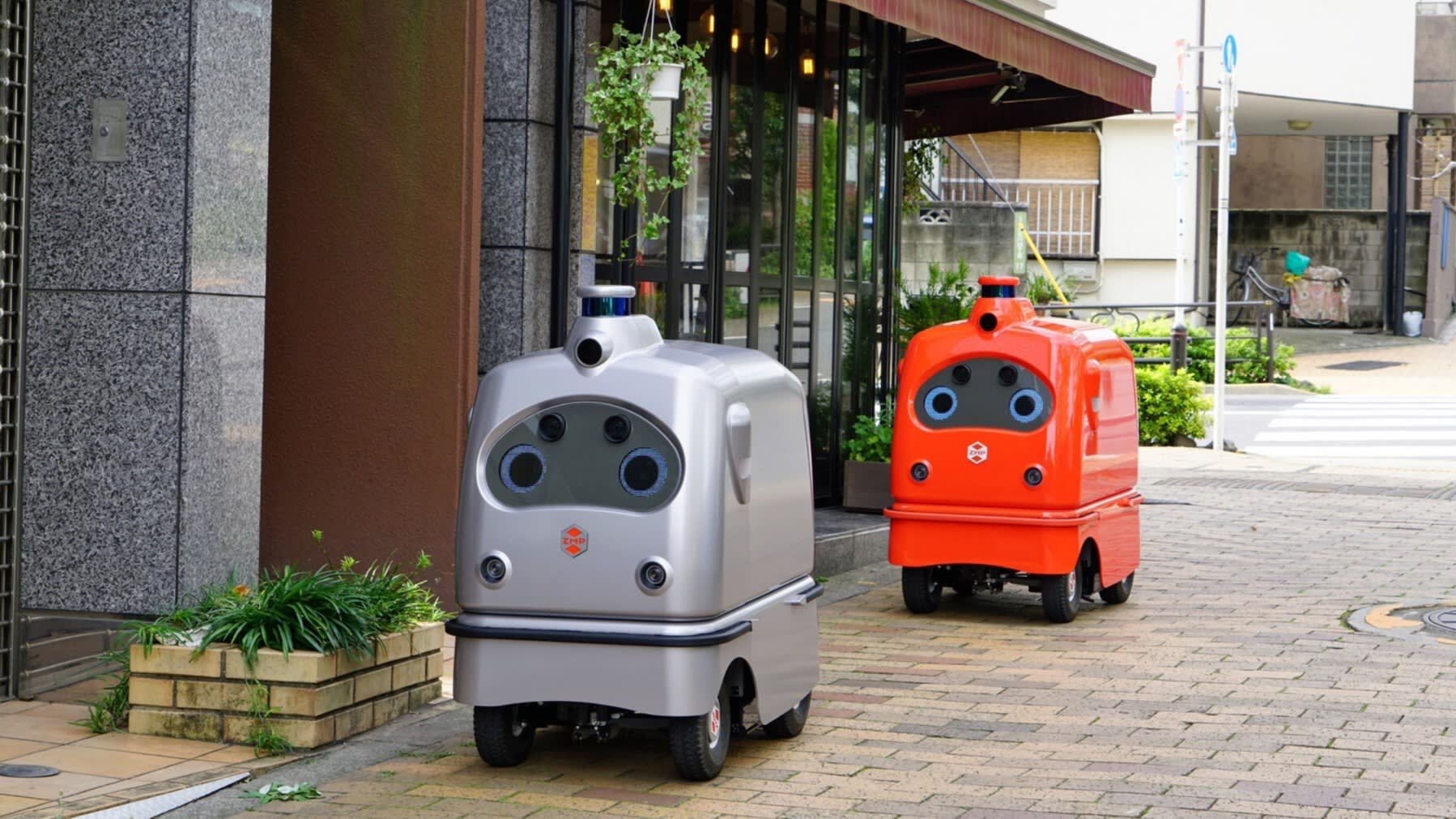
More Robots Coming.... To a Sidewalk Near You!

Not just aerial unmanned vehicles, but terrestrial, as well, are making their way to us...

Designers of futuristic cityscapes envision airborne drones dropping off your packages and driverless cars taking you to work. But the robotic-delivery invasion already has begun — in the form of machines that look like wheeled beer coolers scooting along the sidewalks.

...But Missy Cummings, director of the Humans and Autonomy Lab at Duke University, worries that new technologies such as drones and sidewalk robots are being developed without enough attention paid to how they will interact with people or to how people will react.

“It’s a huge problem in robotics, which are developed by engineers” who know little about human interaction, she said. “Look at Google Glass,” she said. The eyeglasses had tiny screens that allowed Internet access, and wearers could take photos and videos using voice commands.

Read more at the WaPo...

Sunday, December 18, 2016

More Robot Cars on the Road!

Announced by GM CEO Mary Barra and not long after Uber said it had started a trial self-driving taxi service in San Francisco, and Google said it had transformed its self-driving car project into a standalone business known as Waymo, we see the SAVE Act signed in by Michigan Gov. Rick Snyder. Developed in partnership with major automakers as well as tech firms, it clears the way for self-driving cars devoid of a steering wheel, pedals and a human in control to start testing on Michigan roads. It also lays the groundwork for setting up the criteria required for the eventual sale of self-driving cars to the public. We are seeing more autonomous cars on the road in the U.S.

Delphi and MobilEye to provide off-the-shelf self-driving system by 2019. Both companies have announced that they will bring a fully self-driving (SAE level 4) system on the market for use in a variety of cars in 2019.

In an interview session, Andrew Ng, the chief scientist of the Chinese search engine Baidu expects that a large number self-driving self-driving cars will be on the road within three years, and that mass-production will be in full swing by 2021.