Showing posts with label politics. Show all posts

Sunday, January 10, 2021

Seditionists Had Unfettered Access to Congressional IT Systems

After Wednesday's invasion by protesters, America's Capitol building is now grappling with "the process of securing the offices and digital systems after hundreds of people had unprecedented access to them," 

Rioters could have bugged congressional offices, exfiltrated data from unlocked computers, or installed malware on exposed devices. In the rush to evacuate the Capitol, some computers were left unlocked and remained accessible by the time rioters arrived. And at least some equipment was stolen; Senator Jeff Merkley of Oregon said in a video late Wednesday that intruders took one of his office's laptops off a conference table...

Former Senate sergeant at arms Frank Larkin, who retired as Senate sergeant at arms in 2018, adds that cybersecurity is the next priority after physical security. In spite of this, the mob Wednesday had ample opportunities to steal information or gain device access if they wanted to. And while the Senate and House each build off of their own shared IT framework, ultimately each of the 435 representatives and 100 senators runs their own office with their own systems. This is a boon to security in the sense that it creates segmentation and decentralization; getting access to Nancy Pelosi's emails doesn't help you access the communications of other representatives. But this also means that there aren't necessarily standardized authentication and monitoring schemes in place. Larkin emphasizes that there is a baseline of monitoring that IT staffers will be able to use to audit and assess whether there was suspicious activity on congressional devices. But he concedes that representatives and senators have varying levels of cybersecurity competence and hygiene.
It's also true that potentially exposed data at the Capitol on Wednesday would not have been classified, given that the mob had access only to unclassified networks. But congressional staffers are not subject to Freedom of Information Act obligations and are often much more candid in their communications than other government officials. Security and intelligence experts also emphasize that troves of unclassified information can still reveal sensitive or even classified information when combined... Kelvin Coleman, executive director of the National Cyber Security Alliance, who formerly worked in the Department of Homeland Security and National Security Council... adds, though, that for now the most important thing congressional IT staffers can do is account for which devices were stolen and begin a mass effort to reset passwords, add multifactor authentication to any accounts that don't already have it, wipe and reimage hard drives when practical, and comb monitoring logs for signs of access or exfiltration.

There is more information at Wired.

Wednesday, December 11, 2013

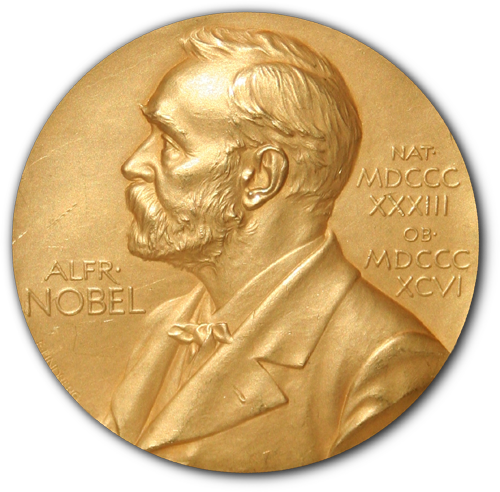
Time Magazine - More In Touch than the Nobel Peace Prize

Time Magazine has named Pope Francis as "Person of the Year" -- the third pope so honored as Time’s Person of the Year (Pope John Paul II made the cover in 1994 and Pope John XXIII made the cover in 1962). Lilian Cunningham at the WaPo writes,

By the judgement of Time’s editorial staff, the pope–elected earlier this year after a surprise resignation by predecessor Pope Benedict–was the most influential global newsmaker of the past 12 months. Earlier this week, Time narrowed the finalists down to ten, then five. Pope Francis ultimately won out over Edward Snowden, Syrian president Bashar Assad, Texas senator Ted Cruz and gay rights activist Edith Windsor.
The magazine first released such a cover in 1927 under the name “Man of the Year,” and conferred the title on Charles Lindbergh for his solo trans-Atlantic flight. Since then, the annual covers have featured global peacemakers, U.S. presidents, tech billionaires, dictators and more amorphous concepts, like “the protestor” and “the endangered earth.” The editors’ intention is not to praise the figures selected, but to acknowledge their influence in shaping the news and history of the outgoing year. (Hence why Adolph Hitler made the cover in 1938.)
The magazine's cover story sometimes seems to make more sense than the actions of the Nobel Peace Prize committee, who have turned this esteemed artifact into a political football. At The Economist, recognizing an institution (Organization for the Prohibition of Chemical Weapons -- a very noble cause, of course) and not a person reduces the heroic nature of past laureates, like Nelson Mandela (1993). This award seems consistent with the recent mediocre underwhelming recent winners (last year, the European Union or Barak Obama (2009), who had been president for just 12 days before nominations). The magazine's chart of past prizes calls out this pattern of suspect winners. An organization, not a person, won the fourth year. In an enlightened sign, the first woman won a year later. Yet non-Westerners weren’t recognized until the 1970s.


Why do such awards matter? Calling attention to those who do "good" (or, in the case of Time's criteria, just "do" important things, good or evil) in the world is important to the health of our combined human psyche. Dark days continue, economically and socially, around the world. When the person who invented an awesome tool -- used for both good and evil -- is humanistic enough to dedicate his earning to fostering peace, we should take the assignment of that prize with gravitas.

Sunday, February 26, 2012

Now is not the time to give up on the Internet


The opposite of liberal is, well, IMHO, the desire to inflict on others a reduction in 'adaptive potential'. I would suggest this means the ability to choose between a range of attractive opportunities. Barriers to social mobility, relentless mega-corporation dominance, endless growth of government, restrictions on human sexuality and freedom of expression all qualify as narrowing.

I find the Internet has proven to be a means to facilitate growth in adaptive potential. Opening markets globally for large and small businesses. Amplifying peoples' voices. Reducing cost of public service delivery.

Supply chain and e-commerce improvements are contributing to overall economic growth. With the size of the global market getting bigger, the rewards for uncovering lucrative new ideas grow -- a multiplier effect. Moreover, as new ideas flow across national boundaries faster and more easily, humans all benefit.

Public officials, potential laws, and other public policy issues are scrutinized and influenced by Internet-organized movements.

Public spending should focus on broad-based, pro-growth, pro-poor services like primary education, primary health care and infrastructure investment.

Saturday, January 28, 2012

Post-conflict, the need for a reconciliation process remains

After the fighting ends, as we have seen in South Africa, and lately, Liberia, a reconciliation needs to take place. In Ireland, this was glossed over in the peace accords. But many recognize the need to salve what has come before, and move on.

If the ending of violence is a prerequisite for political reconciliation in Northern Ireland, the project remains unfinished. The Northern Irish settlement is essentially a consociational scheme; it is not designed to facilitate the fostering of a common perception of citizenship among Northern Ireland's inhabitants. The Democratic Unionist Party and Sinn Féin have agreed to shelve their differences about nationhood for the foreseeable future, but this means that their day-to-day cooperation will always be qualified by the absence of a shared patriotism. When another country's courts (the US, in this case) stirs up the past, there is no method to manage old wounds.

http://www.chicagotribune.com/news/sns-rt-us-usa-ireland-crimetre80o01p-20120124,0,7156048.story

Monday, January 23, 2012

Freedom from being tracked by the US gov't

The Supreme Court ruled unanimously Monday the authorities need a probable-cause warrant from a judge to affix a GPS device to a vehicle and monitor its every move. http://www.wired.com/threatlevel/2012/01/scotus-gps-ruling/


Scalia: “Whatever new methods of investigation may be devised, our task, at a minimum, is to decide whether the action in question would have constituted a ‘search’ within the original meaning of the Fourth Amendment. Where, as here, the government obtains information by physically intruding on a constitutionally protected area, such a search has undoubtedly occurred.”

One's automobile has special status concerning illegal search, etc. Police may order the driver and any passengers out of the vehicle. If they have reasonable suspicion to detain you, police may frisk the outside of your clothing to check for weapons, but only if they have a basis for suspecting you're armed. If police detain and frisk you, you have the right to clearly state your refusal to consent to the search. They can only search your vehicle if they suspect something, see something plainly in view, or you're being arrested anyway. BTW, I'm not a lawyer, I only play one on... the internet??

More from USAToday on this important decision...

Thursday, January 19, 2012

Trying to be libertarian, but mostly just being reasonable...

Noam Chomsky on Ron Paul: Ron Paul's a nice guy. If I had to have dinner with one of the Republican candidates, I'd prefer to have it with him -- but, his policies are off the wall.

Kutztown University Nov. 21, 2011

Wednesday, January 18, 2012

Let's wash our hands of SOPA


Politicians don't have enough to do, what with massive unemployment, environmental disaster, etc. Instead, they are focused on chipping away our rights (yes, free speech is a right). SOPA is one such effort, but some of the top sites on Internet -- including Wikipedia, Google, and Craigslist -- have joined the protest against the proposed law. These and other sites have black banners, while others such as Reddit have gone completely dark

If you're not quite sure what internet censorship is about, check out Gizmodo's answer to the question: What is SOPA? Also, watch Clay Shirky's Ted Talk: Defend Our Freedom to Share (or why SOPA is a bad idea).

Don't let the man (or women) take away our freedoms... in this country, supposedly the land of the free.

Wednesday, January 4, 2012

SOPA - killing freedom, not piracy

The Stop Online Piracy Act is an item of legislation that the entertainment industry wants most desperately, but virtually anyone else with an interest in the internet (isn't that all of us?) opposes.

While the bill has bipartisan support, it also has countless critics, there's significant public opposition. Roll Call warned that SOPA could be used to stifle political free speech and shut down entire websites "without any involvement by a court." The current bill would dismantle the "safe harbor" protections of the DMCA, protections that allow sites like Facebook and YouTube to operate without taking responsibility for infringing actions of users, who, after all, are responsible for what they upload.

People feel so strongly about maintaining internet freedom, many suffer a backlash for supporting SOPA. For example, GoDaddy reversed its position on SOPA after the company reportedly suffered from the exodus of tens of thousands of customers.

David Carr's piece over at the NYT gives a good perspective on this.

Monday, October 31, 2011

Anti-biking?


I'm disappointed the Congress even would consider bicycling (and pedestrians) as an urban problem. How can alternatives to congestion, pollution, and accident-rate-increasing road traffic be vilified?

http://www.alternet.org/environment/152898/what_do_republicans_have_against_biking_and_walking/