Showing posts with label science. Show all posts

Tuesday, March 23, 2021

Drones As Research Tools

 We know unmanned aerial vehicles (UAV) -- or "drones" -- are great for agricultural surveys or other business applications. But their use in science cannot be undervalued. Work between NASA's Jet Propulsion Laboratory (JPL) and Qualcomm Technologies Inc., resulted in the Ingenuity, a helicopter drone that landed on Mars on February 18th, 2021 and is the first autonomous aerial platform operated outside Earth's atmosphere. 

This site describes the UAV:

Ingenuity relies on counter-rotating coaxial rotors about 4 feet in diameter that spin very fast to work in the thin atmosphere. The main computer behind it all is a Qualcomm Snapdragon 801 processor that includes a quad-core CPU, a GPU and a 55 megapixel downward facing image signal processor. The computer controls a visual navigation algorithm using Mars surface geographical features tracked with the camera. Surprisingly, the Snapdragon processor aboard Ingenuity is not ruggedized by itself, although JPL has encased the processor to protect against Mar’s low pressure and cold, said Dev Singh, general manager of robotics and drones for Qualcomm in an interview with Fierce Electronics.
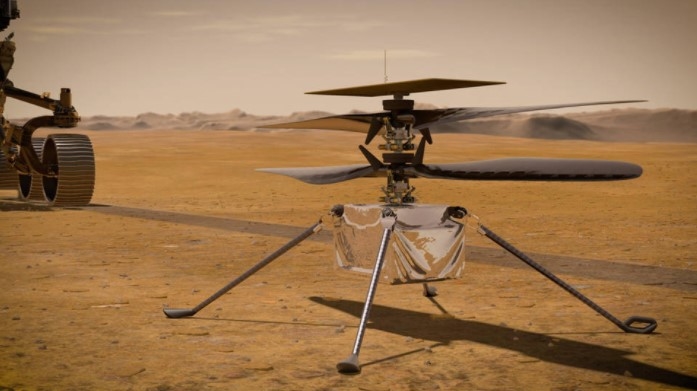
In fact, the chip is not much different from other Snapdragon chips used in billions of smartphones, Singh said. Qualcomm first began working with NASA JPL in 2016 on the Ingenuity project.  Qualcomm's flight platform is a multifunctional chip used for drones and robots. 

Back on Earth, drones can be useful in high threat environments. "Due to the difficult accessibility and the high risk of collapse or explosion, the imaging of active volcanoes has so far been a great challenge in volcanology. Researchers around Edgar Zorn from the German Research Centre for Geosciences GFZ in Potsdam are now presenting the results of a series of repeated survey flights with optical and thermal imaging cameras at the Santa Maria volcano in Guatemala. Drones were used to observe the lava dome, a viscous plug of lava. The researchers were able to show that the lava dome shows movements on two different time scales: slow expansion and growth of the dome and fast extrusion of viscous lava," as published in the journal Scientific Reports.


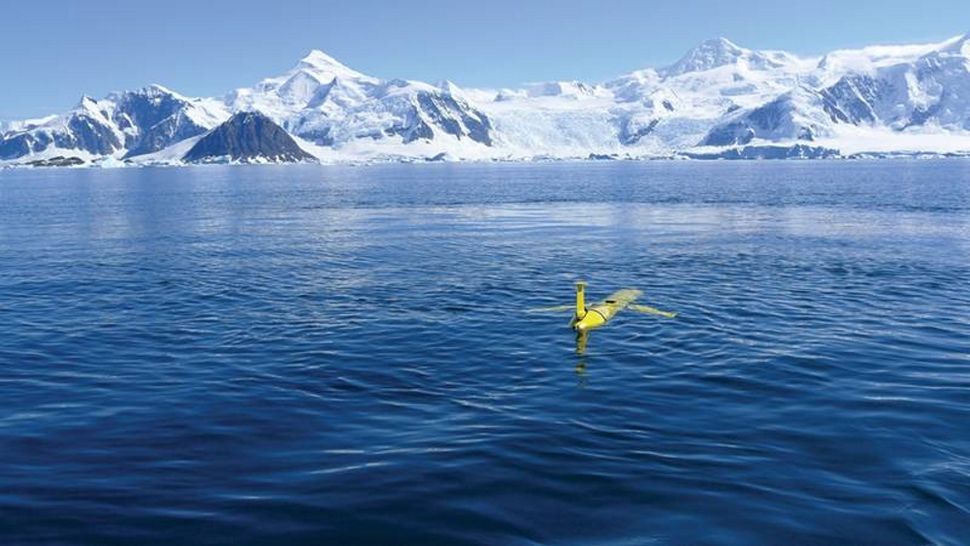
And specialized underwater drones can be used for ocean research -- the same artificial intelligence that enables aerial drones, such as greater levels of autonomy, can be re-purposed for underwater missions. Autonomy — the ability to take action without direct control -- means drones are more robot and less remote-controlled device. 


Friday, February 26, 2021

Tracking COVID19 reinfection - with help from Elon Musk

On 15 February, 2021, the paper Discrete SARS-CoV-2 antibody titers track with functional humoral stability was accepted for publication by the prestigious journal Nature — interesting not only for being a large-cohort study on COVID-19 reinfection, but for the presence of one of its coauthors: Elon Reeve Musk.  Elon is listed as one of the co-authors on a paper concerning the tracking of antibodies in people. Antibodies serve as biomarkers of infection. If sustained they can confer long-term immunity. 

For most clinically approved vaccines, binding antibody titers only serve as a surrogate of protection. Instead, the ability of vaccine induced antibodies to neutralize or mediate impact is the main way they confer protection. While evidence points to persistent antibody responses among SARS-CoV-2 infected individuals, cases of re-infection have begun to emerge, calling the protective nature of humoral immunity against this highly infectious pathogen into question. Using community-based surveillance, the study aimed to define the relationship between titers and functional antibody activity to SARS-CoV-2 over time.

Apparently, Musk — concerned in April 2020 with maintaining the schedule for the SpaceX crewed launch in May and wanting to make sure that an outbreak wouldn't set back plans — contacted academic researchers and worked with them to set up an antibody testing research programme. Over 4,000 SpaceX employees volunteered and were provided with periodic free testing at work to look for infection and monitor previously-infected people for reinfection. The programme gave SpaceX an advance heads up about upcoming threats, such as the growing wave in Texas in June, and continues to this day, with a new focus on mutant COVID strains.

The primary results of the study were that past infection provides a strong, although not perfect, barrier to reinfection. The level of antibodies strongly indicate the level of risk of reinfection, which promotes a positive outlook for vaccines, as they tend to result in much higher antibody levels than infection.

Tuesday, April 16, 2019

End of The Jasons? Who Will Lead if this brain trust is disbanded?

The Department of Defense says is ending a decades-long, open-ended agreement with a legacy science advisory board, a move that has set off alarm bells for some analysts. But the department has not ruled out relying on that office for more information in the future.

The Jasons — an important advisory committee that assessed many difficult issues. Named for Jason of the Argonauts, luminaries on this panel answered (in secret) pressing questions the government had, such as:  Are there UFO? No. Should we nuke Vietnam? Also, no. What is Quantum Computing? Using the spin of quarks like bits. All answered in the 1960s!

As a Federally Funded Research Bureau (FFRB), MITRE doesn’t implement ideas, only the non-profit only consults. After WWII, the government decided it would not be caught with its pants down again (having been severely understaffed after the Depression, at the start of the war). MITRE and other FFRBs are funded as a percent of the total budget — MITRE isn’t taking work from contractors, it is providing neutral oversight and guidance. 

Read more about the Jason at 


Friday, March 29, 2019

What You Experience Could Impact Your Offspring


Based on this article in Nature: In 1864, nearing the end of the US Civil War, conditions in the Confederate prisoner of war camps were at their worst, with overcrowding in some camps that Union Army soldier (prisoner) death rates soared. For survivors, the harrowing experiences marked many of them for life -- returning to society with impaired health, worse job prospects, and shorter life expectancy. Such hardships also had an effect on the prisoners’ children and grandchildren, which appeared to be passed down the male line of families. While their sons and grandsons had not suffered the hardships of the PoW camps -- they suffered higher rates of mortality than the wider population. It appeared the PoWs had passed on some element of their trauma to their children.

Your experiences during your lifetime – particularly traumatic ones – would have a very real impact on your family for generations to come. There are a growing number of studies that support the idea that the effects of trauma can reverberate down the generations through epigenetics. For the PoWs in the Confederate camps, these epigenetic changes were a result of the extreme overcrowding, poor sanitation and malnutrition. The men had to survive on small rations of corn, and many died from diarrhoea and scurvy. “There is this period of intense starvation,” says study author Dora Costa, an economist at the University of California, Los Angeles. 
For a long while we have understood that child abuse, for example, is very often passed from one generation to another. And as to how far back some of these cycles of abuse go is hard to determine. There are many cases of a person who was abused themselves -- and they also know what it feels like -- yet, they repeat to another what was done to them. This suggests in some cases a human being appears to have no control over their actions.

Read more here...

Thursday, August 16, 2018

Over at Slashdot, we read:

A forum thread on QRZ.com indicates that the shortwave time broadcasts by the National Institute of Standards and Technology (NIST) from stations WWV (Colorado) and WWVH (Hawaii) may be slashed in budget year 2019. [One of the proposed reductions includes "$6.3 million supporting fundamental measurement dissemination, including the shutdown of NIST radio stations in Colorado and Hawaii."]

While the WWV broadcasts may seem like an anachronism to some Slashdotters, they remain a crucial component in many unexpected services, from over-the-air broadcasters and traffic signals, to medical devices, wall clocks, and wrist watches. The signals serve as standard beacons for radio propagation, and as a frequency reference for alignment of a broad range of communications equipment. It's easy to imagine that not even the NIST knows every service and device that could be impacted by this decision.

Sunday, July 2, 2017

Aquaman

In the movie The Abyss, there are scenes in which oxygenated liquid has a mouse dropped in it. The mouse almost drowns, but then adapts to the liquid it has inside of it and breathes using that water. Is such breathing via some specialized water possible? The scene with the rat breathing an oxygenated perfluorocarbon fluid was real. The rat was breathing a liquid, and some countries actually censored that scene due to perceived animal cruelty. This is real technology -- perfluorocarbons are routinely used today in liquid breathing ventilators for premature newborns with severely underdeveloped lungs.


Read more at...

Monday, May 15, 2017

Interact with Each Other, not Your Phone

Using a Faraday Cage, a pub owner has figured out how to bring back the art of conversation.

Read more...

Monday, December 5, 2016

From SlashDot,

A single underground deposit of ice on Mars contains about as much water as there is in Michigan's Lake Superior, according to new research from NASA. The deposit rests in the mid-northern latitudes of the Red Planet, specifically in the Utopia Planitia region. Discovered by the Shallow Subsurface Radar (SHARD) instrument on the Mars Reconnaissance Orbiter (MRO), the deposit is "more extensive in area than the state of New Mexico," according to a NASA press release. It ranges in thickness from about 260 feet to about 560 feet, and has a composition that's 50 to 85 percent water ice, with what appears to be dust or larger rocky particles mixed in as well. None of the ice is exposed to the surface. At various points the dirt covering it is in between 3 and 33 feet thick.

Read more...

Thursday, December 1, 2016

Frozen Embryos Could Lead to HyperSleep?

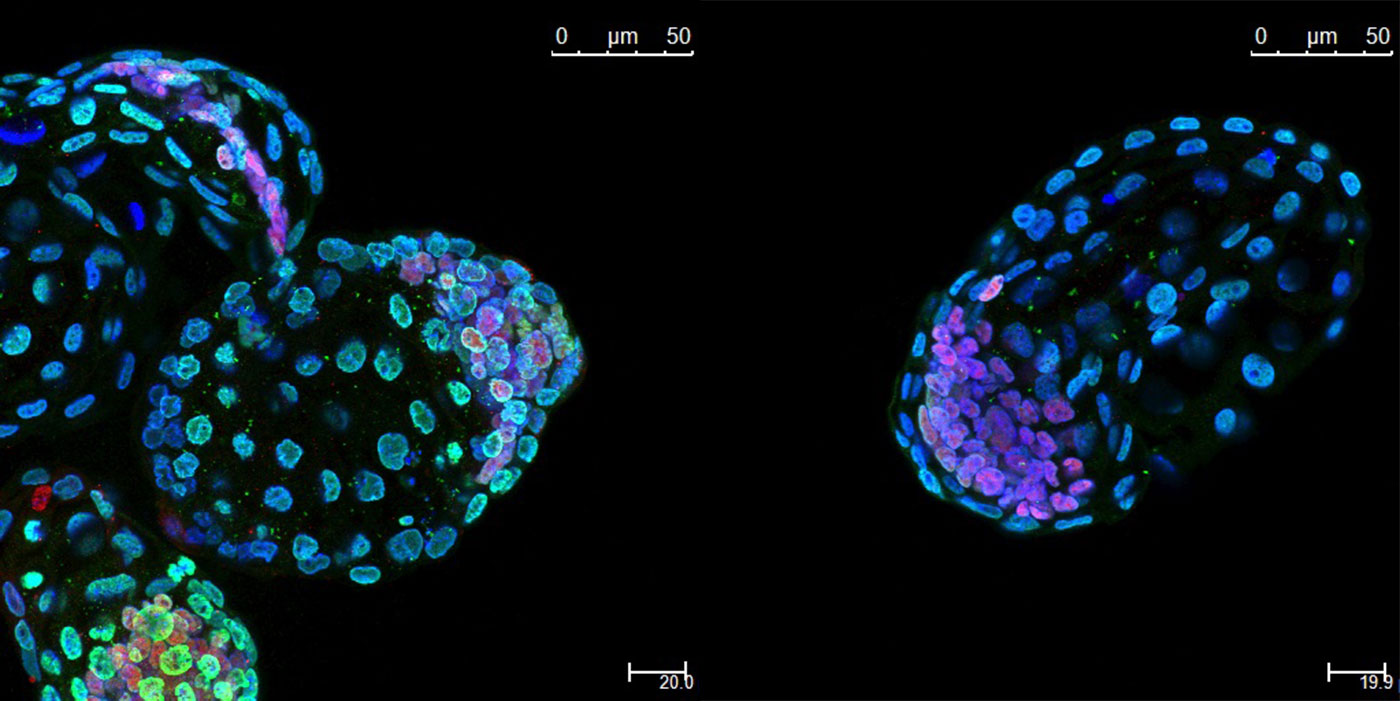
Read about a team of scientists from the University of California, San Francisco, who managed to completely pause their development, putting the blastocysts (very early embryos) in suspended animation for a month. What's more, they found that the process can put stem cells derived from the blastocysts in suspended animation as well, [and] the researchers were able to prove that the embryos can develop normally even after a pause in their growth. Team member Ramalho-Santos from the Eli and Edythe Broad Center of Regeneration Medicine and Stem Cell Research said... "To put it in perspective, mouse pregnancies only last about 20 days, so the 30-day-old 'paused' embryos we were seeing would have been pups approaching weaning already if they'd been allowed to develop normally." The implications for long-distance space travel are intriguing.

Sunday, September 11, 2016

Chatty Dolphins

We read over at Slashdot,

For the first time Russian researchers have recorded a conversation between two dolphins -- Yasha and Yana -- who were talking to each other in a pool. An anonymous Slashdot reader quotes The Telegraph: Scientists developed an underwater microphone which could distinguish the animals' different "voices" [and] have now shown that dolphins alter the volume and frequency of pulsed clicks to form individual "words" which they string together into sentences in much the same way that humans speak.

"This language exhibits all the design features present in the human spoken language, this indicates a high level of intelligence and consciousness in dolphins, and their language can be ostensibly considered a highly developed spoken language, akin to the human language... Humans must take the first step to establish relationships with the first intelligent inhabitants of the planet Earth by creating devices capable of overcoming the barriers that stand in the way of using languages and in the way of communications between dolphins and people."

The dolphins listened to an entire "sentence" before replying, according to the article, which points out that dolphin brains are larger and more complex than the brains of humans.

Saturday, August 6, 2016

Interact with Each Other, not Your Phone

Using a Faraday Cage, a pub owner has figured out how to bring back the art of conversation.

Read more...

Wednesday, August 3, 2016

Commercial Space Travel to the Moon Approved

With a recently granted approval, the U.S. Federal Aviation Administration has given the go-ahead for the Moon Express mission to ferry a small lander to Luna in 2017. This sets a framework for other commercial expeditions to the moon, asteroids and Mars. According to the company, the spacecraft will carry a number of science experiments and commercial cargo on its one-way trip to the lunar surface, including cremated human remains, and will beam back pictures and video to Terra. This suggests the MX-1 mission will comply with the Outer Space Treaty.

Read more here...

Tuesday, June 14, 2016

Want to See things More Clearly? Use low-cost, high res Micro Len technology!

Flat lens promises a revolution in optics, and they are unlike the curved disks of glass found everywhere from cameras to binoculars. Instead, it is made of a thin layer of transparent quartz coated in millions of tiny pillars, each just tens of nanometres across and hundreds high. Singly, each pillar interacts strongly with light. Their combined effect is to slice up a light beam and remould it as the rays pass through the array... The team is already working on beating the performance of its first prototypes.

Read more over at this source... on BBC.

Friday, February 5, 2016

Coffee + Science = Yum

As one of the most popular beverages on this planet, coffee has a mostly unique place (and tea). And we know there's benefits -- such as this study from Korean researchers, who found that study participants who consumed 3 to 5 cups of coffee a day were less likely to show the beginning signs of heart disease.

PS writes,

Coffee doesn't just keep you awake, it may literally make you smarter as well.
The active ingredient in coffee is caffeine, which is a stimulant and the most commonly consumed psychoactive substance in the world.
Caffeine's primary mechanism in the brain is blocking the effects of an inhibitory neurotransmitter called Adenosine.
By blocking the inhibitory effects of Adenosine, caffeine actually increases neuronal firing in the brain and the release of other neurotransmitters like dopamine and norepinephrine Many controlled trials have examined the effects of caffeine on the brain, demonstrating that caffeine can improve mood, reaction time, memory, vigilance and general cognitive function

Bottom Line: Caffeine potently blocks an inhibitory neurotransmitter in the brain, leading to a net stimulant effect. Controlled trials show that caffeine improves both mood and brain function.

At Ars Technica, they write, "There are more than 1,000 chemicals in a typical cup of coffee. While scientists haven’t yet teased out each one individually for closer examination, they have nailed down the big players in terms of taste and potential health benefits..."


Read more here...

Tuesday, January 12, 2016

Possible Discovery of Gravitational Waves

From the Guardian:
If gravitational waves have been discovered, astronomers could use them to observe the cosmos in a way that has been impossible to date. “We would have a new window on the universe,” Krauss said. “Gravitational waves are generated in the most exotic, strange locations in nature, such as at the edge of black holes at the beginning of time. We are pretty certain they exist, but we’ve not been able to use them to probe the universe.”

Einstein predicted that the waves would be produced in extremely violent events, such as collisions between two black holes. As gravitational waves spread out, they compress and stretch spacetime. The ripples could potentially be picked up by laser beams that measure minute changes in the lengths of two 4km-long pipes at the Ligo facilities.

Saturday, December 26, 2015

Reach out and touch someone...

Haptic feedback can be useful with touch displays. How about holographic haptic feedback? Engineering researchers in Japan have come up with just such a scheme!

Sunday, December 13, 2015

Google's Quantum Computer


From over at Futurism:

Google claims that a controversial computer it purchased in 2013 is capable of using quantum physics to solve math much faster than regular computers. They note that the type of math it solves is crucial to the development of artificial intelligence (AI).

Companies such as Microsoft, IBM, and Google (as well as several governments) have been trying to develop quantum computers which use quantum mechanics to handle data. It is believed that quantum computers can make AI computers much more powerful. NASA has high hopes for the technology, as well. “It is a truly disruptive technology that could change how we do everything,” said Deepak Biswas, director of exploration technology at NASA’s Ames Research Center in Mountain View, California.

Thursday, December 4, 2014

Followup: iOS 8 + iPhone 6 = Portable Weather Station

With the iPhone six array of sensors, it is no wonder scientists are jumping on board. For example, OpenSignal is putting the barometer to use as old-fashioned weather sensors. Their app will download to any iPhone with iOS 8, with Apple’s two newest handsets you can take pressure readings, which Open Signal will plop into its crowdsourced weather map. Those readings combined with the barometric pressure measurements of Android users can then be used to give an ever-updating look at the pressure changes in your area. The data is also being sent off to climatologists, such as the University of Washington’s Cliff Mass, who are exploring ways of incorporating crowdsourced smartphone readings into future meteorology models.

Even add-on components are becoming available. Soon crowd-sourced real-time weather data will supplement satellite information to give us a better picture of our atmosphere. So you can do more than make satellite calls.

Interested in this technology? Read more here...

And, of course, sign up now for US national weather alerts...

Wednesday, September 10, 2014

Apple's iPhone Barometer - clear sailing for weather apps?

Many weather enthusiasts are seeing sunny days -- the new iPhone 6 carries a barometer, which measures atmospheric pressure. The sensor is mostly intended to provide elevation data to fitness and other apps (GPS satellites do a poor job of triangulating elevation, with an error rate of upwards of 60 feet +\-).

While barometric pressure readings can be subject to the vagaries of local conditions, accuracy may be an issue for weather-gathering apps. Combined with geo-located map data, however, you will have accurate on-point readings. Only flight requires accurate elevation readings that GPS can't give -- why you calibrate your baramoter at the apron of the departure runway, which has MSL marked on the chart. Using statistical sampling could overcome some data accumulation problems, as well.

Anytime scientists can gather more data, we all benefit. Look at Google's traffic display on their maps -- crowdsourcing works.

Tuesday, June 17, 2014

Want a bigger return-on-investment? Try science, not war...

At Forbes, an excellent article on government outlays -- the choices our lawmakers exercise have a profound impact on us. And our children.

We’re in the midst of a remarkable stream of scientific and medical advances, spurred by dramatic advances in biotechnology, computing, and miniaturization. Our knowledge of biology has led to amazing leaps in our understanding of aging, immune responses, inherited diseases, and brain function, to name but a few. And yet we’re cutting science funding, year after year...

We've given up on the Super Conducting Super Collider, and the Tokamak reactor is limping along. Physics (expressed as math) is the study of the mechanical universe -- the basic science that underlies all the natural sciences. Uncovering basic rules of the behavior of matter and energy on every scale like quantum phenomena and the theory of the Big Bang, literally transform transformed our view of the natural world. Inventions like the transistor and the laser have ignited modern technology. Physics consists of many sub-fields, including particle and nuclear physics, atomic and molecular spectroscopy, optics, solid state physics, biological and medical physics, computational physics, acoustics, astrophysics and cosmology. We need to know more, to survive in this great universe.