Showing posts with label psychology. Show all posts

Tuesday, December 7, 2021

Choose a Job to Make Yourself Content

We work a lot. Too much, probably. One often muses, when will the post-scarcity world come into being? In the mean time, people should pursue a work life that is rewarding. But wow? 

One approach to to purse "earned success," which gives someone a sense of accomplishment (see Seligman, whose studies show this strongly predict happiness at work). Combined with professional efficacy -- when you are effective in your job, you are more committed to your occupation, a measure of job satisfaction -- we can aim to more likely enjoy the fruits of our labors, beyond a paycheck. Employers who give clear guidance and feedback, reward merit, and encourage staff to develop new skills are better choices if someone wants to boost those feelings. Look for a boss who acts that way -- and if the reader is in a position of authority, be that kind of boss.

Happiness may not only be a consequence of success, but also a cause. Essentially, we argued that the presence of frequent positive emotions (such as joy, happiness, and contentment) may precede and even promote career success. This past year, we returned to the literature to determine whether more recent findings continued to support our hypothesis. What did we discover? It turns out that the wealth of evidence indicates that happiness is indeed a critical precursor to success.

Are happy workers more likely to perform well -- and succeed in the workplace? It appears so. When a person is prompted to experience positive emotions, they set higher goals for themselves, persevere at challenging tasks longer, view themselves and others more favorably, and are more optimistic they will succeed. People induced to feel happy also demonstrate greater creativity and productivity than those who are driven to feel less happy. 

Employers are better off creating environments that authentically increase workers’ happiness. One way to do this might involve giving employees the option to engage in positive activities designed to enhance well-being, such as performing acts of kindness for co-workers or expressing gratitude to customers.

Read more over at The Atlantic.

Wednesday, August 11, 2021

Why We Should All Advocate for Wokeness

Awareness of unfairness in the treatment of others -- the definition of the slang term "woke" -- not only makes the world a better place, it makes all of us better people. By being aware of systemic racism and bigotry, we could build a culture in which the marginalized receive empathy instead of disdain.

Being “woke” is, according to Merriam-Webster, “aware and actively attentive to important facts and issues (especially issues of racial and social justice).”

Originally slang used by Black Americans, the word became part of the national lexicon in the past few years. But its meaning has already changed, and there is a divide in how the word is perceived, a divide that is both political and generational.


We should reflect on Nietzsche's admonishment: “Whoever fights monsters should see to it that in the process he does not become a monster.” Power theory teaches us that every system develops a subsystem that initially makes rules that are good for the system, but, eventually, that governing subsystem makes rules that are good for itself. George Orwell ended Animal Farm with the disgusting image of pigs imitating their human oppressors.

We can become more "woke" without becoming authoritative. The impulse for humans to mistreat each other is deeply rooted in our history.

The analogy between mistreatment of others and mistreatment of ourselves also applies to Christians and Jews. Many Christians, historically, knew it was wrong to persecute Christians because of their religion, but they missed the analogy to mistreating Jews because of their religion, not because they believed the Old Testament had been replaced or because they blamed Jews for the Crucifixion, but because the “righteous indignation” that Christianity offers in the story of the Crucifixion depends on missing the analogy.

Hate cannot stand up to analogized, contextualized empathy, which is why Critical Race Theorists organized their scholarship around storytelling. Hate requires the obliteration of context. This is well-known to trial lawyers. When juries decide whether to impose the death penalty, defense attorneys present evidence concerning their clients’ difficult childhoods. 

What we see happening with the term “woke” is similar to what happened to the term “political correctness,” from the 1980s and in the 90s by the left. The term was always a bit tongue in cheek, but it was serious in that people wanted to respect diversity, to respect the political differences that exist. However, as soon as people who did not share that ideology started using it, it became pejorative.

Critical Race Theory and antiracism focus on changing formal and informal policy rather than on aiming to identify who not to hate. 

Read more here...

Wednesday, March 11, 2020

Can We Move Past a Materialistic, Consumption-Driven Economy?

One important question that arises, during this difficult time, is, can we move past a materialistic, consumption-driven economy?

Most present economic models result in rising inequality, impacting income, wealth, education, health, and social perceptions.

"... [a] materialistic social contract rests on philosopher and economist Adam Smith’s principle of the invisible hand, whereby people pursuing their own self-interest in free markets are led—as if by an invisible hand—to make everyone in society as well off as possible. The popular appeal of capitalist economies relies heavily on this principle, since people usually support capitalism because it is alleged to deliver higher living standards and more economic freedom than alternative economic systems."

The underlying assumption is that human needs can be satisfied through material prosperity and that decentralized, self-interested market decisions tend to generate such material prosperity more efficiently than more centralized, coordinated approaches. Too often, assessments of capitalism aim to focus on so-called "triumph" over socialism. Be real -- there is no such thing as a pure capitalist system. Humans embrace many different forms of capitalist economies; since money was invented about 5,000 years ago, people understand that trading improves both parties' position.

The current institutional capitalism and corporatism represents one of many different versions. And, around the globe, there are many iterations of capitalism right now. Singapore, for example, is the fourth richest country in the world in terms of per-capita GDP with an unemployment rate of 2.2 percent or lower since 2009. Who doesn't regard this city-state as one of the most free and open, pro-business economies in the world? Yet the government in Singapore routinely guides investment policy, and government-linked firms dominate telecommunications, media, and finance. Such intertwining would be unthinkable in America, Norway, Japan, or Canada. Like Singapore, many countries’ form of capitalism is steered not by that unseen hand — but by defined policy.

Human-centered capitalism: Utilizing market forces (capitalism) to benefit society, measured in gross national well-being instead of domestic product (human-centered)

What activities add up what might be considered a "normal life," one that is well-rounded? Could our model for consumption and interaction be more accommodating to a lifestyle where care of each other, of personal character development, can be fostered? We all benefit from lifestyles influencing community in a positive way, infused with personal creativity and work-life balance.Economics enables us to explore why people sometimes make irrational decisions, and why and how their behavior does not follow the predictions of so-called experts. Humans are emotional, oft times making decisions that are not in their self-interest. We should aspire to get away from viewing capitalism as some cold, numbers-only thing or a zero sum game that pits business profits against government taxes or capitalist bosses vs socialist workers.

https://www.brookings.edu/research/toward-human-centered-capitalism/

Monday, November 18, 2019

Achieving Simplicity in a Complex System

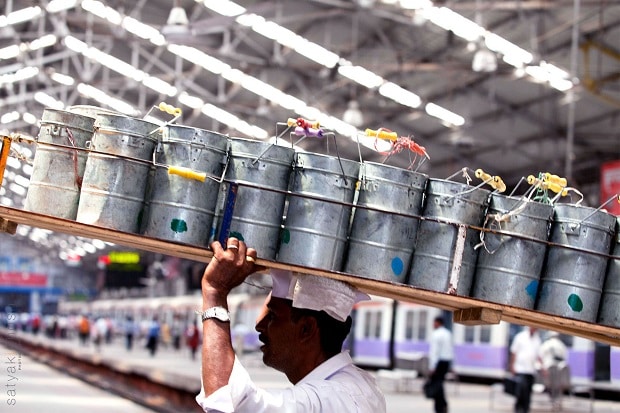
Mumbai is one of the largest cities in the world and an average working professional leaves home pretty early in the day to take the local train to commute to the work. Each day approximately 4,000 dabbawallahs deliver almost 250,000 home-cooked meals (for late breakfast and lunch) from the kitchens of suburban wives and mothers direct to workers in “the world’s most ingenious meal distribution system.”

The foot soldiers are Dabbawallahs, who pick up the home-cooked lunches in the suburbs, hop on trains, and deliver them, on foot or bike, to office workers in Mumbai. Later on, they pick up and bring back the same empty tiffins (the name for the metal containers used).

The tiffins consist of several stacked aluminum boxes with a carry-handle. Each container carries individual portions that separate curry dishes, bread, rice, desserts, and more. This means multiple courses. Tiffins come in several different compartments so as to separate starter, mains, and dessert. The tiffin serves to keep food in its original shape - no bruised fruit or mashed roti. The tiffin’s handle is at the top, keeping everything upright when being carried. Home-cooked meals are economical and can be more healthy.


While the system seems very complicated, it is the coming together of many elements, including the railway system in Mumbai. The dabbawallah rely on the train to deliver the lunch boxes around the city. Stefan Thomke, the Harvard Business School professor studied the system: “[the railway] sort of helps them in unexpected ways. It synchronizes the system because in Mumbai the railway is one of the few things that always runs on time. It forces the entire organization to run according to a rhythm.”

Another example of how simplicity aids the dabbawallah system is  the labeling of the tiffins. There’s very little information coded on the boxes. “For example, there’s no return address,” says Thomke, “but these boxes have to go back to the person who gave them to you.”  The simple color coding system acts as an identification system for the destination and recipient and origin of the tiffin.

The Dabbawala Association has been in business for over last 125 years. In 1998, Forbes Magazine recognized its reliability to match the Six Sigma standard. This means that the dabbawalas make less than 1 mistake in every 6 million deliveries. Be it a Steve Jobs or Picasso, all the great artists always had a penchant for simplicity. Value and efficiency is maintained by  keeping to basics. The process is very lean and uncomplicated. And the customer is the most important cog in this machine.

Read more here

Monday, July 24, 2017

Get into the State of Flow

When a writer, a software developer, or an artist is completely engaged, they exeprience flow, also known as "the zone" In this mental state a person performing an activity is fully immersed in a feeling of energized focus, full involvement, and enjoyment in the process of the activity.

"Scientists are still learning why people say they feel increased amounts of unity, reverence, and happiness in the water, Nichols told me. But if you look at the scientific recipe for flow states—the psychological term for when people are fully and pleasantly absorbed in what they're doing—being in water checks a lot of the boxes."
Read more at The Atlantic...

Tuesday, March 25, 2014

Trolls Are People, Too.

Is the internet only populated with trolls, a-holes and the ignorant unwashed masses who happen to know how to click a mouse? In my opinion, no. And, after all, my opinion counts the most /sarcasm

The internet is about community, as much as technology. However, as a widely-reported 2006 study argued, since 1985, Americans have become more socially isolated, the size of their discussion networks has declined, and the diversity of those people with whom they discuss important subjects has shrunk. In particular, the study found that Americans have fewer close ties to those from their neighborhoods. Sociologists Miller McPherson, Lynn Smith-Lovin and Matthew Brashears suggest that new technologies, such as the internet and mobile phone, may play a role in advancing this trend.

Specifically, they argue that the type of social ties supported by these technologies are relatively weak and geographically dispersed, not the strong, often locally-based ties that tend to be a part of peoples’ core discussion network. They depicted the rise of internet and mobile phones as one of the major trends that pulls people away from traditional social settings, neighborhoods, voluntary associations, and public spaces that have been associated with large and diverse core networks.

But the reality of social connectivity via the internet is here to stay. A Pew Internet Personal Networks and Community survey shined a light on people’s use of mobile phones and the internet as ways to connect with larger and more diverse discussion networks. And, when we examine people’s full personal network — their strong and weak ties — internet use in general and use of social networking services such as Facebook in particular are associated with more diverse social networks. [ The Strength of Internet Ties, Boase, J., et al., 2006, Pew Internet & American Life Project: Washington, DC ]

Social media activities are associated with beneficial social activities, such as having discussion networks that are more likely to contain people from different backgrounds. As an example, frequent internet users such as those who maintain a blog are much more likely to confide in someone who is of another race. Those who share photos online are more likely to report that they discuss important matters with someone who is a member of another political party.

The Pew study found that, when one examines people’s full personal network — their strong ties and weak ties — internet use in general and use of social networking services such as Facebook in particular are associated with having a more diverse social network. This counters the perception that technology pulls people away from social engagement.

But the internet is also about obscurity. The recent newsworthy reporting on government surveillance of internet and telecom communications has made clear that, while we rely on these two technologies to communicate and collaborate, we have long assumed such dialog occurred in private, much like the whispered exchanges in back booths of cafés or empty aisles of bookstores of the past. The fact that all traffic on these networks, mapped by the Internet Protocol address — the "I.P." address — can be traced to originator and recipient, has largely been ignored by the vast populations using these tools. The obscurity we find with anonymous logins and random user names can be liberating. One can speak freely about topics often found uncomfortable in one's existing social circles, or ask questions that an immediate circle of friends, relatives or colleagues might not answer. But this anonymity is also a free pass to sling vitriol.

Anonymous communications play an important role in political and social discussion. The Supreme Court has ruled repeatedly that the right to anonymous free speech is protected by the First Amendment, such as the 1995 Supreme Court ruling in McIntyre v. Ohio Elections Commission:

Protections for anonymous speech are vital to democratic discourse. Allowing dissenters to shield their identities frees them to express critical minority views . . . Anonymity is a shield from the tyranny of the majority. . . . It thus exemplifies the purpose behind the Bill of Rights and of the First Amendment in particular: to protect unpopular individuals from retaliation . . . at the hand of an intolerant society.

This tradition of anonymous speech ispredates the United States. Founders Alexander Hamilton James Madison and John Jay wrote the Federalist Papers under the pseudonym "Publius " and "the Federal Farmer" spoke up in rebuttal.

But the ease by which anyone can fake a name and voice any opinion — no matter how controversial or bigoted — without threat to their reputation is a driving forces behind the prevalence of hate speech online. Free speech does not mean freedom to disparage, libel, or foster hatred.

Anonymity on the internet desensitizes participants in a discussion. Such behavior, while rampant, is not found in the entire population of on-line commentators. Most so-call "trolls" might be easily classified as sociopathic narcissists, showing a callousness and lack of empathy for the objects/subjects of their derision. Unable to empathize with the pain of their victims, and perhaps having only contempt for others' feelings of distress and readily taking advantage of them, leads such participants in discussion threads to trample over the feelings of others. This reflects poor behavioral controls, found in the typical impulsive nature that can be observed in such personalities. Perhaps from the rage and abuse some of these participants have experienced, alternating with small expressions of love and approval, to produce an addictive cycle for abuser and abused. This may as well as foster a sense hopelessness in the victim, who finds an outlet in the obscurity of the vast whorl wide web, but engendered by a believe they are all-powerful, all-knowing, entitled to every wish, with no sense of personal boundaries, nor concern for their impact on others. Particularly with harsh words, submitted so quickly with a click of a mouse button.

Ultimately, people are behind the I.P. addressees that connect us all. What is low-cost approach to decrease the systemic negativity? Empathy, the cure for "trolling".

Wired magazine recently reported on a human rights group that introduced a new version of CAPTCHAs, those little boxes that make you type in a word to prove you are human before you can comment or register for a site. The new version doesn’t just present a scrambled word to be deciphered, but instead forces a person to choose the right word to unscramble based on the proper emotional response to a human rights violation. Civil Rights Defenders, the Swedish-based group that developed the tool, hopes the Civil Rights Captcha will help sites block spiders and bots, while letting humans in — and hopefully educating the humans at the same time.

More about trolls…
Chris Mooney reports at Slate that research conducted by Erin Buckels of the University of Manitoba confirmed that people who engage in internet trolling are characterized by personality traits that fall in the so-called Dark Tetrad:

Machiavellianism (willingness to manipulate and deceive others), narcissism (egotism and self-obsession), psychopathy (the lack of remorse and empathy), and sadism (pleasure in the suffering of others). In the study, trolls were identified in a variety of ways. One was by simply asking survey participants what they 'enjoyed doing most' when on online comment sites, offering five options: 'debating issues that are important to you,' 'chatting with others,' 'making new friends,' 'trolling others,' and 'other.' The study recruited participants from Amazon's Mechanical Turk website and two measures of sadistic personality were administered (PDF): the Short Sadistic Impulse Scale and the Varieties of Sadistic Tendencies Scale. Only 5.6 percent of survey respondents actually specified that they enjoyed 'trolling.' By contrast, 41.3 percent of Internet users were 'non-commenters,' meaning they didn't like engaging online at all. So trolls are, as has often been suspected, a minority of online commenters, and an even smaller minority of overall Internet users. Overall, the authors found that the relationship between sadism and trolling was the strongest, and that indeed, sadists appear to troll because they find it pleasurable. 'Both trolls and sadists feel sadistic glee at the distress of others. Sadists just want to have fun ... and the Internet is their playground!' The study comes as websites are increasingly weighing steps to rein in trollish behavior but the study authors aren't sure that fix is a realistic one. 'Because the behaviors are intrinsically motivating for sadists, comment moderators will likely have a difficult time curbing trolling with punishments (e.g., banning users),' says Buckels. 'Ultimately, the allure of trolling may be too strong for sadists, who presumably have limited opportunities to express their sadistic interests in a socially-desirable manner.' Perhaps posting rights should only be unlocked if you pass a test.

Reading, specifically works of fiction, can lead to greater empathy. A study by a Washington and Lee University psychology professor has demonstrated that reading a short work of fiction can lead readers to empathize with the work’s characters, to detect subtle emotional expressions more effectively and to engage in pro-social behavior. Dan Johnson, assistant professor of psychology at Washington and Lee, published the results of his study in the November 2011 edition of the journal “Personality and Individual Differences.”