Showing posts with label trade. Show all posts

Wednesday, December 2, 2020

Will Diversity Become Part of Corporate Governance?

In the USA, the Nasdaq asked the Securities and Exchange Commission if it can require all 3,300+ companies that trade on its exchange to (a) publicly disclose diversity statistics about their boards of directors, and (b) retain at least two diverse directors (one woman, one who identifies as an underrepresented minority and/or LGBTQ).

If the SEC gives the nod, boards will have two years to bring on at least one diverse director and two+ years to hire the second. If companies miss the deadline and fail to provide a sufficient explanation of why they missed it, they could get delisted.  

As of now, 75% of Nasdaq-listed companies would not meet that benchmark. We know corporate America has made slow progress improving diversity at the top. In 2018, women held less than 1/4 of Fortune 500 board seats. From 2010–2018, seats held by Black directors increased just one percentage point to 9%.

This would mark the first time a major exchange would impose such requirements, but it's not alone in pushing for board diversity. California requires at least one diverse director for companies headquartered in the state, and Goldman Sachs does as well to underwrite an IPO. 

For diversity as a success story, just turn to Europe: EU companies and others are successful in bringing more women into the top ranks of business. Norway was the first to introduce quotas for women in 2003. Iceland, Spain, and France followed with 40% targets. In 2015, Germany became the largest economy to impose a quota, mandating 30% of supervisory board seats be filled by women. Across Europe, the number of women on boards is climbing, although from a low base. The number of women board members at 734 large publicly traded companies across the Europe in 2016 was 23%, up from 11% in 2007, according to EU data. In countries with quotas in place, it’s higher: 44% in Iceland, 39% in Norway, 36% in France and 26% in Germany (2016 numbers).



Monday, November 18, 2019

Achieving Simplicity in a Complex System

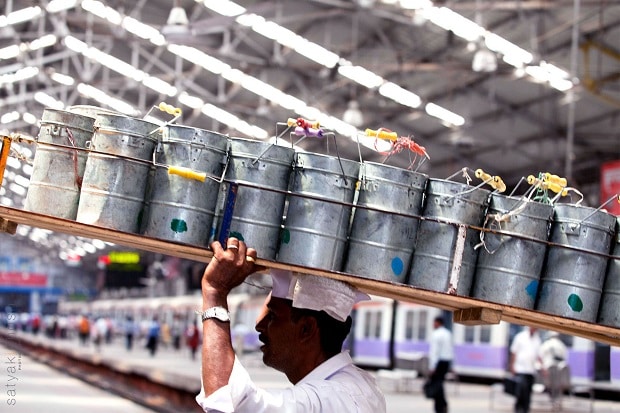
Mumbai is one of the largest cities in the world and an average working professional leaves home pretty early in the day to take the local train to commute to the work. Each day approximately 4,000 dabbawallahs deliver almost 250,000 home-cooked meals (for late breakfast and lunch) from the kitchens of suburban wives and mothers direct to workers in “the world’s most ingenious meal distribution system.”

The foot soldiers are Dabbawallahs, who pick up the home-cooked lunches in the suburbs, hop on trains, and deliver them, on foot or bike, to office workers in Mumbai. Later on, they pick up and bring back the same empty tiffins (the name for the metal containers used).

The tiffins consist of several stacked aluminum boxes with a carry-handle. Each container carries individual portions that separate curry dishes, bread, rice, desserts, and more. This means multiple courses. Tiffins come in several different compartments so as to separate starter, mains, and dessert. The tiffin serves to keep food in its original shape - no bruised fruit or mashed roti. The tiffin’s handle is at the top, keeping everything upright when being carried. Home-cooked meals are economical and can be more healthy.


While the system seems very complicated, it is the coming together of many elements, including the railway system in Mumbai. The dabbawallah rely on the train to deliver the lunch boxes around the city. Stefan Thomke, the Harvard Business School professor studied the system: “[the railway] sort of helps them in unexpected ways. It synchronizes the system because in Mumbai the railway is one of the few things that always runs on time. It forces the entire organization to run according to a rhythm.”

Another example of how simplicity aids the dabbawallah system is  the labeling of the tiffins. There’s very little information coded on the boxes. “For example, there’s no return address,” says Thomke, “but these boxes have to go back to the person who gave them to you.”  The simple color coding system acts as an identification system for the destination and recipient and origin of the tiffin.

The Dabbawala Association has been in business for over last 125 years. In 1998, Forbes Magazine recognized its reliability to match the Six Sigma standard. This means that the dabbawalas make less than 1 mistake in every 6 million deliveries. Be it a Steve Jobs or Picasso, all the great artists always had a penchant for simplicity. Value and efficiency is maintained by  keeping to basics. The process is very lean and uncomplicated. And the customer is the most important cog in this machine.

Read more here

Thursday, October 10, 2019

Boeing Wins at the WTO against Airbus

The World Trade Organization (WTO) found in favor of Boeing and the U.S. in retaliation for the unlawful EU subsidization of Airbus. The October 2, 2019, $7.5 billion annual award is the largest made, and comes after almost 15 years of litigation at the WTO. The U.S. successfully argued that the EU / four of its member states conferred more than $18 billion to Airbus in subsidized financing.

This entitles the U.S. to impose an additional 10 percent duty (tariff) on airplanes from France, Germany, Spain, and the United Kingdom, as well as an additional 25 percent duty on certain goods including single malt Irish and Scotch whiskies, coffee from Germany, cheeses from several countries, and certain garments from the United Kingdom.

EU officials claim to have little interest for mutual imposition of countermeasures. They have emphasized that such countermeasures strain transatlantic trade relations and inflict damage on citizens and businesses. The timing of the new tariffs is politically sensitive given the recent global imposition of national security tariffs by the U.S. on steel and aluminum, as well as the potential addition of global national security tariffs on automobiles and parts.

Read more here...