Friday, June 19, 2026

Ireland Should Not Join the War Machine

Ireland should resist pressure to abandon neutrality and instead develop a serious doctrine of active neutrality and peace realism. Neutrality should not mean passivity, evasion, or underinvestment. It should mean disciplined statecraft: peacekeeping, humanitarian response, maritime and cyber resilience, disarmament diplomacy, civilian protection, refugee protection, and a consistent opposition to imperial violence, regardless of whose flag is flying over it.

The immediate context is the renewed militarisation of European politics: NATO nuclear rhetoric, pressure for higher defence spending, Germany’s rearmament, Japan’s pacifist settlement under strain, Russia’s invasion of Ukraine, China’s coercive pressure, and the United States demanding loyalty from allies while often destabilising the order it claims to defend. Against that background, Ireland’s comparative advantage is not military deterrence. It is legitimacy.

The essay also rejects the lazy claim that welfare states, gender equality, climate policy, migration governance, and defence restraint are signs of weakness. These are not distractions from security. They are security infrastructure. A republic is not made serious by learning to frighten the world. It is made serious by protecting life, law, dignity, democratic accountability, and social cohesion under stress.

Ireland will not lead the world by becoming a miniature great power. It may, however, lead by showing that peace is not childish, neutrality is not silence, and small states need not become pawns. A republic born in defiance of empire should not join the war machine. It should stand in its path.

I have uploaded a new essay, Ireland Should Not Join the War Machine, to Zenodo. It is available here: https://zenodo.org/records/20759250


Friday, May 29, 2026

Baby Bumpers, Bombs, and Bots — False Logic and the Moral Blackmail of AI

Pope Leo XIV has called for artificial intelligence to be “disarmed.” This is, at first glance, the sort of papal phrase that invites both applause and eye-rolling. It sounds noble. It also sounds vague enough to be filed beside every other high-minded institutional plea to make technology “serve humanity,” as if the technology were a disobedient but promising intern.

But the phrase deserves more respect than that.

Monday, March 16, 2026

A Market That Loves Design but Won’t Pay for It

Most people assume the graphic design industry works like a normal professional services market. You train, develop skill, find clients, and gradually increase your rates as your reputation grows. That is the story design schools tend to tell.

The reality looks quite different.

If you step back and look at the industry as an economic system rather than a creative profession, you see a strange structure: thousands of talented people competing aggressively for a relatively small number of paying clients. Prices frequently fall below what it would actually cost to run a sustainable business. And every so often, one designer lands a client who pays extraordinarily well.

Those rare clients are what some freelancers quietly call “bluebirds.”

To understand why this happens, you have to start with the supply side of the market.

Design is one of the easiest professional services fields to enter. The tools are inexpensive, widely available, and increasingly intuitive. A capable laptop, a subscription to design software, and an internet connection are enough to begin offering services. Formal credentials are rarely required, and many designers are self-taught. Unlike architecture, engineering, or medicine, there is no licensing barrier that limits entry.

As a result, the supply of designers is enormous.

Even more important, a significant portion of those designers are not behaving like traditional economic actors. Many are students building portfolios. Some are hobbyists who enjoy the work and would do it anyway. Others treat design as a side income rather than a primary livelihood.

When people enter a market with motivations other than profit, pricing behavior changes dramatically.

You see designers offering logo packages for €25 or full websites for less than the cost of the software used to create them. Strictly speaking, these prices are below economic cost. Once you factor in time, equipment, software subscriptions, and overhead, the work cannot possibly be profitable. Yet it continues because participants are often pursuing experience, reputation, or creative satisfaction rather than immediate income.

That produces a chronic oversupply of labor.

Now consider the demand side.

Most buyers of graphic design services are small businesses. A local café needs a menu. A startup needs a logo. A small manufacturer wants a brochure or website refresh. These clients operate under tight budgets and intense cost pressure. From their perspective, design is often viewed as a necessary expense rather than a strategic investment.

Because of that perception, they shop aggressively for the lowest price that produces something “good enough.”

Complicating matters further is the difficulty of evaluating design quality. A restaurant owner can easily judge whether plumbing work fixed a leak. Evaluating a logo or brand identity is far less straightforward. Clients often cannot distinguish between average work and excellent work, especially before a project is completed.

Economists call this information asymmetry.

When buyers cannot easily judge quality, price becomes the dominant signal. Designers without strong reputations therefore compete primarily by lowering their rates. The market gradually pushes prices downward.

The industry ends up dividing itself into three informal tiers.

At the bottom is the commodity tier. This is the world of online gig platforms, global freelance marketplaces, and extremely low-cost services. Competition here is intense and international. Designers from dozens of countries compete for the same projects, and prices often hover near minimum wage levels or lower.

In the middle sits the professional tier. These are freelancers and small studios who build relationships with repeat clients. They work with local companies, regional organizations, and growing firms. Income here can be stable, but margins are rarely spectacular. Much of the work comes through referrals and long-term relationships rather than open bidding.

Then there is the top tier.

This is where the bluebirds live.

A small number of companies truly understand the economic value of design. For them, design is not decoration. It is part of their competitive strategy. Brand positioning, conversion optimization, product presentation, and customer experience all depend heavily on visual communication.

These clients will pay accordingly.

Large consumer brands, venture-backed startups, luxury companies, and cultural institutions sometimes spend sums on design that seem almost absurd compared to the rest of the market. But from their perspective the expense is rational. A well-designed brand identity or product interface can influence millions of euros in revenue.

Design becomes an investment rather than a cost.

The designers and agencies who operate in this tier tend to share one thing: reputation. They have portfolios that signal quality, recognizable client lists, and often years of accumulated relationships. Once those signals exist, the pricing dynamics change dramatically. Clients stop asking “why is this so expensive?” and begin asking “when can you start?”

The result is a market that looks less like a normal bell curve and more like a power law.

Most designers earn very little from their work. A moderate number manage to build sustainable professional practices. And a small elite captures a disproportionate share of the industry’s total income.

You see the same structure in many creative industries. Writers, musicians, illustrators, photographers, and filmmakers all operate in similar economic environments. Digital tools reduce entry barriers, global markets increase competition, and reputation becomes the main mechanism that separates commodity work from premium work.

From the outside, this system can look unfair or chaotic.

From an economic perspective, it is behaving exactly as expected.

When entry barriers are low, when the value of the work is difficult to measure, and when reputation acts as the primary signal of quality, markets tend to produce large numbers of underpaid participants and a small number of extremely successful ones.

Graphic design is simply another example of that pattern.

Which is why designers quietly keep watching the horizon for bluebirds. When one appears, it can change the economics of a year’s work overnight.

Wednesday, July 9, 2025

The Consultant in 2025: Navigating Turbulence with Tools and Tenacity

The world seems in turmoil — what can we do to help?


After a global pandemic, economic shocks, AI disruption, and geopolitical shakeups, the professional services sector in 2025 is experiencing not a renaissance—but a reckoning.

Consultants today are caught between relentless demand for strategic clarity and a business climate that’s anything but clear. Deltek’s latest 2025 Professional Services Maturity Benchmark shows a median net profit margin of just 13.7% for EMEA firms, a drop from previous years. Utilization rates hover at 72.2%—respectable, but far from optimal in a market flooded with uncertainty and price pressure. In short: we’re being asked to do more with less, and prove every penny of our value.

That’s where setting benchmarks—real ones, not vanity metrics—becomes essential. As consultants, we’re no longer just problem-solvers. We’re performance translators. Clients don’t want pretty reports; they want measurable outcomes, faster cycles, and embedded accountability.

At Bluedog, we’ve taken this to heart by automating the “show your work” part of consulting. Our proposal tools accelerate pipeline decisions, improve bid/no-bid discipline, and generate compliance matrices and draft submissions in minutes—not days. It’s not just automation for automation’s sake—it’s strategy delivered at speed.

Meanwhile, Workbench continues to evolve as the consultant’s digital cockpit: a place where project execution, knowledge management, and client collaboration converge. Its Balanced Scorecard module lets teams link strategy to execution, measure real progress, and course-correct in real-time using KPI dashboards, Gantt views, and continuous feedback loops. It’s where “value for payment” isn’t a slogan—it’s auditable.

Consulting will always be about insight—but in 2025, it’s also about infrastructure. The firms that win won’t be the flashiest talkers. They’ll be the ones that measure better, communicate clearer, and move faster—with the right tools at their fingertips.


See my profile at LinkedIn: https://www.linkedin.com/in/termini/


Tuesday, January 23, 2024

Why You Should Implement a Content + Document Management System at your Organization

 Why You Should Implement a Content + Document Management System at your Organization


Does your firm rely on the development of proposals and responses to Requests for Proposals (RFPs) and Requests for Information (RFIs) to get ahead? If so, the effective management of documents and content should be considered. Implementing a comprehensive Document and Content Management System (CMS) across your entire organization offers multifaceted

doc mgmt

advantages, addressing critical aspects of information handling, collaboration, and 

compliance.

Document Storage — A centralized repository serves as a cornerstone for efficient document management. Storing a myriad of documents, ranging from proposals to contracts, in a secure and easily accessible location ensures that the organization can manage and retrieve critical information effortlessly.

For example, consider the scenario where a government contractor is simultaneously working on multiple projects with various teams. A unified document storage system eliminates the need for scattered and siloed storage solutions, fostering a more organized and streamlined approach to document management.

Access Control — In the context of government contracting, where confidentiality and data security are paramount, controlling access to sensitive documents is critical. A robust CMS allows organizations to implement role-based access control, ensuring that only authorized personnel have access to specific documents.

Imagine a scenario where a proposal contains sensitive pricing information or proprietary methodologies. With access control mechanisms in place, the organization can restrict access to this information to only those individuals directly involved in the proposal development, minimizing the risk of unauthorized access.

Audit Trails — Transparent and accountable processes are essential, especially in government contracting, where compliance with regulations and adherence to established procedures are non-negotiable. An effective CMS provides detailed audit trails, documenting every change made to documents. Are you considering ISO or CMMI certification? Audits will be crucial. 

As another example, consider a situation where a proposal undergoes multiple revisions. The ability to trace and review each modification ensures transparency and accountability, crucial for compliance with regulatory requirements and internal governance standards.

Workflow Automation— In the realm of proposal development, workflows often involve multiple stages, requiring collaboration across different teams and departments. Workflow automation within a CMS streamlines these processes, reducing manual effort and enhancing overall efficiency.

For instance, envision a scenario where a proposal undergoes sequential reviews by subject matter experts, legal teams, and project managers. With workflow automation, the CMS can automatically route the document through the necessary stages, notifying relevant stakeholders at each step, thereby expediting the review process.

Collaboration and Integration — Effective collaboration is the backbone of successful proposal development. A CMS facilitates seamless collaboration by providing a centralized platform for team members to work on documents collectively. Integration capabilities with other tools and platforms further enhance collaboration by eliminating data silos.

Consider a government contractor collaborating with external consultants and internal teams on a complex proposal. With a CMS, all contributors can access and edit the document in real-time, fostering a collaborative environment that accelerates the proposal development lifecycle.

Disaster Recovery — The significance of disaster recovery in safeguarding critical documents cannot be overstated. Unforeseen events, ranging from hardware failures to natural disasters, can pose a threat to valuable information. A CMS ensures robust backup and recovery capabilities, minimizing the risk of data loss.

Imagine a scenario where a government contractor's office experiences a sudden data server failure. Without proper backup mechanisms, crucial proposal documents and historical information could be lost. A CMS with disaster recovery capabilities mitigates such risks, ensuring business continuity.

Workflow and Process Automation — Automation of routine tasks and processes is a key driver of operational efficiency. In the context of government contracting, where repetitive tasks are inherent in the proposal development lifecycle, a CMS that supports business process automation becomes indispensable.

Consider the process of document approval within a government contractor's organization. A CMS with business process automation can streamline the approval workflow, automatically routing documents for approval based on predefined rules, thereby reducing delays and bottlenecks.

Conclusion:

At Bluedog, we seethe implementation of a robust Document and Content Management System organization-wide as not just a technological enhancement —but a strategic imperative. From enhancing document security and compliance to fostering collaboration and streamlining workflows, the benefits are multifaceted. Our clients, government contractors, stand to gain a competitive edge by embracing a CMS that aligns with the unique challenges and requirements of their industry, ultimately contributing to more efficient and successful proposal development and overall business operations.

Wednesday, January 10, 2024

What Makes a Good Government Marketing Consultant?

What should a small-to-medium sized enterprise (SME) look for, in a government marketing consultant?

.

🕵🏽‍♂️Government Contracting Expertise – A qualified marketing and operations consultant for a small business entering government contracting should possess a deep understanding of the Federal Acquisition Regulations (FAR) and the intricate processes involved in government procurement. This includes familiarity with set-aside programs tailored for small businesses, such as the 8(a) Business Development Program, HUBZone, and Service-Disabled Veteran-Owned Small Business (SDVOSB). The consultant should bring a wealth of experience in navigating the complexities of government contracting, ensuring that the SME can leverage available opportunities and comply with regulatory requirements.

.

📊 Market Research and Analysis – An effective consultant must excel in market research to identify and assess viable government contracting opportunities for the SME. This involves a keen understanding of agency needs, upcoming contracts, and a thorough analysis of the competitive landscape – proficiency in conducting competitive analyses, enabling the SME to position itself strategically in the market and increase its chances of securing valuable government contracts.

.

📗Proposal Development and Management – The consultant should possess strong writing skills to articulate the SME's capabilities, value proposition, and solutions that meet government requirements. Moreover, expertise in bid management is essential, encompassing the entire bid process from pre-solicitation to post-submission activities. This includes developing win themes, assembling proposal teams, and ensuring the timely and accurate submission of bids.

.

⚔️Compliance and Risk Management - A proficient consultant should have a comprehensive understanding of compliance requirements associated with government contracts. This includes expertise in navigating cybersecurity, accounting, and reporting standards. Additionally, the consultant should be skilled in identifying and mitigating risks that may arise during the execution of government contracts, ensuring the SME operates in accordance with all regulations and standards.

.

🛠Operational Efficiency and Scalability - The consultant should be adept at evaluating and enhancing internal processes to improve operational efficiency. This involves process improvement skills to streamline operations, implement effective project management tools, and optimize workflows. Furthermore, the consultant should possess a strategic mindset for scalability planning, guiding the SME in preparing for growth and ensuring that operational capacities align with the increasing volume and complexity of government contracts. By focusing on these critical skills, SMEs can position themselves for success in government contracting with the guidance of a knowledgeable and experienced consultant.


With www.Bluedog.net, you can be assured of talent, expertise, and alacrity.


Tuesday, January 2, 2024

Systematic Analysis of Opportunities is Vital to P-win's for Higher Proposal Win Ratios

Recognizing that not every identified Request for Proposal (RFP) is the right opportunity, the paper advocates for a systematic evaluation before committing valuable resources. The pre-bid-decision gap analysis, coupled with a Strengths, Weaknesses, Opportunities, Threats (SWOT) analysis, emerges as a potent hybrid approach. This method empowers businesses to assess internal and external factors influencing their ability to secure government contracts, fostering realistic expectations and strategic planning.

Bluedog outlines the crucial role of the gap analysis in the broader opportunity assessment process, emphasizing its integration into the RFP response cycle. By identifying gaps early on, businesses can enhance efficiency, optimize resource allocation, and minimize unnecessary work or rework. Ultimately, the pre-bid decision gap analysis emerges as a key driver of success, enabling businesses to navigate the complexities of government contracting with foresight and strategic acumen.

Get a PDF of the white paper here.


Monday, December 18, 2023

Be a Leader, Like Beowulf!

"Beowulf," the epic Old English poem, is not just a gripping tale of heroism but also a source of valuable lessons for leaders in any era. As we delve into the world of warriors and monsters, we discover timeless principles of leadership that resonate across cultures and centuries.


1. Courage in the Face of Adversity

Beowulf, the protagonist, exemplifies unparalleled courage. Leaders, too, must confront challenges head-on. Whether it's navigating a turbulent business environment or leading a team through adversity, courage is the cornerstone of effective leadership. Beowulf teaches us that true leaders do not shy away from daunting tasks; they embrace them.

2. Lead by Example

Beowulf doesn't just give orders; he leads from the front. His willingness to take on the monstrous Grendel and later, the dragon, showcases the importance of leading by example. Effective leaders inspire their teams through action, setting the standard for hard work, dedication, and bravery.

3. Value Loyalty and Build Strong Alliances

Beowulf's success is not a solo endeavor. He builds alliances and surrounds himself with loyal warriors. Leaders, too, must recognize the value of teamwork and loyalty. Cultivating strong relationships within a team fosters a sense of unity and ensures that everyone is working towards a common goal.

4. Integrity and Honor

Beowulf is a symbol of integrity and honor. Leaders must uphold ethical standards and maintain a sense of honor in their actions. Building trust among team members and stakeholders is essential for long-term success. Beowulf's commitment to his word and his people underscores the importance of integrity in leadership.

5. Humility in Victory

Despite his remarkable achievements, Beowulf remains humble. Leaders, too, should exhibit humility in the face of success. Acknowledging the contributions of the team and recognizing that success is a collective effort fosters a positive and collaborative working environment.

6. Adaptability and Learning from Failure

Beowulf faces defeats and losses but learns from them. Leaders, too, must be adaptable and view failures as opportunities for growth. Being open to learning from mistakes and adjusting strategies is a hallmark of effective leadership.

7. Balancing Confidence and Prudence

Beowulf's confidence is evident, but it is tempered with prudence. Leaders should strike a balance between confidence and careful decision-making. Overconfidence can lead to recklessness, while excessive caution can stifle progress. Beowulf's measured approach in facing challenges highlights the importance of finding this delicate balance.

In the tapestry of leadership, "Beowulf" weaves a narrative rich with lessons that transcend time and culture. Whether leading a team into battle or navigating the complexities of the modern business world, the epic hero's principles of courage, integrity, and humility serve as guiding beacons for leaders on their own heroic journeys.

Saturday, December 9, 2023

Earned Value Management Can Increase the Likelihood of Successful Government Contract Performance

Government contract management demands meticulous oversight and effective control to ensure successful project execution within budgetary constraints. One important tool for achieving this is Earned Value Management (EVM). EVM is a systematic project management approach that integrates cost, schedule, and scope to provide a holistic view of project performance. In the context of government contracts, where transparency, accountability, and compliance are paramount, EVM is an essential tool to ensure adherence to contractual obligations. 

Ok, great, but what is EVM? It is a project management technique that helps project managers measure project performance in an integrated manner. It involves the use of key performance indicators (KPIs) to assess the progress of a project based on the scope of work completed, the time taken, and the costs incurred. The three primary components of EVM are:

  • Planned Value (PV): The authorized budget assigned to the work planned to be accomplished by a specific time.
  • Earned Value (EV): The value of the work actually performed, expressed in terms of the approved budget assigned to that work.
  • Actual Cost (AC): The costs actually incurred for the work performed.

To implement EVM, project managers use several key formulas that help quantify project performance:

Cost Performance Index (CPI): CPI = EV / AC

A CPI greater than 1 indicates that the project is performing under budget.

A CPI less than 1 suggests that the project is over budget.

Schedule Performance Index (SPI): SPI = EV / PV

An SPI greater than 1 indicates that the project is ahead of schedule.

An SPI less than 1 suggests that the project is behind schedule.

Variance at Completion (VAC): VAC = BAC - EAC

VAC represents the estimated cost variance at the end of the project.

Cost variance / EVM

Picture a government agency embarking on a complex project, a venture laden with responsibilities and taxpayer dollars. Enter Earned Value Management (EVM), a guiding light in the realm of project transparency. EVM isn't just a set of calculations; it's a standardized and transparent approach to project reporting. Imagine the veil being lifted as government agencies gain a bird's-eye view of project performance through key metrics. This newfound clarity fosters accountability, ensuring that contractors toe the line of agreed-upon terms.

Juggling multiple phases and tasks, timing is everything in project execution. EVM acts as a vigilant watchman, enabling project managers to identify discrepancies in the early beats of the project lifecycle. As planned, earned, and actual values intertwine, anomalies are illuminated. This isn't merely about numbers; it's about timely intervention, a preemptive strike against issues before they crescendo into the ominous symphony of project failure.

Numbers, when crunched correctly, tell a story – one of financial health and resource efficiency. EVM takes the helm in crafting this narrative. Through the lens of the cost performance index, EVM enables precise forecasting of project costs. Imagine government agencies equipped with a financial compass, navigating the budgetary seas with confidence. In this narrative, decisions are driven not by guesswork but by a data-driven understanding of the project's fiscal landscape.

Government contracts, like a script, come with stringent requirements and regulations. Enter EVM, the script supervisor of project compliance. It doesn't just ensure adherence; it provides a structured methodology for compliance monitoring. Auditors, in their quest for project integrity, find EVM to be a reliable ally, simplifying the assessment of whether projects are executing in harmony with regulatory standards.

So, envision a room filled with government stakeholders — each armed with real-time data on cost and schedule performance. While not a literally crystal ball, decision makers can make better choices with the help of EVM. The narrative shifts from reactive to proactive, encompassing adjustments to scope, reallocation of resources, and the implementation of risk mitigation strategies.

At the heart of EVM is accuracy, which is dependent on precise data inputs. And accuracy relies on repeatable processes; adequate training becomes the guide, transforming project managers so they are capable of maximizing the benefits of EVM. This tool complements and enhances other project management systems, increasing the likelihood of project success.


Monday, December 4, 2023

Navigating an Ever-Changing Landscape with Continuous Learning

In a world that's evolving at an unprecedented pace, the ability to adapt and learn continuously has become a key factor in personal and professional success. The rapid advancement of technology, shifts in global economies, and the constant emergence of new ideas make lifelong learning not just a choice but a necessity.

The Need for Continuous Learning

Gone are the days when education was seen as a one-time investment in the early years of life. The Fourth Industrial Revolution has ushered in a new era where skills become obsolete faster than ever before. In this dynamic landscape, those who embrace continuous learning gain a competitive edge, ensuring they stay relevant in their chosen fields.

Adapting to Technological Advances

Technology is at the forefront of change, and staying abreast of the latest developments is crucial. Whether you're a professional in the IT industry or a creative artist, understanding how technology shapes your field is vital. Continuous learning enables you to integrate new tools, platforms, and methodologies into your work, enhancing efficiency and innovation.

Navigating Career Transitions

Career paths are no longer linear, and individuals often find themselves switching industries or roles multiple times in their lives. Continuous learning facilitates these transitions, providing the knowledge and skills needed to excel in new environments. It's a mindset that fosters resilience and agility, allowing individuals to pivot when necessary and explore new opportunities with confidence.

Cultivating a Growth Mindset

At the core of continuous learning is a growth mindset—an understanding that abilities and intelligence can be developed with dedication and hard work. This mindset empowers individuals to embrace challenges, learn from failures, and persist in the face of setbacks. It's a mindset that not only fuels personal development but also fosters a culture of innovation and adaptability in the broader community.

Harnessing Online Learning Platforms

The digital age has democratized education, making learning opportunities accessible to people around the globe. Online platforms such as Workbench "Always on the Job!" offer a myriad of courses, workshops, and resources, allowing individuals to tailor their learning journey to their specific needs and schedules. From coding bootcamps to language courses, the options are diverse, enabling everyone to pursue their interests and passions.

In a world that's constantly in flux, the power of continuous learning cannot be overstated. It's a lifelong commitment to growth, adaptability, and resilience. By embracing the ever-changing landscape of knowledge and skills, individuals can not only thrive in their careers but also contribute to a more innovative and dynamic global community.

Wednesday, November 29, 2023

Maximizing the Impact of Knowledge Workers: Practical Strategies

In the realm of knowledge work, specialists with honed expertise play a crucial role in driving innovation and problem-solving. Yet, unlocking the full potential of knowledge workers requires strategic alignment with organizational goals and the cultivation of collaborative, communicative environments. For knowledge workers to contribute effectively, alignment with your organization's strategic business goals is paramount. Ensure these goals are clear, achievable, and communicated transparently across the company.

  • Eliminate Silos - Combat the pitfalls of siloed information by fostering a culture of knowledge-sharing. Implement learning management systems (LMSs) that facilitate effortless sharing of expertise among knowledge workers.
  • Encourage Collaboration - Break down silos not just for knowledge sharing but also for cross-departmental collaboration. Reevaluate your organizational structure to promote an open, honest, and trusting culture that empowers knowledge workers to collaborate effectively.
  • Promote Innovation with New Ideas - While knowledge workers are catalysts for innovation, inclusive collaboration ensures that diverse perspectives contribute to shaping and implementing new ideas. Transparency in projects invites expertise from all corners of your organization.
  • What’s Happening in Your Industry? Help knowledge workers stay abreast of industry trends without succumbing to information overload. Implement solutions that automatically curate and deliver relevant information from reliable sources, ensuring easy accessibility.
  • Embrace the Internet - The rise of remote work necessitates embracing mobile-first solutions. Enable your knowledge workers with easy access to information and instant communication through mobile-friendly platforms, recognizing the increasing trend of remote and hybrid work environments. Digital communication is the lifeblood of knowledge work. Equip teams with tools like Slack or Workbench “Always on the Job!” to foster seamless communication, breaking down barriers and promoting collaboration across departments.
  • Stay in Perspective - Knowledge workers are not just innovators but also drivers of change. Embrace organizational change by keeping an open mind, supporting change management initiatives, and effectively communicating the benefits throughout the organization.

In the dynamic landscape of what we do in the knowledge-based economy, strategic alignment, effective communication, and a collaborative culture are essential for maximizing the impact of knowledge workers. 


Wednesday, November 15, 2023

Use Disruptive brainstorming to improve your brainwaves...

Disruptive brainstorming is a technique to apply constraints to creative thinking using a fast paced, high energy approach – to achieve better ideas, more quickly.

1. Preparation – For teams working remotely, establish a collaborative document using tools like Trello or Confluence and have Disrupt cards ready for sharing.

In face-to-face settings, use a whiteboard or large paper along with sticky notes and markers. Bring printed Disrupt cards. (15 minutes)

Clearly define the brainstorming topic.

Prepare a document with relevant research, sharing it with the team a few days before the session.


✏️Tip: Select a Topic

Identify a problem, a process for improvement, or an issue impacting customers.


2. Introduction – At the beginning of the meeting, communicate to the team:Objective: Generate a maximum number of ideas.

Emphasize the importance of an open-minded approach and validate all ideas.

Clarify that the focus is on idea generation, not judgment. 

Highlight that the meeting aims to produce actionable ideas. (5 minutes)


3. Brainstorming – Divide the team into two groups for multiple rounds of brainstorming.

If the session is virtual, use the breakout room feature in video conferencing.

Set a 10-minute timer for free-flowing brainstorming.

Ideas are added one by one to the chosen platform (template, whiteboard, or sticky notes), with discussions for each idea as it's contributed.(10 minutes)


4. Evaluation – Reassemble the teams; have each team evaluate and remove ideas from the other team's board. Focus on eliminating ideas that appear unattainable, unsupported, or unrelated to the main objective. This step involves a generous trimming of ideas to make room for new and potentially more viable ones. (10 minutes)


Tuesday, November 14, 2023

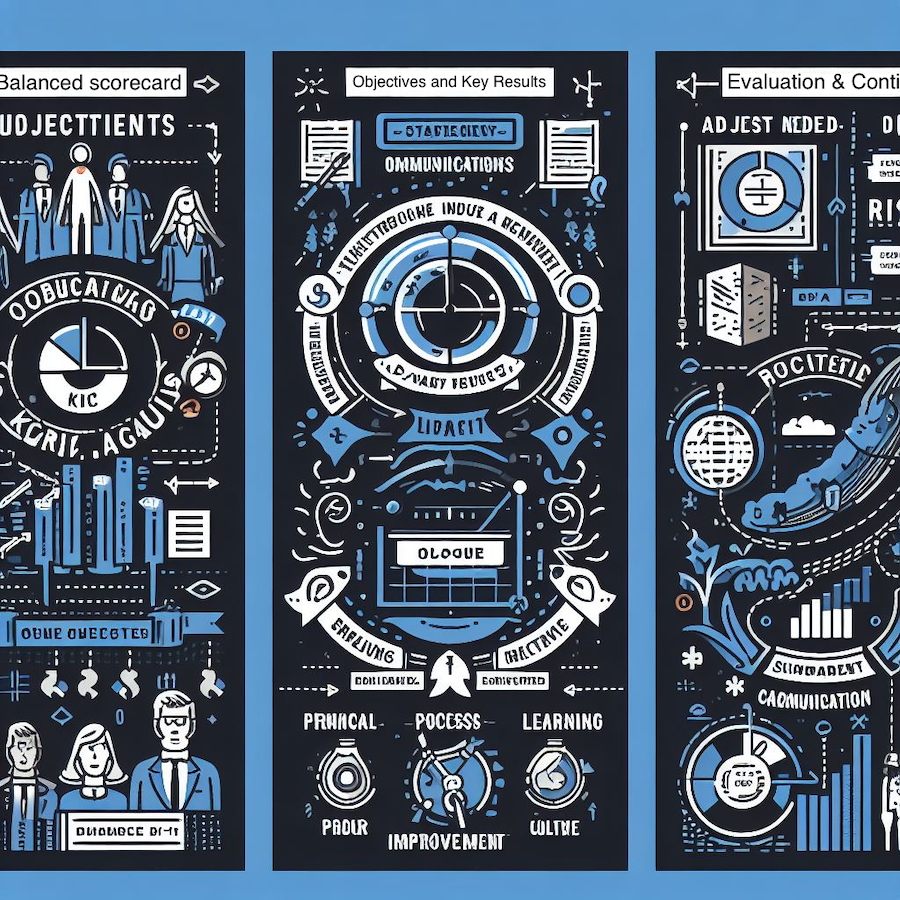
How Bluedog Helps Navigate the Project Performance Maze

⛵️ Embarking on a project is like setting sail into uncharted waters. You need a compass, a map, and a crew that's ready to adapt to changing winds. In the world of project management, the compass is your set of Objectives and Key Results (OKRs). These are your guiding stars, the North Star of project success. Define them with clarity, and you'll have a reliable direction. Regularly checking your bearings and adjusting the sails ensures you stay on course. It's a dance with the winds of change, and flexibility is your best partner.


Imagine your project as a well-balanced ship 🛳 navigating through stormy seas. The Balanced Scorecard is your ship's wheel, keeping you on course. Financial Return on Investment (ROI) is the treasure you seek, but don't forget to send postcards to your stakeholders. Communication is key. Share the victories and setbacks, keeping everyone on board informed. Watch for leaks in your processes, patch them up for smoother sailing. And above all, cultivate a learning culture among your crew. Every wave is a lesson, and every lesson makes you stronger.


As you sail, you'll encounter unforeseen obstacles – the hidden rocks beneath the surface. Enter the Risk Assessment & Mitigation phase, where you don your strategist hat. 📊 Conduct a SWOT analysis – a modern-day treasure map revealing your project's Strengths, Weaknesses, Opportunities, and Threats. This map guides you to safe waters and helps you navigate around potential pitfalls.


But what good is a map if you can't read it? 🧭 Use Evaluation & Continuous Improvement – your project's own spyglass. Employ Kanban to visually monitor your progress. It's like having a lookout in the crow's nest, keeping an eye on the horizon. Collect feedback from your crew and those on distant shores. Analyze it like a seasoned explorer, learning from every encounter. Measure your success with Key Performance Indicators (KPIs), your project's sextant, guiding you through the vast sea of possibilities.


In the end, project performance is not just about 🗺 reaching your destination; it's about the journey. So, hoist your sails, set your course, and navigate the project performance maze with confidence. The winds may be unpredictable, but with a well-crafted map and a vigilant crew, you'll not only weather the storm but conquer the seas. 🐟


Monday, November 6, 2023

Crafting a Data-Driven Transformation Following a Proven Blueprint for Success

In this fast-paced digital age, data has emerged as the lifeblood of successful enterprises, offering invaluable insights and powering informed decision-making. To harness this transformative potential, your organization must align its data strategy with its broader business goals, evaluate its analytics maturity, make prudent choices in data architecture and technology, build the right data analytics team, implement effective data governance, and create a strategic roadmap. In this comprehensive guide, we will explore these key pillars of a data-driven transformation, providing your organization with a roadmap to unlock the full potential of data, foster a culture of innovation, and gain a competitive edge in today's data-centric landscape.

While data governance is very important to your data strategy, it’s important to understand that just like your level of data and analytics maturity is unique to your organization, so is your need for data governance. Although there are some great tools on the market to support the effective application of governance, data governance itself isn’t a tool or platform your organization can purchase. To avoid this, the data governance program your organization outlines should account for your company’s needs, size, urgency, maturity, and capabilities.


Saturday, October 21, 2023

Drone Delivery Coming to the EU … We Promise!

Amazon's drone delivery service, Prime Air, is expanding to the UK and Italy by the end of 2024. The service has already been successful in the US, and it plans to use existing distribution centers, eliminating the need for special drone hubs. The new MK30 drone can withstand various weather conditions and carry packages up to 5 pounds, promising deliveries in under an hour. It also features advanced obstacle-detection technology and reduced noise levels.

This expansion by Amazon reflects a global trend in drone delivery services, with companies like Walmart, Alphabet (Google's parent company), and Zipline also making strides in the industry. In Europe, Sweden has been at the forefront of technological and regulatory advancements in drone delivery, with startups like Aerit gaining operational permission for trials.

There have been experiments with medical drones, such as delivering medicine and equipment, which can be particularly valuable in emergencies when ground traffic is congested. Despite the promise of drone delivery, it still faces challenges related to public acceptance and safety concerns.

Read more here: https://innovationorigins.com/en/drone-package-delivery-coming-to-the-eu-next-year/


Sunday, October 8, 2023

Fixing Broken Projects - Someone's Perspective

Poor communication lead to lack of alignment, misunderstandings and delayed deliveries. In fact, this pain is measurable: 30% of failed projects in IT organizations are failing because of poor communications according to the 2017 Pulse of the Profession at PMI.

https://medium.com/fusion-accelerator/precision-communication-a1a5b8b24293


Recent Advice to a Client — Case Study


In the dynamic landscape of business, opportunities often arise unexpectedly, presenting the chance to embark on transformative journeys. This case study delves into the strategic crossroads faced by a small but promising business in the IT services industry. With an annual revenue of $5,000,000, this entrepreneurial venture recognized the potential to achieve remarkable growth under the guidance of a holding company known for scaling businesses to new heights.

I proposed an outline for leading the discussion in a pivotal meeting between our subject business and the holding company, which boasts a portfolio of successful ventures in the same sector. The holding company's explicit preference for businesses with the potential to soar to a minimum of $50 million in revenue over 18-24 months.


Armed with a well-prepared pro-forma and comprehensive financial data, the business owners embarked on this journey with a blend of anticipation and curiosity. I recommended the following as a way top structure this crucial first meeting:


My recommendation was to state with providing a concise overview of the business, emphasizing its unique selling points and the sector in which it operates in. I advised the client to highlight the current annual revenue of $5m, showing that they’ve successfully established a foundation. Then, move into a more formal discussion (keep it brief and focused):


Growth Potential (1-2 minutes):

  • Stress an understanding of the acquirer’s  preference for businesses that can scale.
  • Present pro-forma numbers to demonstrate a clear growth trajectory that aligns with their goals. Highlight key growth drivers and realistic revenue projections.
  • Showcase strategies for achieving this growth, whether it's expanding market reach, introducing new products/services, or optimizing operations.


Why Us? (1-2 minutes):

  • Emphasize the team's expertise and dedication to the business.
  • Talk about the founder/owners’ passion for the industry and commitment to taking the business to the next level.
  • Mention any existing partnerships, customer loyalty, or unique assets that set the business apart.


Sell the Idea - Integration as a Subsidiary (1 minute):

  • Explain how the founder/owners’ envision the business fitting into their portfolio seamlessly.
  • Highlight the potential synergies between the business and their existing holdings.
  • Stress a willingness to collaborate and adapt to their operational strategies while maintaining the essence of what makes the target business successful.


Questions & Discussion:

  • Open the floor for questions and discussions.
  • Be prepared to address any concerns, such as risks or challenges.
  • Showcase your deep knowledge of your business and industry during this interactive session.


🍀

I closed with a reminder: Don't forget to thank them for their time and express your eagerness to move forward. Reiterate your excitement about the prospect of working together and scaling the business. Remember to be confident, concise, and passionate about your business. Be open to feedback and engage in a meaningful conversation during the meeting. Leave something like a "tear sheet" behind.


Thursday, January 6, 2022

Consider two tools to enhance marketing in 2022

First impressions with a potential customer is key to creating a profitable relationship. One desires to show business value and help a potential customer understand and remember what your organization does best. When they are in need of the products or services you provide, they know who to call. Getting potential clients' attention can be a challenge. In the coming year, consider adding two tools to your marketing toolbox. 

In the "meat space" world, creative leave behinds provide a great way to do this -- a physical object that you leave behind to help the prospect remember you and your company after an in-person sales call. Digital Leave Behind can be an online space where you can showcase products, design work, a portfolio of sorts.

Read more about this marketing tool (and another) that can improve your prospects with... prospects.


Monday, January 3, 2022

This Year, Don't Expect Staff to Return to the Office in Droves

Over at ZDNet, we read...

Months have gone by, and the great resignation keeps rolling along. Some people thought that people would come flocking back to the office once generous unemployment benefits ended. Nope. Wrong. Months after Republican states cut the $300-a-week Federal benefit and other benefits expired, there has been no rush to return to the workforce. There are many reasons for this. People don't want to catch COVID-19; people are sick of bad jobs; early retirement; and the one I care about today, bosses still think they can force skilled workers to return to offices. I've said it before; I'll say it again. That's not going to happen. People with talent and high-value skills, like most technology workers, aren't returning to traditional offices. You don't have to believe me, though. Look at the numbers being reported. 

A Hackajob survey of 2,000 UK tech workers and employers found not quite three-quarters (72%) of tech workers said having the ability to do remote work was very important to them. All, and by the way, just over one in five were looking for new jobs with remote work. A more recent Microsoft survey found UK techies felt even stronger about the issue. In this survey, they found over half of the employees would consider quitting if you tried to force them back into the office. It's not just the UK. The Future Forum Pulse survey found IT workers in the US, UK, Australia, France, Germany, and Japan all had one thing in common: Most want to work at least part of the time remotely. To be precise, 75% want flexibility in where they work, while 93% want flexibility in when they work. Why? The top reason: "Better work-life balance." 

The problem? Many executives and owners haven't gotten the clue yet. 44% said they wanted to work from the office daily. Employees? 17%. Three-quarters of bosses said they at least wanted to work from the office 3-5 days a week, versus 34% of employees. Can we say disconnect? I can. And, here's the point. Today, for the first time in my lifetime, workers, not employers, are in the driver's seat. [...] But, that doesn't mean that you must give up the traditional office entirely. You don't. In the Dice State of Remote Work report, there's a remote work spectrum. Sure, some workers never want to cross the office transom again, but others like a flexible work schedule where they can work outside of the office a set number of days per week or month. By Dice's count, only one in five workers are bound and determined to never come into the office again. 75% would be fine with flex work. But, pay attention folks, only 3% want to go back to the old-school 9 to 5, every weekday at the office. I repeat a mere 3% want to return to the office as most of you knew it in the 2010s. Indeed, 7% of respondents said they would even take a 5% salary cut to work remotely.

So if your work is unfulfilling and the office is a distracting nuisance -- almost nothing will get you to back in your cubicle. Rather than blaming workers for actually having a bit of power for the first time in roughly a century, should we be addressing these issues and doing something about it?


Friday, December 31, 2021

What's Gonna Be Hot in 2022? Web3, blockchain-based web sites that are decentralized... and more

In the coming new era, navigating the web may no longer require logging onto Facebook, Google, or Twitter. Instead, web sites are decentralized. Imagine it as a kind of bookkeeping where many computers at once host data that's searchable by anyone. It's operated by users collectively, rather than a corporation. People are given "tokens" for participating. The tokens can be used to vote on decisions, and even accrue real value.

Blockchain is a driving force of the next-generation Internet, what some refer to as the "Web3." The Internet we use today predominantly builds on the idea of the stand-alone computer. Data is centrally stored and managed on servers of trusted institutions. The data on these servers is protected by firewalls, and system administrators are needed to manage these servers and their firewalls. One might recall that blockchain is the tech that undergirds Bitcoin and other cryptocurrencies.


Experts say, in the best case scenario for Web3 enthusiasts, the technology will operate alongside Web 2.0, not fully supplant it. In other words, blockchain-based social networks, transactions and businesses can and will grow and thrive in the coming years. Yet knocking out Facebook, Twitter or Google completely is not likely on the horizon, according to technology scholars.

For those surfing, nothing much will change on the surface of the Internet. If "Web 2.0" was a frontend revolution, Web3 is a backend evolution.

Read more...