Showing posts with label drones. Show all posts

Saturday, October 21, 2023

Drone Delivery Coming to the EU … We Promise!

Amazon's drone delivery service, Prime Air, is expanding to the UK and Italy by the end of 2024. The service has already been successful in the US, and it plans to use existing distribution centers, eliminating the need for special drone hubs. The new MK30 drone can withstand various weather conditions and carry packages up to 5 pounds, promising deliveries in under an hour. It also features advanced obstacle-detection technology and reduced noise levels.

This expansion by Amazon reflects a global trend in drone delivery services, with companies like Walmart, Alphabet (Google's parent company), and Zipline also making strides in the industry. In Europe, Sweden has been at the forefront of technological and regulatory advancements in drone delivery, with startups like Aerit gaining operational permission for trials.

There have been experiments with medical drones, such as delivering medicine and equipment, which can be particularly valuable in emergencies when ground traffic is congested. Despite the promise of drone delivery, it still faces challenges related to public acceptance and safety concerns.

Read more here: https://innovationorigins.com/en/drone-package-delivery-coming-to-the-eu-next-year/


Tuesday, March 23, 2021

Drones As Research Tools

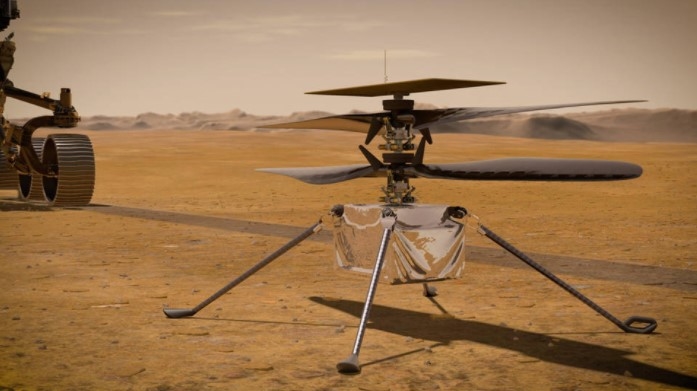
 We know unmanned aerial vehicles (UAV) -- or "drones" -- are great for agricultural surveys or other business applications. But their use in science cannot be undervalued. Work between NASA's Jet Propulsion Laboratory (JPL) and Qualcomm Technologies Inc., resulted in the Ingenuity, a helicopter drone that landed on Mars on February 18th, 2021 and is the first autonomous aerial platform operated outside Earth's atmosphere. 

This site describes the UAV:

Ingenuity relies on counter-rotating coaxial rotors about 4 feet in diameter that spin very fast to work in the thin atmosphere. The main computer behind it all is a Qualcomm Snapdragon 801 processor that includes a quad-core CPU, a GPU and a 55 megapixel downward facing image signal processor. The computer controls a visual navigation algorithm using Mars surface geographical features tracked with the camera. Surprisingly, the Snapdragon processor aboard Ingenuity is not ruggedized by itself, although JPL has encased the processor to protect against Mar’s low pressure and cold, said Dev Singh, general manager of robotics and drones for Qualcomm in an interview with Fierce Electronics.

In fact, the chip is not much different from other Snapdragon chips used in billions of smartphones, Singh said. Qualcomm first began working with NASA JPL in 2016 on the Ingenuity project.  Qualcomm's flight platform is a multifunctional chip used for drones and robots. 

Back on Earth, drones can be useful in high threat environments. "Due to the difficult accessibility and the high risk of collapse or explosion, the imaging of active volcanoes has so far been a great challenge in volcanology. Researchers around Edgar Zorn from the German Research Centre for Geosciences GFZ in Potsdam are now presenting the results of a series of repeated survey flights with optical and thermal imaging cameras at the Santa Maria volcano in Guatemala. Drones were used to observe the lava dome, a viscous plug of lava. The researchers were able to show that the lava dome shows movements on two different time scales: slow expansion and growth of the dome and fast extrusion of viscous lava," as published in the journal Scientific Reports.


And specialized underwater drones can be used for ocean research -- the same artificial intelligence that enables aerial drones, such as greater levels of autonomy, can be re-purposed for underwater missions. Autonomy — the ability to take action without direct control -- means drones are more robot and less remote-controlled device. 


Monday, January 18, 2021

In the Time of Pandemic, Drone Delivery Lands

 In this time of global pandemic, greater drone adoption is driven not by technological advancement, but by the utility of drones. When major players such as Walmart and Amazon throw their hats in the ring, one can count on fast adoption of new ideas. For example, the retailing giant Walmart has undertaken  drone trials, one to deliver select grocery and household essentials, and another to test delivery of certain health and wellness products. They have expended into drone delivery of at-home COVID-19 self-collection kits, to provide  contactless, testing options. And Amazon inches closer to FAA approval.

We read,

Dire times drive innovation. In this instance, the innovation is not in technology, but in policy. While some argue that drone technology wasn’t mature enough to be trusted at large scale – and cultural questions around privacy, noise and annoyance have hampered the expansion of flights – a societal and governmental shift in evaluating acceptable risk is driving greater implementation. With air travel down nearly 90% and dramatically fewer cars on the road due to shelter-in-place orders, the risks drones might present in the air and on the ground are significantly reduced. Meanwhile, pressure has been mounting to streamline drone use to deliver vital goods, support social distancing and enable essential workers to operate with greater efficiency and efficacy.

Read more here...


The Federal Aviation Administration has approved American Robotics to become the first company to operate smart drones without needing on-site pilots or spotters. American Robotics, an industrial drone developer based out of Massachusetts, will still need a human pilot overseeing each flight’s takeoff remotely, so the process isn’t technically 100% autonomous, as the Verge notes. Still, the decision brings the U.S. one step closer to seeing fully automated commercial drone flights.


Thursday, January 14, 2021

Air Mobility is the Key Phrase when it comes to Autonomous Flying Taxi's

As many onlookers congregated, Chinese drone maker Ehang showed off its autonomous air taxi in the US. The all-electric two-seater took flight for five minutes above a test track south of Raleigh, North Carolina

As the world’s leading autonomous aerial vehicle (“AAV”) technology platform company and the UAM industry pioneer, EHang has proprietarily developed a complete suite of intelligent aerial logistics solutions, including the EH216L heavy-lift AAV for short-to-medium-haul aerial transport, the Falcon medium-sized AAV for urban express delivery, the unmanned aircraft systems, take-off and landing control sites and intelligent self-express service machines. With abundant operating experience, service workflow and practical data, EHang made significant contribution to the groundbreaking for the Standard based on its industry expertise and valuable insights. 

EHang is based in Guangzhou, a major city in southern China. Its EHang 216 drone has carried out demo flights in Seoul, and the aircraft has also been recently tested in Canada at a special drone-testing facility in Quebec.

The Verge has more...


Wednesday, December 2, 2020

What Every Happened with the Drone Sightings at Gatwick?

Short answer: not much.

Around 9pm on Wednesday December 19, 2018, a security guard observed two drones inside the security perimeter at Gatwick Airport,  Unauthorized drone activity is considered a danger to aircraft and passengers due to the risk of collision. Within minutes, Gatwick’s only runway had been closed and all flights were suspended -- the full details are documented here.

The Gatwick drone incident was the first time a major airport was shut down by drones. The unknowns -- was this a terrorism incident, or just random overflight by irresponsible parties -- remain. Two years on, the perpetrators remain unidentified, despite a law enforcement operation that lasted 18 months, cost £800,000 and involved five different organizations.

Without evidence – or any leads or convincing motives – Sussex police and Gatwick maintain it was a sophisticated, malicious, and well-planned attack. In other circles. the Gatwick drone has become a punchline, with doubts of the drones' very existence.

Read more at the Guardian...

Tuesday, November 24, 2020

Amazon Changes Course - Outsources Drone Manufacturing

Amazon is reportedly laying off dozens of staff working on its delivery drone project, Amazon Prime Air, turning to external manufacturers to help build the devices instead. 

The jobs would be lost in research and development as well as in manufacturing, the Financial Times reported Thursday, citing a person familiar with Amazon's plans.

The online retailer has reached tentative deals with Spain's Aernnova Aerospace and Austria's FACC Aerospace to manufacture component parts of its drone, according to the FT.

Monday, August 31, 2020

Skynet is on its way - AI wins against human fighter pilot in DARPA dogfight

As we read over at some military news site,

DARPA's AlphaDogfight trials have officially come to a close with Heron Systems' incredible artificial intelligence pilot system defeating not only its industry competitors, but going on to secure 5 straight victories against a highly trained U.S. Air Force F-16 pilot, without the human pilot scoring a single hit.

This should not be confused with the Intelligent Flight Control System (IFCS), a next-generation flight control system designed to provide increased safety for the crew and passengers of aircraft as well as to optimize the aircraft performance under normal conditions. What is most valuable to 99% of the rest of the world -- outside of military applications -- is regarding passenger planes which fly autonomously. Software would have to be capable of handling emergency situations. At present, modern airliners do a good job of flying automatically until something unexpected happens. At that point, a pilot takes control and typically resolves the problem. Very rarely, though, a pilot must act to save the aircraft from catastrophe. 

There's more details about autonomous flight over at the I-triple-E, Application of AI Methods to Aircraft Guidance and Control.


Tuesday, June 9, 2020

Aerial Delivery in the People's Republic of China, via Drone


Chinese drones will deliver goods to houses -- the tech company EHang will use its advanced drone pilot-less helicopters to deliver bulky goods to residents' houses after receiving official permission to demo the service.

These 'air taxis' can carry up to 150 kilos (331 pounds) of goods per flight and send them to remote and mountainous areas, according to their manufacturer. The mega drones will be tasked to transport products 'between ground and hilltop and between shore and islands' in the Chinese city of Taizhou during trial runs.

Watch the flight: 


https://youtu.be/bF0gxZ01wC8


Based in Guangzhou, EHang suggests that their drones are the world's first electric passenger-carrying autonomous aerial vehicles. The company obtained approval from the Civil Aviation Administration of China (CAAC) to use its drones in for transporting heavy-lifting merchandise.

Thursday, April 9, 2020

When Demand Increases, Innovation Follows - Non-Contact Deliveries in the time of Pandemic

Alphabet subsidiary Wing is looking to help out through this pandemic with the scaling up of use of drones. Wing reports its drone delivery service is increasing the number of vendors and new items for delivery as it experiences a "dramatic" increase in customers.

Last April, Wing became the U.S.’ first drone operator to be FAA-certified as an air carrier, and in October it rolled out a test delivery program in the rural town of Christiansburg, Virginia (USA). Deliveries have more than doubled in the area, Wing says. The company has partnered with FedEx and Walgreens, and has added a local bakery, Mockingbird Cafe.

"We're trying to support local businesses that aren't able to open their doors by allowing them to deliver their products directly to customers' homes," Wing said. It pointed to a local bakery in Christiansburg, Virginia, which is now selling 50% more pastries via Wing on one weekend than it usually sells in store.

Social distancing and the need to isolate ourselves has fueled massive demand for delivery. Restaurants are re-tooling to serve take-away in place of sit-down. Uber and Lift are shifting drivers away from carrying passengers (who are not traveling) to help delivery comestibles and even pharmacy orders. Gig workers quickly have emerged as frontline responders, often driving people to the hospital or delivering food to those who have been quarantined, such as the elderly, disabled, or ill.


The San Antonio-based company Xenex has been deploying UV disinfection robots to keep up with coronavirus-fueled demand. The company’s flagship product, the LightStrike Germ-Zapping Robot, is a four-wheeled unit with a long, lantern-like tower mounted on it. This "bot" automates the cleaning process, using pulsing xenon lamps that quickly knock out germs lingering in a room’s corners and surfaces.

Xenex’s robots are already in more than 500 hospitals around the world — including Italy, Spain, Japan and the United Kingdom — and that number is growing daily due to the coronavirus outbreak. Specialized cleaner robots, like those made by Xenex and others, are more useful than ever right now. They not only help hospitals reduce coronavirus transmission from surfaces, their work also frees up staff to spend more time focusing on tasks that require a human element — attending to sick patients, for instance.

There will be growing scenarios for curb-to-door robots. Such autonomous vehicles could roll up to a household for patient testing, garbage collection, and sanitizing services. One of the added benefits of such a tiered approach to delivery automation is that robots can also be tasked with safely delivering testing kits, then collecting test samples from quarantined populations. This is a logistical challenge for local, state, and federal agencies. Community and landlord-operated robots could also be tasked with collecting and disposing of garbage from quarantined households in a manner that would limit unnecessary exposure and contamination.

But such work still exposes human workers to the threat of contracting COVID-19, among other health risks. Here is an opportunity for coronavirus-immune alternatives like autonomous vehicles and drones to prove they can save the day.

Friday, March 27, 2020

UPS in a Deal for Drones to Delivery Packages

Flight Forward, a subsidiary of UPS that handles drone delivery, has partnered with German drone manufacturer Wingcopter to develop the next generation of package delivery drones for a variety of use cases in the United States and internationally. An article in GPS World writes:
UPS chose Wingcopter for its unmanned aircraft technology and its track record in delivering a variety of goods over long distances in multiple international settings. As part of this collaboration -- UPSFF's first new relationship with a drone manufacturer since its formation -- both companies will work toward earning regulatory certification for a Wingcopter unmanned aircraft to make commercial delivery flights in the United States. It also is a critical step toward building a diverse fleet of drones with varying capabilities to meet potential customer needs. 
The Wingcopter drones feature vertical takeoffs and landings in tight spaces, transitioning to efficient, high-speed horizontal flight, enabling ranges suitable for a variety of uses. These capabilities will allow UPSFF to begin developing solutions that, if approved, will go well beyond the healthcare and retail industries to solve long-standing challenges for high-tech, industrial manufacturing, hospitality, entertainment and other customers. [Wincopter's] electric vertical takeoff and landing drones have a patented tilt-rotor mechanism, which enables a seamless transition between two drone modes: multicopter for hovering and fixed-wing for low-noise forward flight. The aerodynamic Wingcopter aircrafts operate with stability even in harsh weather conditions.
"Drone delivery is not a one-size-fits-all operation," said Bala Ganesh, vice president of the UPS Advanced Technology Group. "Our collaboration with Wingcopter helps pave the way for us to start drone delivery service in new use-cases. UPS Flight Forward is building a network of technology partners to broaden our unique capability to serve customers and extend our leadership in drone delivery."


Friday, March 20, 2020

When Drone Delivery Moves from Fad to Requirement


The concept of “social distancing,” in the face of the pandemic, is racing around the world. This signals a time for cities and governments to embrace drone delivery -- not just for speed and convenience, but to protect citizens' most vulnerable members.


Drones originally designed to spray pesticides for agricultural applications were adapted in China to spray disinfecting chemicals in some public spaces and on epidemic prevention vehicles traveling between impacted areas. (Coronavirus is mainly transmitted via respiratory droplets and can also spread by touching contaminated surfaces. Disinfectant spray helps reduce these transmission mechanisms.)

The drone delivery company JD worked with government stakeholders to dramatically increase service areas to bring supplies to quarantined and isolated areas. JD explains that the drones drop parcels at a fixed point, allowing customers to pick them up without human-to-human contact – which minimizes the risk for both the courier and the customer.

In Spain, drones were used to alert people to the need to shelter in place. Drones have also been used for surveillance of large groups of people. Soaring over crowds, these devices can pinpoint if anyone is in need of medical attention. Of course, this is another method that is allowing medical employees to scan at a distance. Some drones are even equipped with infrared thermometers to detect body temperatures. A high temperature can mean that the person has the coronavirus, yet this method is far from foolproof. 


Friday, November 1, 2019

Giant-Sized Drone for Cargo

From Engaget:

While Volocopter's been busy working on its air taxis, it's also preparing to enter the utility drone market using a similar design. Much like the company's experimental 2X and upcoming VoloCity, the aptly-named VoloDrone announced today is yet another 18-rotor electric aircraft, which can be remote-controlled or set to a pre-planned route in autonomous mode. But instead of carrying passengers, the VoloDrone is designed to fit various types of cargo and equipment under its belly -- be it a box, an agricultural sprayer, a sling or disaster relief tools.
Watch the video for more... 

Monday, October 21, 2019

Alphabet (Google) Wing Drone Delivery Service Debuts in Virginia

Alphabet's Wing drone delivery service made its first commercial delivery in Christiansburg, Virginia on October 18, 2019. Wing is a spinoff from Google's parent company, Alphabet. The drone (UAV) service delivered a package through the air from a distribution center to a home in Christiansburg, Virginia, on behalf of FedEx.

Wing received Federal Aviation Authority approval for door-to-door drone delivery. Wing’s partners for this service include FedEx Express, Walgreens, and Sugar Magnolia (a local Virginia retail operation). This constitutes the first businesses in the United States to offer this form of local air delivery to customers.

FedEx is also participating in the U.S. Department of Transportation's Unmanned Aircraft Systems Integration Pilot Program in conjunction with the Memphis Shelby-County Airport Authority, conducting drone operations on airport property to generate data to help inform future UAS policymaking.

During the trial, Wing drones will transport select FedEx packages to qualifying homes in Christiansburg, demonstrating last-mile delivery service.

Read more here and here

Thursday, October 3, 2019

UPS First out of the Gate in the US for Drone Delivery

The FAA has settled on UPS to be the first nationwide drone delivery service. The company’s drone subsidiary just got the official nod to take its delivery service nationwide.
UPS announced today that it is the first to receive the official nod from the Federal Aviation Administration (FAA) to operate a full “drone airline,” which will allow it to expand its current small drone delivery service pilots into a country-wide network. In its announcement of the news, UPS said that it will start by building out its drone delivery solutions specific to hospital campuses nationwide in the U.S., and then to other industries outside of healthcare
With the FAA’s approval, the company appears ready to ramp up its drone operation to go head-to-head with competitors like Alphabet's (formerly Google) Wing, DHL, and Amazon.

Read more here ...

Thursday, July 4, 2019

EU Regulations on UAVs (drones) Updated

In the Cyber and Copyright Group’s June 2019 Newsletter, we read:

The European Union has published common rules on the use of drones, aimed at harmonizing the law on this issue across the 28 member states of the EU, so that drone operators better understand what they may and may not do. According to the European Union’s Aviation Safety Agency (EASA), “once drone operators have received authorization in [their] state of registration, they are allowed to freely circulate in the European Union”. Although the common rules formally take effect on July 1, 2019, they will become mandatory only in June 2020 so that member states in the EU have sufficient time to adjust their local laws to the new regulation.
One of the new rules requires drone operates to register before using a drone. The rules prescribe three categories of drone operation – ‘open’ (for low-risk drones of up to 25Kg in weight), ‘specific’ (where drones require authorization to be flown), and ‘certified’ (a high risk category, such as using drones for delivery of shipments or flying over large crowds). Each category will be subject to its own set of regulations. The rules also deal with privacy matters, including provisions that require operators of drones with sensors capable of collecting personal data, to register them as such.

Updated rules are published here.

Wednesday, April 10, 2019

Google is Delivering Packages via Drone in Australia

Touted as the world's first commercial drone deliveries, a Google-funded startup won approval from the Australian aviation authority. Civil Aviation Safety Authority (CASA) gave approval to Wing -- a subsidiary of Google's parent company Alphabet -- to deliver packages via unmanned aerial vehicle. An earlier trial of the service proved successful. At the moment, about 100 homes in a suburb of Canberra will initially be eligible for the drone deliveries. A wider roll-out is expected. The Wing team started as an ambitious "moonshot" project inside Google X, testing drones in Australia since 2014.


Wednesday, December 19, 2018

Friday, November 10, 2017

Helo Drone Taxi Test in Dubai

A driverless flying drone has begun testing in Dubai, with hopes that the volocopter taxi two passengers on journeys of up to 30 minutes by air around the city.

Read more...

Wednesday, August 23, 2017

Vikings Lead the Way -- Drone Delivery in Reykjavik

Iceland is never too cold to try new things -- a startup is offering deliveries via the air:

Drone logistics startup Flytrex has teamed up with Iceland's main online retailer, AHA, to launch a courier drone service in Reykjavik. Specifically, it's serving one part of Reykjavik -- robotic fliers carry food across a river in the city, cutting the delivery time from 25 minutes to 4.
Read more here...

Wednesday, July 5, 2017

Osprey-Like Drone with Variable Angle Thrust

A traditional quadcopter is designed to achieve 6 degrees of freedom — three translational and three rotational — and piloting these manually can prove to be a challenge for beginners. Hexacopters offer better stability and flight speed at a higher price but the flight controller gets a bit more complex.

Read more...