Showing posts with label cars. Show all posts

Thursday, May 13, 2021

Self-Drive Delivery Van from VW in Germany, Coming Soon!

 We read at the Verge,

Volkswagen will start testing its new autonomous vehicles in Germany this summer, the company announced Wednesday. The German automaker’s electric ID Buzz vans will use hardware and software developed by Argo AI, a Pittsburgh-based startup that is backed by Ford and VW. The aim is to launch a commercial delivery and micro-transit service in Germany by 2025.

Argo, which has been testing its vehicles in the US with Ford for the last few years, said it would be launching the fifth generation of its automated driving technology with the VW ID Buzz, which is the electric version of the automaker’s iconic microbus. Bryan Salesky, the startup’s founder and CEO, praised the collaborative nature of Argo and Volkswagen’s partnership.

Read more...


Monday, February 22, 2021

Tesla vs German Car Manufacturers

With Tesla opening a manufacturing facility in Deutschland, and Ford aiming to only sell electrified vehicles in the coming decade, it seems German auto makers are under pressure. 

Seven years ago, Mathias Döpfner was at a ceremony celebrating Tesla founder Elon Musk. Döpfner, the head of German media company Axel Springer, was seated next to a CEO of one of Germany's biggest carmakers, and he turned to him and asked, "Isn't this guy dangerous for you?"

As he later recounted, the CEO shook his head. "These guys in Silicon Valley, they have no clue about engineering, about building really beautiful and great cars," the CEO told him. "So we don't have to worry."

At the time, the value of Tesla's shares was $23 billion, a quarter of that of Germany's largest carmaker, Volkswagen. But times have changed. Tesla's market capitalization has skyrocketed to more than $700 billion, more than three times that of Volkswagen, Daimler and BMW — Germany's three largest automakers — put together.

There have been hiccups: Tesla was ordered to suspend preparations for a car factory in Germany after a successful court injunction by environmentalists in December of 2020. Mercedes-Benz and Audi are introducing electric cars so as to defend dominance of the luxury market.


Over at the NYT, a reporter wrote about another competitor to Tesla -- the p-wagen:

The Taycan, a four-door sedan that Porsche recently let me try out at the Hockenheimring racing complex south of Heidelberg, provides an early example of what the German automakers are capable of. The car, with a starting price a little over $100,000, can blast from zero to 60 miles per hour in well under three seconds.

So, it happens, can the Tesla S. But tests by Car and Driver confirmed Porsche’s assertion that the Taycan can replicate those blastoffs 10 times in a row, unlike the Tesla, which becomes sluggish with repeat use as the battery wears down. Porsche has found a way to maintain explosive acceleration even when the battery is not fully charged.

During an hour of all-out driving on Porsche’s serpentine test track, egged on by a Porsche instructor who encouraged me to probe the car’s limits, the Taycan stayed glued to the asphalt like a roadster and never showed signs of fatigue. I ran out of juice before the car did.

One side-effect, and a positive one, is that Germany is becoming a hub of battery technology.

Read more at NPR...


Friday, October 9, 2020

Has the Robot Future Pulled Up to the Curb?

In a milestone for the self-driving industry, Waymo said it will open up its autonomous ride-hailing service to the general public in metro Phoenix, Arizona. In the upcoming weeks, people in the Phoenix area can hail a taxi like they would a Lyft or an Uber ... then hop in a car that’ll know where they want to go to be taken to that destination. But... the car will be driving itself!


Waymo, Alphabet’s self-driving vehicle division, has been testing its cars in the Phoenix area since 2016, diligently upgrading the technology and capacity to eventually roll out a fully fledged commercial service.  Hundreds of testers have been experimenting with the Robot Taxi service through the Waymo One app. 

The announcement expands the current program in two ways:

  • Existing customers of Waymo One can start taking their friends and family along.
  • By November, Waymo will make the app available to the “general public” in the Phoenix area.

To deal with the current pandemic, Waymo is limiting the scope of its service by restricting it to fully driverless rides. It is installing barriers in its vehicles so down the road it can plunk a human safety driver in the front seat and address a larger geographical market. 

Other car companies -- namely Tesla and GM -- are racing to introduce driverless vehicles, but Waymo has recently pulled away from the pack. This spring, it raised $3 billion to accelerate the rollout of its commercial service, using money for the first time from a company not associated with Google.


Read more here...

Friday, May 22, 2020

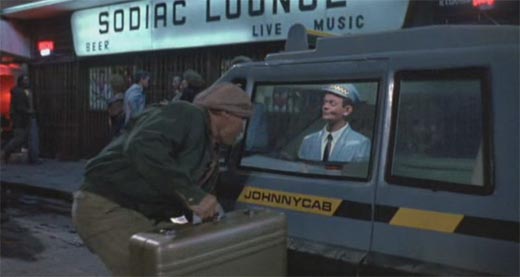
People Would Be More Accepting of Jonny-Cab Once They Try Them Out

Autonomous vehicles seem to have s public perception problem, according to new survey data collected by an industry group. Partners for Automated Vehicle Education surveyed 1,200 Americans earlier this year and found that 48 percent of Americans say they would "never get in a taxi or ride-share vehicle that was being driven autonomously." And slightly more Americans -- 20 percent versus 18 percent -- think autonomous vehicles will never be safe compared to those who say they'd put their names down on a waiting list to get a ride in an autonomous vehicle.

According to the survey data, getting a ride in a robotaxi might change some of those minds. Three in five said that they'd have more trust in autonomous vehicles if they had a better understanding of how those vehicles worked, and 58 percent said that firsthand experience -- i.e. going for a ride in a self-driving car -- would make them trust the technology more.
"Of the 1,200 survey respondents, 678 reported owning an [advanced driver assistance system] ADAS-equipped vehicle, and three-quarters of them said they 'will feel safer on the road when I know that most other vehicles have enhanced safety features,' with the same number saying they are eager to see what new safety features will be on their next vehicle," the report adds.

As describer at Slashdot, "Interestingly, drivers who own cars with forward collision warning (FCW), blind spot monitoring (BSM), lane departure warning (LDW), and automatic emergency braking (AEB) were also more likely to believe that safe autonomous vehicles would be available within the next 10 years compared to those without those features."

Monday, June 24, 2019

More Robot Cars, More Fun in the City

Drivers are already ditching their cars because of apps like Uber. Imagine what happens when driverless cars hit the roads.

Why bother owning a car when you can easily get where you want via your iPhone? This concept is known as “mobility as a service”, where passengers no longer own to their own cars, instead signing on for transportation-on-demand booked through smartphones.

Perhaps, for instance, a commuting plan that charges by the mile or through a monthly fee, like Netflix. Getting rid of cars in growing urban centers is a smart idea, and the world’s automakers are preparing in various ways. A major switch to subscription transportation requires two components. The first is already well underway: the explosion of ride-hailing apps like Uber, Lyft, Grab and others.
The second is still in the works — driverless cars.

Removing the human from behind the wheel slashes the cost of a taxi ride which will make mobility as a service so cheap in many places, it won’t make financial sense to own a car any longer. Lowering the cost per mile will turbo-charge demand for mobility as a service, likely to become a $10 trillion business, according to Ford Motor Company.

That's why tech giants like Google and Apple are developing their own self-driving systems to take on the world's leading automakers, including Volkswagen, General Motors, Ford, and Toyota.

Eventually, a single smartphone app could connect us to a web of options, such as robo-taxis, self-driving shuttles, on-demand subway or tram, e-bikes, and electric scooters. No more driving ourselves though congested cities. All that parking freed up means more space for pedestrians and parks. Unless it is bad — fleets of individually-owned driverless vehicles loosed upon streets and highways, randomly ferrying individual occupants near and far. Or, with so many shared rides, significantly fewer vehicles will be on the road, where is the need to spend billions on bigger highways?

Autonomous vehicles will revolutionize passenger transport, but they are also rapidly changing the delivery business. Data generated from self-driving cars will provide cities with “a more granular viewpoint into everything from infrastructure wear-and-tear to detailed traffic flow information and even sidewalk congestion patterns,” says Brooks Rainwater, director of the Center for City Solutions at the National League of Cities.

Read more here…  http://fortune.com/2019/02/22/self-driving-cars-cities/

Wednesday, March 13, 2019

Will Robo-Cars be Unaffordable?

Many are eagerly awaiting self-driving cars -- but we should recall that all of Silicon Valley’s big bets don’t always pay off.

Silicon Valley is pouring billions into robot cars. Soon – although the time scale keeps shifting – tech manufacturers say driverless cars will replace their traditional counterparts, car parks will become parks again and road fatalities will plummet. People have argued over ethical concerns surrounding the technology, the ensuing job losses and the public’s antipathy to this robot revolution. But the biggest obstacle may well be money.

The article continues, "Driver wages are a key part of taxi fares today. The average cab ride in San Francisco, for example, will cost you around $13. The driver keeps most of that. There is one caveat, however. Taxis are inefficient – so inefficient in fact that cabbies only spend about half their time earning fares."

Read more here....

Thursday, September 7, 2017

Some Legislative Movement on Autonomous Vehicles

Congress might be making progress on self-driving cars: a bill put forth addresses manufacturers seeking to test robot cars have to demonstrate self-driving cars are at least as safe as existing vehicles. States could still set rules on registration, licensing, liability, insurance, and safety, but not performance standards.

The U.S. House ... unanimously approved a sweeping proposal to speed the deployment of self-driving cars without human controls by putting federal regulators in the driver’s seat and barring states from blocking autonomous vehicles.

The House measure, the first significant federal legislation aimed at speeding self-driving cars to market, would allow automakers to obtain exemptions to deploy up to 25,000 vehicles without meeting existing auto safety standards in the first year. The cap would rise over three years to 100,000 vehicles annually.

Read more...

Monday, August 14, 2017

Hidden Messages in Signs... for Robots Only

The company 3M is helping autonomous cars by encoding hidden messages in road signs.

3M is using its expertise with signs to assist with autonomous car development. The company, which now boasts 90,000 employees, is tucking invisible messages into traffic signs to help self-driving cars figure out where they are.

Read more here...

Friday, February 10, 2017

Ford Bets on an Unknown, in the Race to Autonomy

We learned that...


Seemingly out of the blue, Ford announced today that it's investing $1 billion in Argo AI, a Pittsburgh-based company building self-driving technology. Ford is effectively buying the previously unknown startup, which was founded by engineers from Google and Uber. Argo AI will operate as an independent subsidiary and will focus on developing a software platform for Ford's self-driving car, which the company is targeting for 2021. Notably, Ford is also planning to license the technology out to other companies.

Read more...

Monday, January 2, 2017

Downside of Robot Cars - Less Kidneys


Should autonomous cars reach anywhere near their potential of saving lives, the US will face a decline in available organs for transplant.


Read more...

Sunday, December 18, 2016

Argument Fodder: Best P-Wagen Ever?

Which Porsche is the best? Who knows, they are all cool!


Even the original...

More Robot Cars on the Road!

Announced by GM CEO Mary Barra and not long after Uber said it had started a trial self-driving taxi service in San Francisco, and Google said it had transformed its self-driving car project into a standalone business known as Waymo, we see the SAVE Act signed in by Michigan Gov. Rick Snyder. Developed in partnership with major automakers as well as tech firms, it clears the way for self-driving cars devoid of a steering wheel, pedals and a human in control to start testing on Michigan roads. It also lays the groundwork for setting up the criteria required for the eventual sale of self-driving cars to the public. We are seeing more autonomous cars on the road in the U.S.

Delphi and MobilEye to provide off-the-shelf self-driving system by 2019. Both companies have announced that they will bring a fully self-driving (SAE level 4) system on the market for use in a variety of cars in 2019.

In an interview session, Andrew Ng, the chief scientist of the Chinese search engine Baidu expects that a large number self-driving self-driving cars will be on the road within three years, and that mass-production will be in full swing by 2021.

Wednesday, September 14, 2016

Reporters get a look at Uber's self-drive cars in Pittsburgh

Over at the NYT, we read about reporters getting a look at Uber's autonomous vehicles on public roads, in the Pennsylvania city of Pittsburg.

Uber said autonomous cars can reduce vehicle-related deaths, including the nearly 40,000 that occurred in the United States last year, which was the deadliest for automotive-related deaths since 2008 and had the largest year-over-year percentage increase in 50 years, according to the National Safety Council.

Over at Engadget, their reporter tells us:

Uber's cars will likely learn [the customs of local driving] sooner than later, and I got to see examples of that learning on display in my drive. Apparently, when you're stopped at a red light in Pittsburgh, it's customary to let the first car across from you take a left turn if they need to before continuing straight through the intersection (it's called the "Pittsburgh left," appropriately). The autonomous cars thus are programmed to take a little pause before continuing through an intersection when a car across from it has its left blinker on. That's not about driving "right" or "wrong" -- it's about knowing local rules of the road and respecting them. Every area these cars go into will have their own quirky rules like this they'll need to learn.

...and...

While sitting in the back of the Uber, I could look at an iPad mounted to show the riders some details on the car. You can see how far you've driven autonomously, the current speed and a graphic showing the movements of the steering wheel and when the brakes are applied. But most interesting was a view of what the car's radar system is seeing at any given moment. You can see cars, buildings, pedestrians and anything else in range of the car. It'll satisfy the curiosity of people interested in how the car works as well as provide some transparency and possible security to people skeptical about the system.

Tuesday, August 30, 2016

Can You Tell I Can't Wait to Not Drive!

Another company -- emerging from stealth mode -- announced a retrofit kit to make fleet vehicles, from delivery trucks to car services, self-driving. The kit includes a sensor array, computer and an LED sign to communicate with pedestrians and other drivers.

The company, Drive.ai, is past the dev phase, as it holds a license to test self-driving cars in California, and has already been deploying its systems on open roads.

Read more at CNet

Sunday, August 28, 2016

Wednesday, August 17, 2016

Autonomous Vehicles -- from Ford


According to the Guardian,

Ford ... announces plans to make self-driving vehicles for companies such as Uber and Lyft by 2021, saying automation of cars will define the next decade

This comes on the heels of a lobbying effort by Ford and others
Read more here...

Thursday, July 21, 2016

Solar for everyone -- Elon Musk will make Tesla Car Company a broader brand

By snapping up Solar City, Elon Musk plans to provide Solar for everyone, and will make Tesla Car Company a broader brand. Plus - you can make your Tesla part of the autonomous fleet, when you are not using it...!

You will also be able to add your car to the Tesla shared fleet just by tapping a button on the Tesla phone app and have it generate income for you while you're at work or on vacation, significantly offsetting and at times potentially exceeding the monthly loan or lease cost. This dramatically lowers the true cost of ownership to the point where almost anyone could own a Tesla. Since most cars are only in use by their owner for 5% to 10% of the day, the fundamental economic utility of a true self-driving car is likely to be several times that of a car which is not.

https://www.tesla.com/blog/master-plan-part-deux

Wednesday, June 8, 2016

Almost a Flying Car

In Nevada, a prototype flying drone taxi made by a Chinese company is getting closer to testing. As we read at The Consumerist, EHang is working with the Nevada Governor’s Office of Economic Development to enable the firm to develop a testing program for its autonomous aerial taxi. Ehang's autonomous helicopter may soon shuttle a passenger anywhere, no pilot required. Well, within the 20-minute, 60mph range.

Watch a Naval version video here...

The Verge:

Ehang, a Chinese drone company, announced a new product at CES it's calling the Ehang 184, an all electric quadcopter scaled up from a drone so that it's large enough to carry a passenger. Ehang calls it an autonomous aerial vehicle, I prefer personal pilotless helicopter, but if you need to explain what it is to anyone, just say it's a driverless car for the sky.

Thursday, May 5, 2016

Jonny Cab Coming Soon

In The Wall Street Journal we read that Lyft customers in a “yet-to-be-disclosed city” will soon be able to select self-driving cars from a menu within the ride-hailing app on their smartphone. These cars will still have humans in the driver’s seat at the onset to intervene if the system fails and to satisfy laws about taxi operation, “but the driver is expected to eventually be obsolete.”


Thursday, April 28, 2016

Better Ways to Get to Work -- While We Wait for Autonomous Cars

Read about car share and other upgrades coming thanks to technology, over at the WSJ--

Ride-sharing firms Uber Technologies Inc. and Lyft Inc. are experimenting with carpooling services that are changing how people get to work. Both companies, best known for providing a fleet of private drivers that can be matched to individual passengers through their smartphones, have introduced technology that groups strangers as passengers—thus saving commuters money—by using algorithms that match distances and times of trips with other people going to similar places or in similar directions.

In Late March, Lyft launched Lyft Carpool, a pilot program in the San Francisco Bay Area, to address a heavily congested section of Highway 101 between San Francisco and Silicon Valley. That program matches commuters with other commuters rather than private drivers. The company also is working with the regional Metropolitan Transportation Commission to expand carpool lanes along that route...

Researchers are looking at how mobile apps, social media and predictions about traffic flow can all combine to deliver a better commute. Of course, the NYT has information on how Uber is looking to relieve congestion.

Call up the app, specify your destination, and in exchange for a significant discount, UberPool matches you with other riders going the same way. The service might create a ride just for you, but just as often, it puts you in a ride that began long ago — one that has spanned several drop-offs and pickups, a kind of instant bus line created from collective urban demand.