The way the business would work is because the satellites operate on modified but mostly ordinary off-the-shelf software and connect to phones with no modifications necessary, Ubiquitilink will essentially be a worldwide roaming operator that mobile networks will pay to access.
Showing posts with label iPhone. Show all posts
Showing posts with label iPhone. Show all posts
Monday, March 4, 2019
Global Mobil (cellular) Roaming via Satellite - with your current iPhone!
At the Mobile World Congress in Barcelona, Ubiquitilink said, by employing a constellation of satellites in low Earth orbit, that pretty much any phone from the last decade should be able to text and do other low-bandwidth tasks from anywhere, even in the middle of the ocean or deep in the Himalayas.

Monday, April 11, 2016
Emoji on Different Platforms -- Look Different, Can be Misinterpreted
A study by the GroupLens Research team at the University of Minnesota examines the variations between some popular emoji presentations and how they are perceived. The most widely misinterpreted is the “grinning face with smiling eyes” emoji, which—depending on the platform—can range from the rosy-cheeked cherubic face of glee to the anguished clenched-teeth look of constipation.
Comparing the differences in emoji across platforms is interesting. GroupLens researchers asked subjects to rate 22 anthropomorphic emoji from five platforms by sentiment, using a scale that ranged from strongly negative to strongly positive.

Comparing the differences in emoji across platforms is interesting. GroupLens researchers asked subjects to rate 22 anthropomorphic emoji from five platforms by sentiment, using a scale that ranged from strongly negative to strongly positive.

Wednesday, September 10, 2014
Apple's iPhone Barometer - clear sailing for weather apps?
Many weather enthusiasts are seeing sunny days -- the new iPhone 6 carries a barometer, which measures atmospheric pressure. The sensor is mostly intended to provide elevation data to fitness and other apps (GPS satellites do a poor job of triangulating elevation, with an error rate of upwards of 60 feet +\-).
While barometric pressure readings can be subject to the vagaries of local conditions, accuracy may be an issue for weather-gathering apps. Combined with geo-located map data, however, you will have accurate on-point readings. Only flight requires accurate elevation readings that GPS can't give -- why you calibrate your baramoter at the apron of the departure runway, which has MSL marked on the chart. Using statistical sampling could overcome some data accumulation problems, as well.
Anytime scientists can gather more data, we all benefit. Look at Google's traffic display on their maps -- crowdsourcing works.
While barometric pressure readings can be subject to the vagaries of local conditions, accuracy may be an issue for weather-gathering apps. Combined with geo-located map data, however, you will have accurate on-point readings. Only flight requires accurate elevation readings that GPS can't give -- why you calibrate your baramoter at the apron of the departure runway, which has MSL marked on the chart. Using statistical sampling could overcome some data accumulation problems, as well.
Anytime scientists can gather more data, we all benefit. Look at Google's traffic display on their maps -- crowdsourcing works.
Tuesday, August 12, 2014
Want Safe Juice? Better Wear a USB Condom!
Waiting for your flight, your smart phone’s battery is about to die. Or perhaps at a hotel conference or shopping mall. You don’t have your power cable needed to charge your tablet or phone, but you do have a USB cord that can supply the needed power. Then you spot an help: a free charging kiosk.
Didn't think before connecting your phone to this unknown device -- which could be configured to read most of the data on your phone, and perhaps even upload malware? Better consider a USB Condom!

At the 2014 DefCon (a hacker's convention), over 350 attendees (who should be "in the know" about this) plugged their smart phones into a charging kiosk built by Brian Markus, president of Aires Security, and fellow researchers Joseph Mlodzianowski and Robert Rowley. They built the charging kiosk to educate attendees about the potential perils of juicing up at random power stations. To make their charging station more attractive to passersby, Markus and his pals equipped it with a variety of charging cables to fit the most popular wireless devices. When no device was connected, the LCD screen fitted into the charging station displayed a blue image with the words “Free Cell Phone Charging Kiosk.” The screen switched to a red warning sign when users plugged in any devices. The warning message read:
The security problems with USB devices isn’t just in what they carry, it is built into the core of how they work. That’s the takeaway from findings of security researchers Karsten Nohl and Jakob Lell. The malware they created, called BadUSB, can be installed on a USB device to completely take over a PC, invisibly alter files installed from the memory stick, or even redirect the user’s internet traffic. ... And the two researchers say there’s no easy fix. ... They spent months reverse engineering the firmware that runs the basic communication functions of USB devices. Read more at Slate...
Didn't think before connecting your phone to this unknown device -- which could be configured to read most of the data on your phone, and perhaps even upload malware? Better consider a USB Condom!

At the 2014 DefCon (a hacker's convention), over 350 attendees (who should be "in the know" about this) plugged their smart phones into a charging kiosk built by Brian Markus, president of Aires Security, and fellow researchers Joseph Mlodzianowski and Robert Rowley. They built the charging kiosk to educate attendees about the potential perils of juicing up at random power stations. To make their charging station more attractive to passersby, Markus and his pals equipped it with a variety of charging cables to fit the most popular wireless devices. When no device was connected, the LCD screen fitted into the charging station displayed a blue image with the words “Free Cell Phone Charging Kiosk.” The screen switched to a red warning sign when users plugged in any devices. The warning message read:
“You should not trust public kiosks with your smart phone. Information can be retrieved or downloaded without your consent. Luckily for you, this station has taken the ethical route and your data is safe. Enjoy the free charge!”Markus said the comments from those who chose to juice up their phones at the kiosk were the most rewarding part of the project. But that's not all: Anything using USB is totally unsafe. A bold warning from Security Research Labs, given at Black Hat, another hacker con. Basically, any USB device can do anything it wants to your PC or Mac, and there's nothing you can do to stop it, detect it, or remediate it.
The security problems with USB devices isn’t just in what they carry, it is built into the core of how they work. That’s the takeaway from findings of security researchers Karsten Nohl and Jakob Lell. The malware they created, called BadUSB, can be installed on a USB device to completely take over a PC, invisibly alter files installed from the memory stick, or even redirect the user’s internet traffic. ... And the two researchers say there’s no easy fix. ... They spent months reverse engineering the firmware that runs the basic communication functions of USB devices. Read more at Slate...
Tuesday, March 11, 2014
Leave it to Micro$oft to want to take the Government backwards...
We've seen some proactive attempts to lower costs and increase choice in the public sector when it comes to the technology tools tax payers must foot the bill for. The U.K. Government's decision to look at open source software, for example, as an alternative to using products like Microsoft Office across entire departments could lead to major cost savings, according to a policy document. The policy is pretty broad, where the UK Government will consider OSS solutions alongside proprietary ones in IT procurements. Contracts will be awarded on a value for money basis and the UK Government will only use products for interoperability that support open standards and specifications in all future IT developments. This approach ensures avoiding lock-in to proprietary IT products and services.
Of course, when the iPhone debuted, the government was fully committed to Blackberry. Getting a new mobile platform in the door at U.S. federal agencies was no small task -- even with Apple's "walled garden" that made secure apps possible, and the "sandbox" memory partitions that keep iOS secure. Microsoft's own phone offering, a laggard in the consumer space, only just recently was able to get certification. Demand for the iPhone drove adoption at agencies -- just like Blackberry did back in 2001-2003. However, a lesson learned from that experience was that proprietary means more expensive -- and, with the iPhone, the concept of Bring-your-own-device (BYOD) was born. Now we see MS trying to roll back the clock, leveraging Exchange dominance to enforce use of its own products.
Let's hope tight budgets and common sense push CIOs to reject a fall-back to the dark days of Blackberry dominance. Read more of John Breedon's view here...
Of course, when the iPhone debuted, the government was fully committed to Blackberry. Getting a new mobile platform in the door at U.S. federal agencies was no small task -- even with Apple's "walled garden" that made secure apps possible, and the "sandbox" memory partitions that keep iOS secure. Microsoft's own phone offering, a laggard in the consumer space, only just recently was able to get certification. Demand for the iPhone drove adoption at agencies -- just like Blackberry did back in 2001-2003. However, a lesson learned from that experience was that proprietary means more expensive -- and, with the iPhone, the concept of Bring-your-own-device (BYOD) was born. Now we see MS trying to roll back the clock, leveraging Exchange dominance to enforce use of its own products.
One of the most interesting things that struck me was that while many companies are developing products and services to help with Bring Your Own Device initiates, quite a few people, either privately or off the record, seemed to feel BYOD in government was a passing phase. So while the focus of many mobility efforts are squarely on BYOD, there is a huge pool of people who apparently don’t think it can, or should, last within government.
That means that instead, government agencies will eventually fall back to the older model where a set of uniform devices are purchased and configured by an agency and then deployed to users. But what devices will be used? A few years ago, the answer was easy: BlackBerry. But with its declining fortunes, it’s safe to say other companies are smelling blood in the water. BlackBerry was so successful at getting into government service because it offered a highly secure alternative, though not necessarily a more convenient one, to every consumer phone on the market at the time.
Windows phones have not done so well in the consumer market compared to Android and iOS devices, so the move toward government and business makes sense
Sometime this spring, Microsoft plans to push out an Enterprise Feature pack to every Windows phone. This heavy set of tools includes the ability to use S/MIME to sign and encrypt email, automatically configure and access information through a VPN tunnel and the important ability to manage, enroll, update and revoke security certificates for users on a corporate or government network.
Let's hope tight budgets and common sense push CIOs to reject a fall-back to the dark days of Blackberry dominance. Read more of John Breedon's view here...
Monday, January 6, 2014
"You keep using that word. I do not think it means what you think it means"
In keeping with what a great swordsman once uttered, using that word wrong doesn't make your web service work better. The Application Programming Interface (API) in Service Oriented Architecture (SOA) is a new catch phrase, we hear. This so-called 'REST API' is almost always just an 'HTTP interface' given a fancy name to make it sound better, more so than the integration strategy many consultants are offering up. In an organization with an e-commerce or web development team, this "programmer" view makes SOA seem cool.
REST stands for Representational State Transfer, as proposed in a doctorate dissertation. This approach uses the four HTTP methods GET, POST, PUT and DELETE to execute different operations, compared to SOAP, which creates new arbitrary commands (verbs) like getAccounts() or applyDiscount(). Thus, a REST API is a set of operations that can be invoked by means of any the four verbs, using the actual URI as parameters for a web service operation. For example, we might have a method to query all case management accounts which can be called from /accounts/all/ to invoke a HTTP GET and the 'all' parameter. This tell the web service that to return all accounts, probably in an XML stream annotated for the particular client (with CSS, for example, for a browser).
Here at Bluedog, our apps have always been built with the web tier against the same set of "APIs" as the mobile tier. The advantage of a Java/WebObjects framework is "out-of-the-box" support for a variety of clients. The Ajax framework in Project Wonder provides many of the features that Rails users have come to expect, but written in a style that fits well with "The WebObjects Way" of doing things. An attempt is made to avoid writing javascript whenever feasible, as well as providing as much support for component actions as possible.
The majority of Ajax framework is written without dependencies on ERExtensions (the core framework in Project Wonder). This means that for most Ajax capabilities (the JavaScript/CSS components that give sizzle to the browser), we can use a framework without making a Web Service or Application extend any classes. Advanced capabilities can be designed using supporting classes that are available in the ERExtensions framework or by extending the open source classes such as ERXSession in our foundation frameworks.

The rise of mobile has harkened back the older client/server model which emphasized rich client interfaces, first made popular with Swing and other attempts at native Java clients. With our "API-first" development model, the Java/WebObjects tier is the interface to the device -- or client. When you put a desktop browser client, mobile native app (Objective C for iPhone or iPad) or a desktop app in front of the app server you make a mobile-enabled stack is simple. And all is right, in the world of SOA.
REST stands for Representational State Transfer, as proposed in a doctorate dissertation. This approach uses the four HTTP methods GET, POST, PUT and DELETE to execute different operations, compared to SOAP, which creates new arbitrary commands (verbs) like getAccounts() or applyDiscount(). Thus, a REST API is a set of operations that can be invoked by means of any the four verbs, using the actual URI as parameters for a web service operation. For example, we might have a method to query all case management accounts which can be called from /accounts/all/ to invoke a HTTP GET and the 'all' parameter. This tell the web service that to return all accounts, probably in an XML stream annotated for the particular client (with CSS, for example, for a browser).
Here at Bluedog, our apps have always been built with the web tier against the same set of "APIs" as the mobile tier. The advantage of a Java/WebObjects framework is "out-of-the-box" support for a variety of clients. The Ajax framework in Project Wonder provides many of the features that Rails users have come to expect, but written in a style that fits well with "The WebObjects Way" of doing things. An attempt is made to avoid writing javascript whenever feasible, as well as providing as much support for component actions as possible.
The majority of Ajax framework is written without dependencies on ERExtensions (the core framework in Project Wonder). This means that for most Ajax capabilities (the JavaScript/CSS components that give sizzle to the browser), we can use a framework without making a Web Service or Application extend any classes. Advanced capabilities can be designed using supporting classes that are available in the ERExtensions framework or by extending the open source classes such as ERXSession in our foundation frameworks.
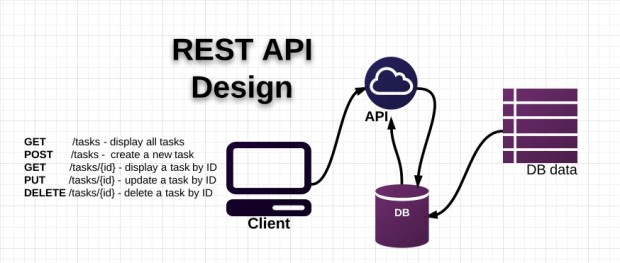
The rise of mobile has harkened back the older client/server model which emphasized rich client interfaces, first made popular with Swing and other attempts at native Java clients. With our "API-first" development model, the Java/WebObjects tier is the interface to the device -- or client. When you put a desktop browser client, mobile native app (Objective C for iPhone or iPad) or a desktop app in front of the app server you make a mobile-enabled stack is simple. And all is right, in the world of SOA.
Friday, December 6, 2013
No Presidential iPhone for Security Reasons? What the Frack?!
Recently, the President told attendees at a White House Youth Summit he wasn't allowed to have an iPhone "for security reasons." President Obama was talking about the price of health insurance under the Affordable Care Act (“Obamacare”). He compared cable / phone bills many young people are paying (more than US$100 per month) to health insurance at the same price, saying it is a good deal.
Then he said, “Now, I am not allowed, for security reasons, to have an iPhone,” adding that Sasha and Malia seem to be spending a lot of time on their own Apple devices.
Crikey, the President of the United States is out of touch.
As Tom Cheredar points out,
While it is hard to imagine decade-old technology is the best choice for the Commander-in-Chief, remember that White House mobile communications are secured with SecurVoice, a company slow to support Apple technology. One might imagine camera-phones are not allowed in the top-secret environments of the White House. But so are any other transmitting/recording devices.
I can understand wanting to get the most out of the government's investment in existing infrastructure (BlackBerry technology is on the server side), but certainly some of the money that goes into upgrades could be used for a phone from this millennium? Even at Bluedog central we use secured base stations locked to specific devices.
Quoting Tom again,
Then he said, “Now, I am not allowed, for security reasons, to have an iPhone,” adding that Sasha and Malia seem to be spending a lot of time on their own Apple devices.
Crikey, the President of the United States is out of touch.
As Tom Cheredar points out,
First of all, using a BlackBerry in 2013 means you’re probably out of touch with the majority of other people. That may sound like an insignificant detail, but the iPhone’s (and yes, Android’s certainly as well) UI and usability can shape a person’s perspective on how to approach and resolve new problems. So, do we really want BlackBerry OS coloring the president’s perspective, or would we rather have iOS, Android, or Windows Phone?
While it is hard to imagine decade-old technology is the best choice for the Commander-in-Chief, remember that White House mobile communications are secured with SecurVoice, a company slow to support Apple technology. One might imagine camera-phones are not allowed in the top-secret environments of the White House. But so are any other transmitting/recording devices.
I can understand wanting to get the most out of the government's investment in existing infrastructure (BlackBerry technology is on the server side), but certainly some of the money that goes into upgrades could be used for a phone from this millennium? Even at Bluedog central we use secured base stations locked to specific devices.
Quoting Tom again,
...as a nation whose companies and entrepreneurs are leading the world in technological advancement, I’m sad that giving Obama his choice of smartphone even merits a discussion. After all, 44 years ago we put a man on the moon just to say we did it before anyone else. But in our current era, we’re struggling to keep a man on Healthcare.gov long enough to sign up for health insurance coverage and telling the commander-in-chief what smartphone he’s allowed to use.Sigh, so much for technological leadership.
Tuesday, November 5, 2013
Steve Jobs jumped in bed too soon with micr$oft in the 80s, Google in the double-oughts
When Steve Jobs recruited Microsoft to be the first outside developer of applications for the Macintosh in 1981, he was concerned that they might try to copy Apple's ideas into a PC-based user interface. As a condition of getting an early start at Macintosh development, Steve Jobs made Microsoft agree not to ship any software that used a mouse until at least one year after the first shipment of the Macintosh.
In 1983, after his visit to Apple, Bill Gates made an exciting announcement at the industry's biggest trade show, Comdex -- he had a new, mouse-based graphical user interface called Windows. It worked just like the top-secret one Steve Jobs had shown him. Bill gates had stolen Steve's thunder before the Macintosh had been released yet. When Steve found out, he went ballistic. A rift that took decades to heal was formed. And the crucial lead in bringing a product to market was hampered.
Fast forward to this century. Apple allied itself with Google,
In 2001, when Google was a noob start-up with roughly $50 million in revenues, Google's co-founders met Steve Jobs and wanted him to become Google's CEO. Having just developed the iconic iPod, Jobs demurred and took Larry Page and Sergey Brin under his wing and mentored them.
In secrecy, Apple started development of the iPhone in 2004. In August 2005, Google quietly bought the Android start-up, when no one outside of Apple was supposed to know that Apple was working on the iPhone. Google Chairman Eric Schmidt joined Apple's Board in August 2006.
Apple launched the iPhone in 2007; later that year Google showed a video that compared Google-Android's original pre-iPhone "before" prototype -- it looked and operated more like a Blackberry than the "smart" phone look we all know today. That video compared the old look to a post-iPhone-launch "after" prototype that heavily-resembled the look-and-feel of iOS. This new look incorporated many of Apple's signature touch-screen innovations.
Google's leaders betrayed a longtime personal trust and friendship of Steve Jobs, stealing what he believed was Apple's most prized possession.
In Steve Jobs, by Walter Isaacson, Steve Jobs famously quoted,
Will Apple thrive as a creative company without Jobs? Did Steve Jobs balance emotion and intelligence as a leader? I believe he did -- his mistakes were from honest efforts at cooperation and collaboration, and an emotional commitment to others. Sure he was flawed -- we all are -- but his creative instincts were coupled with his emotional side. Even with some mistakes, we all move forward, if we persevere.
In 1983, after his visit to Apple, Bill Gates made an exciting announcement at the industry's biggest trade show, Comdex -- he had a new, mouse-based graphical user interface called Windows. It worked just like the top-secret one Steve Jobs had shown him. Bill gates had stolen Steve's thunder before the Macintosh had been released yet. When Steve found out, he went ballistic. A rift that took decades to heal was formed. And the crucial lead in bringing a product to market was hampered.
Fast forward to this century. Apple allied itself with Google,
In 2001, when Google was a noob start-up with roughly $50 million in revenues, Google's co-founders met Steve Jobs and wanted him to become Google's CEO. Having just developed the iconic iPod, Jobs demurred and took Larry Page and Sergey Brin under his wing and mentored them.
In secrecy, Apple started development of the iPhone in 2004. In August 2005, Google quietly bought the Android start-up, when no one outside of Apple was supposed to know that Apple was working on the iPhone. Google Chairman Eric Schmidt joined Apple's Board in August 2006.
Apple launched the iPhone in 2007; later that year Google showed a video that compared Google-Android's original pre-iPhone "before" prototype -- it looked and operated more like a Blackberry than the "smart" phone look we all know today. That video compared the old look to a post-iPhone-launch "after" prototype that heavily-resembled the look-and-feel of iOS. This new look incorporated many of Apple's signature touch-screen innovations.
Google's leaders betrayed a longtime personal trust and friendship of Steve Jobs, stealing what he believed was Apple's most prized possession.
In Steve Jobs, by Walter Isaacson, Steve Jobs famously quoted,
"…I will spend every penny of Apple's $40 billion in the bank, to right this wrong. I'm going to destroy Android, because it's a stolen product. I'm willing to go thermonuclear war on this."Steve Jobs is widely regarded as a visionary leader but could be harsh with people working around him. Leaders with a high degree of emotional intelligence know what they're feeling, what their emotions mean, and how these emotions can affect other people. For many, high levels of emotional intelligence is essential for success.
Will Apple thrive as a creative company without Jobs? Did Steve Jobs balance emotion and intelligence as a leader? I believe he did -- his mistakes were from honest efforts at cooperation and collaboration, and an emotional commitment to others. Sure he was flawed -- we all are -- but his creative instincts were coupled with his emotional side. Even with some mistakes, we all move forward, if we persevere.
Tuesday, August 13, 2013
Apple - Not the Patent Troll You Think
This article at Apple Insider provides an excellent summary of the history of Apple and its attempts to protect its intellectual property. And, by the way, the folks at Cupertino did not steal from Xerox.
So when innovators try to protect their hard work, thieving brigands should beware.
The closest thing in the history of computing to a Prometheus myth is the late 1979 visit to Xerox PARC by a group of Apple engineers and executives led by Steve Jobs. According to early reports, it was on this visit that Jobs discovered the mouse, windows, icons, and other technologies that had been developed at PARC. These wonders had been locked away at PARC by a staff that didn't understand the revolutionary potential of what they had created. Jobs, in contrast, was immediately converted to the religion of the graphical user interface, and ordered them copied by Apple, starting down the track that would eventually yield the Lisa and "insanely great" Macintosh. The Apple engineers-- that band of brothers, that bunch of pirates-- stole the fire of the gods, and gave it to the people.
It's a good story. Unfortunately, it's also wrong in almost every way a story can be wrong. There are problems with chronology and timing. The testimony of a number of key figures at Apple suggests that the visit was not the revelation early accounts made it out to be. But the story also carries deeper assumptions about Apple, Xerox PARC, computer science in the late 1970s, and even the nature of invention and innovation that deserve to be examined and challenged.
So when innovators try to protect their hard work, thieving brigands should beware.
Tuesday, June 11, 2013
Mobility Shines On, with WWDC and More News
Every day we see more mobility -- and everyone's reliance on mobile phones means mobile apps are clearly a cornerstone of this. We see the mobile app as entertainment, as tool, as necessity. I've been witness to how using the web as a platform for application and business process development has increased the value to enterprises -- and to individuals. Consumer uptake drives the enterprise these days. Think of BYOD, bring your own device. The future of computing at work is based on staff buying and maintaining their own (multipurpose) devices.
Mobile technology means more open access to business applications for employees and partners. SOA, as many readers should know by now, opens the door to the API level of business application access. But consumer apps are following that trend. Recently, a note taking app I like released its own API, so anyone could utilize the service layer it provides.
Corporate intranets are being architected in DMZs allowing for mobile browser access -- again, supporting the BYOD model. This type of open access will only accelerate.
One metric drives much of this -- there's a huge increase in mobile web browsing.

At WWDC, we see many new advances in iOS and other Apple technologies. But it's still "Apple vs everyone", as even snarky anti-Google comments highlight. Just yesterday Apple CEO Tim Cook introduced iOS 7, Apple's newest mobile operating system, calling it "the biggest change to iOS since the introduction of the iPhone." In a video showing off the redesigned system, design guru Jonny Ive revealed it will have a quick settings area, new swipe-to-unlock screen and flatter icons in an interface envisioned differently from the recent past. Change is inevitable in the mobile world, and Apple seems to be leading the way.
Mobile technology means more open access to business applications for employees and partners. SOA, as many readers should know by now, opens the door to the API level of business application access. But consumer apps are following that trend. Recently, a note taking app I like released its own API, so anyone could utilize the service layer it provides.
Corporate intranets are being architected in DMZs allowing for mobile browser access -- again, supporting the BYOD model. This type of open access will only accelerate.
One metric drives much of this -- there's a huge increase in mobile web browsing.
At WWDC, we see many new advances in iOS and other Apple technologies. But it's still "Apple vs everyone", as even snarky anti-Google comments highlight. Just yesterday Apple CEO Tim Cook introduced iOS 7, Apple's newest mobile operating system, calling it "the biggest change to iOS since the introduction of the iPhone." In a video showing off the redesigned system, design guru Jonny Ive revealed it will have a quick settings area, new swipe-to-unlock screen and flatter icons in an interface envisioned differently from the recent past. Change is inevitable in the mobile world, and Apple seems to be leading the way.
Wednesday, May 15, 2013
Crowd-sourcing data - and innovating along the way
Many organizations are turning to crowd sourcing to attack data gathering problems. THis so-called “wisdom of the crowds” approach is very compelling: thousands of free-roaming, autonomous data input points, possibly at no cost (or maybe even getting a revenue stream from the app itself). Of course, overcoming privacy concerns (linking the GPS data of each device to the user) is a challenge. For example, TomTom uses data from its devices for traffic condition reporting -- in real time. The approach consolidates data from all the TomTom sat nav in use to get the actual speed of traffic on roads at certain times, versus the posted speeds. They also allow their users to submit map updates. After about 30 days from release, there were more than 6,500 updates to the maps.
Eco-warriors can get the power of crowds on their side with this. Find out where water pollution sources are -- but with augmented sensors, as this approach relies on a sensor plugged into the audio jack on a smartphone that senses water quality using a microeletromechanical (MEMs) sensor inside the dongle. The goal is to eventually use the MEMs packed into the device to measure nitrate, heavy metal, carcinogens, and bacteria in water.
There's plenty of more crowd sourcing options with smart phones. Read more here...
Eco-warriors can get the power of crowds on their side with this. Find out where water pollution sources are -- but with augmented sensors, as this approach relies on a sensor plugged into the audio jack on a smartphone that senses water quality using a microeletromechanical (MEMs) sensor inside the dongle. The goal is to eventually use the MEMs packed into the device to measure nitrate, heavy metal, carcinogens, and bacteria in water.
There's plenty of more crowd sourcing options with smart phones. Read more here...
Tuesday, April 9, 2013
Google in trouble for predatory pricing -- for NOT charging.
Fairsearch Europe, a group including rivals Microsoft, claims Android operating system is 'deceptive way' to dominate markets. The group says Android is "a deceptive way to build advantages" which aims to "dominate the mobile marketplace and cement its control over consumer internet data for online advertising as usage shifts to mobile.
The complaint comes as the European commission's antitrust chief, Joaquín Almunia, continues an investigation into Google's dominance in search that has ground on for more than two years without any clear action. The EC competition group has raised four principal objections to Google's activities in Europe – normally a precursor to regulatory action.
Android-powered phones make up about 70% of those shipped in Europe at present, though a smaller amount of the installed base. Microsoft's Windows Phone makes up around 5%. Not to be left out, Apple has been the subject of European Union complaints about anticompetitive practices carried out by Apple, and its administrative department -- the European Commission -- is closely monitoring the situation.
Carriers throughout Europe (but mainly French carriers) have sent information regarding their contracts with Apple to the European Commission saying that Apple's rules for carrying the iPhone are anticompetitive.
According to many, predatory pricing is a practice of selling a product or service at a very low price, intending to reduce competitors out of the market, or create barriers to entry for potential new competitors. To many economists, this is an absurd concept: as long as any transaction takes place because the parties to it agree to the price, the only reason they will do so is because each party thinks he will be better off doing the transaction, than not. One party is not "preying on" the other.
To this author's mind, the term of arbitrary and moralizing based on non-economic views -- whoever is using the term disapproves of an actual price for whatever reason; there is no reason why Google should offer its mobile operating system for free, if handset makers agree. They do have a "EULA" or licensing agreement to abide by, after all.
Some argue that it is particularly hypocritical for a government agency to criticize companies' pricing, since the funding of government comes from taxation, which is not a voluntary transaction, but is based on coercion -- ultimately the threat of imprisonment. The only real predatory pricing is taxation, to many anarcho-capitalists.
The complaint comes as the European commission's antitrust chief, Joaquín Almunia, continues an investigation into Google's dominance in search that has ground on for more than two years without any clear action. The EC competition group has raised four principal objections to Google's activities in Europe – normally a precursor to regulatory action.
Android-powered phones make up about 70% of those shipped in Europe at present, though a smaller amount of the installed base. Microsoft's Windows Phone makes up around 5%. Not to be left out, Apple has been the subject of European Union complaints about anticompetitive practices carried out by Apple, and its administrative department -- the European Commission -- is closely monitoring the situation.
Carriers throughout Europe (but mainly French carriers) have sent information regarding their contracts with Apple to the European Commission saying that Apple's rules for carrying the iPhone are anticompetitive.
According to many, predatory pricing is a practice of selling a product or service at a very low price, intending to reduce competitors out of the market, or create barriers to entry for potential new competitors. To many economists, this is an absurd concept: as long as any transaction takes place because the parties to it agree to the price, the only reason they will do so is because each party thinks he will be better off doing the transaction, than not. One party is not "preying on" the other.
To this author's mind, the term of arbitrary and moralizing based on non-economic views -- whoever is using the term disapproves of an actual price for whatever reason; there is no reason why Google should offer its mobile operating system for free, if handset makers agree. They do have a "EULA" or licensing agreement to abide by, after all.
Some argue that it is particularly hypocritical for a government agency to criticize companies' pricing, since the funding of government comes from taxation, which is not a voluntary transaction, but is based on coercion -- ultimately the threat of imprisonment. The only real predatory pricing is taxation, to many anarcho-capitalists.

Tuesday, February 26, 2013
Mobile computing -- smart phones like the iPhone are re-defining the personal computing space
At the Barcelona mobile event, U.S.'s AT&T CEO Randall Stephenson says potential for combination of emerging technologies is sure to mean growth for business, and a better experience for consumers. He sees his company (and other mobile providers) expanding services to enable users to stream stored data and content from the cloud at faster rates and with lower delays. The net result: increased data usage and necessary additional investment in spectrum and network infrastructure (towers, repeaters, routers). Stephenson pointed out that the Texas-based AT&T experienced a 30,000 percent increase in data traffic in the past six years as more customers use mobile phones to check e-mails, watch video, and surf the web.
No argument that mobility is important -- people need to be able to access applications and data any time, anywhere.
Regulators should use a “light touch” and keep taxes “very, very low” to encourage new investment and allow more data traffic, Stephenson said. His sentiments were echoed today by the CEO’s of Telecom Italia SpA and Telefonica SA who called for a change in the regulatory environment to allow more consolidation among European carriers.
By the end of 2017, there will be 9.7 billion wireless connections worldwide as the industry brings mobile communications into cars and other consumer electronics, according to the GSMA industry association.
No argument that mobility is important -- people need to be able to access applications and data any time, anywhere.
Thursday, January 24, 2013
Apple Misses Target, Shares Slip
Some disappointing news for Apple Fandom (well, shareholders). While sales of iPhone and other nifty gadgets continue, some targets are missed. Of course, Tim Cook looks on the bright side:
Sorry to be a downer, but I said this *way back* when SJ left/was booted out the first time. Without its leader, a cult, ahem, company has ultimately a hard time avoiding the downwards spiral (the same as Microsoft without Bill Gates, IMHO).
Luckily, SJ started NeXT, and was able to continue development of the BSD-based operating system that powers Macs and iOS today. And he picked up Pixar, which saved Disney, thanks to John Lasseter. And learned an awful lot about life...
But no to be 100% negative -- I think Apple has a WHOLE LOT of smart/creative and driven people. It will continue to be a great company. But without its founder at the helm, stormy seas ahead.
“No technology company has ever reported these kind of results,” chief executive Tim Cook said in a conference call with analysts after the company reported its earnings for the first quarter of its fiscal 2013 year. “Apple is in one of the most prolific periods of innovation and new products in its history.”
Sorry to be a downer, but I said this *way back* when SJ left/was booted out the first time. Without its leader, a cult, ahem, company has ultimately a hard time avoiding the downwards spiral (the same as Microsoft without Bill Gates, IMHO).
Luckily, SJ started NeXT, and was able to continue development of the BSD-based operating system that powers Macs and iOS today. And he picked up Pixar, which saved Disney, thanks to John Lasseter. And learned an awful lot about life...
But no to be 100% negative -- I think Apple has a WHOLE LOT of smart/creative and driven people. It will continue to be a great company. But without its founder at the helm, stormy seas ahead.
Wednesday, November 14, 2012
Blackberry turning sour for DHS
As many users are BYOD (Bring Your Own Device), even government CIOs have to be responsive. One ramification -- BlackBerry suffered a serious setback as the de facto mobile device in federal government, when U.S. Immigration and Customs Enforcement chose the iPhone as its new mobile platform. Pushed by end user demand, and a lower Total Cost of Ownership, the government is seeking alternatives that bring quality smart phone capabilities to civil servants. It doesn't help when Blackberries have problems, as well. Over at Apple, the options for the federal sector are manifold. Technorati has a good brief on government use of iOS devices.
Friday, November 9, 2012
Cloud + Mobile = Better Use of Resources, Happier End Users
Telecoms -- part of my core customer base when I launched Bluedog -- have an integral role in cloud computing. Those cloud services have the highest need to have always-on access and users expect a flawless network experience. Verizon's acquisition of private-cloud provider Terremark, for example, highlights the importance of cloud to telcos.
Jason Young, vice president of product strategy at T-Mobile USA, during a panel discussion at the Open Mobile Summit remarked, “What we spend a lot of time thinking about, from a network standpoint, is that we’re a highway to the cloud." He went on to explain that basically means just connecting customers to the cloud-based services they want to use.
The convergence of cloud and mobile was the topic of discussion at the OpenMobile Summit. With the iPhone and other smart phones becoming ubiquitous, the iPad continues its rapid growth and internet access becomes standard in everything from a TV through to cars, fridges and a host of other devices, the mobile economy is ramping up. As teleco carriers continue to redefine business models and new entrants continue to disrupt existing markets -- and make new ones -- the focus of the role of cloud on mobile will sharpen.
Monday, October 29, 2012
It's the Future, at least for Now
So, are you as confused about which i-thingy to get as I am? I mean, what's the difference between the iPad mini and the iPod touch? Besides the size of the display... which is a Retina display on the iPod, but not on the Mini. Oh, and the camera. Or was that the processor? Maybe this leaked video will help clarify what device to buy -- until the next device comes out.


Monday, October 1, 2012
Kaizen for knowledge work

My efforts at bringing Kaizen to knowledge workers is not my only interest. In the new millennium, remote work (telework) is the future. Obviously some workers will have to man the walls, turn the sprockets, oil the gears. But for the vast majority of creatives, programmers, and other thought workers, enabling remote work, according to many sources, will increase the overall productivity by 22%. And small business owners can adopt mobile and cloud technology with little expense.
Indeed, the benefits are manifold with the trends showing that going mobile is the way to access the internet. With upwards of 3o% of the global workforce already telecommuting, the cloud and mobile computing will boost those numbers.
Here's more...
Friday, August 17, 2012
Being connected - people really like it
Regular readers know that I place a high value on communication, the essence of which is the transfer of information. Throughout history this has been a key element in the evolution of civilized societies, and is a requirement of organization and planning.
The advancement of communication technology has addressed unique aspects of information transfer:
- the speed and distance at which information can be transmitted,
- the permanency of the information, and
- the volume of information that can be transmitted.
Throughout history, technological innovations have allowed for the steady improvement of all three aspects. However, in the last three decades, advances and globalization has made complicated and convoluted these once unique qualities as factors that were once limiting began to disappear.
In the results of this Time Magazine poll, we can see that people are attached to their mobiles. Of course, humans evolved and came to dominate this planet because of our ability to communicate, coordinate, and negotiate.
Some interesting tidbits: around one in four people check their mobile phone at least once every half-hour. People ages 25-29 sleep with their phones. Seventy-six percent of Americans think that being constantly connected is a mostly good thing. This contrasts others around the world, where, in South Korea, for example, mobiles are considered a distraction from responsibility by over sixty percent.
The advancement of communication technology has addressed unique aspects of information transfer:
- the speed and distance at which information can be transmitted,
- the permanency of the information, and
- the volume of information that can be transmitted.
Throughout history, technological innovations have allowed for the steady improvement of all three aspects. However, in the last three decades, advances and globalization has made complicated and convoluted these once unique qualities as factors that were once limiting began to disappear.
In the results of this Time Magazine poll, we can see that people are attached to their mobiles. Of course, humans evolved and came to dominate this planet because of our ability to communicate, coordinate, and negotiate.
Some interesting tidbits: around one in four people check their mobile phone at least once every half-hour. People ages 25-29 sleep with their phones. Seventy-six percent of Americans think that being constantly connected is a mostly good thing. This contrasts others around the world, where, in South Korea, for example, mobiles are considered a distraction from responsibility by over sixty percent.
Monday, August 13, 2012
Smaller devices that do more, because of software based radio
Free up radio communication from hardware-specific needs with software -- that's the dream of many an electrical engineer.
A software-defined radio (SDR) is a radio device where components that have been typically implemented as hardware (tuner, filters, amplifiers, modulators/demodulators, etc.) are instead implemented by means of software.
Think of a mobile phone that could support multiple cellular technologies and frequencies at the same time and can be modified in the future without any hardware changes. Apple's upcoming iPhone will likely support this model -- reducing the need to build separate CDMA and GSM versions. When mass-customization meets remote software update, we see Apple's profits shoot up (lower unit production cost = higher margins), and the flexibility of devices explode.
Near-field communications, for example, is a useful tool to enable consumers to make credit card purchases with their mobile phones, based on a chip embedded in the phone chassis. But what if you could use many vendors' chip readers, without supporting the actual hardware antenna and other components? That's the beauty of an SDR.
Around the globe, SDRs could boost mobile operators in less-developed countries. The flexibility to combine different grades of hardware and software to strike the right balance between cost and network resiliency would be more opportunities for more people to be connected, at a lower cost.
The U.S. Federal Communications Commission loves SDR -- such software-defined radios enable the sharing of limited airspace and prevent interference.
A software-defined radio (SDR) is a radio device where components that have been typically implemented as hardware (tuner, filters, amplifiers, modulators/demodulators, etc.) are instead implemented by means of software.
Think of a mobile phone that could support multiple cellular technologies and frequencies at the same time and can be modified in the future without any hardware changes. Apple's upcoming iPhone will likely support this model -- reducing the need to build separate CDMA and GSM versions. When mass-customization meets remote software update, we see Apple's profits shoot up (lower unit production cost = higher margins), and the flexibility of devices explode.
Near-field communications, for example, is a useful tool to enable consumers to make credit card purchases with their mobile phones, based on a chip embedded in the phone chassis. But what if you could use many vendors' chip readers, without supporting the actual hardware antenna and other components? That's the beauty of an SDR.
Around the globe, SDRs could boost mobile operators in less-developed countries. The flexibility to combine different grades of hardware and software to strike the right balance between cost and network resiliency would be more opportunities for more people to be connected, at a lower cost.
The U.S. Federal Communications Commission loves SDR -- such software-defined radios enable the sharing of limited airspace and prevent interference.
Subscribe to:
Posts (Atom)